
What Makes Original Mixed Media Artworks So Compelling
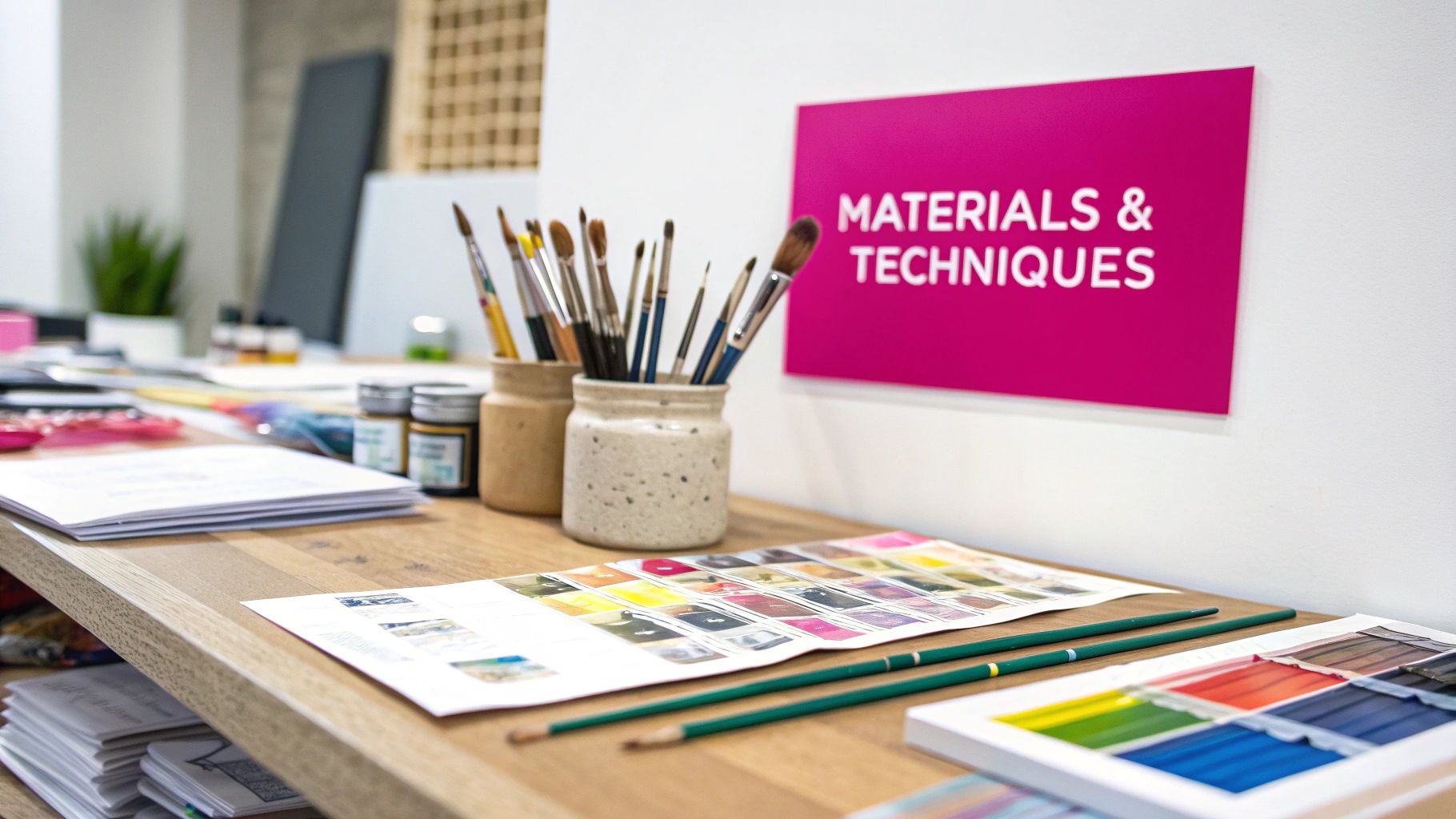
Imagine a mixed media artist not as a painter, but as a creative director. They don't just put paint on a canvas; they arrange a visual conversation between different and often surprising materials. While a traditional painting speaks in a single artistic voice, original mixed media artworks create a rich dialogue. Think of paint paired with photography, digital designs meeting found objects, or industrial textures blending with natural elements. This layered method gives these pieces their distinct and fascinating character.
The main draw is their power to connect with the viewer on several levels at once. This is an art form that encourages you to look closer, rewarding your attention with new discoveries each time. You might spot the faint shimmer of metallic leaf under acrylic paint, see the outline of an old photograph beneath layers of ink, or notice the gritty texture of sand mixed into a brushstroke.
A Symphony of Texture and Depth
The real strength of mixed media lies in its ability to create texture and dimension. An artist might weave copper wire through an oil painting, making a piece that seems to shift and change as you walk past it, catching the light in new ways. This turns the viewing experience from passive to active and makes it deeply personal. The artwork is no longer just a flat image; it becomes a tangible object with a presence all its own. This style pushes the boundaries of what a painting can be, moving it toward sculpture and installation. If you're new to this art form, our guide on how to understand abstract art can help you engage with its unique visual language.
Emotional Resonance and Market Growth
This complexity helps build a strong emotional connection, which is something many collectors look for. When an artist uses pieces of recycled circuit boards or scraps of old letters, they aren't just adding texture. They are weaving history, memory, and personal meaning directly into the artwork. This blend of materials and ideas has helped make original mixed media artworks a major force in the contemporary art world.
The global art market reached about $67.8 billion in sales in 2024, showing a 4% recovery from the year before. The growing fascination with these works shows a wider appreciation for artistic exploration. You can discover more insights into the 2024 art market recovery here.
How Mixed Media Evolved From Rebellion to Respectability
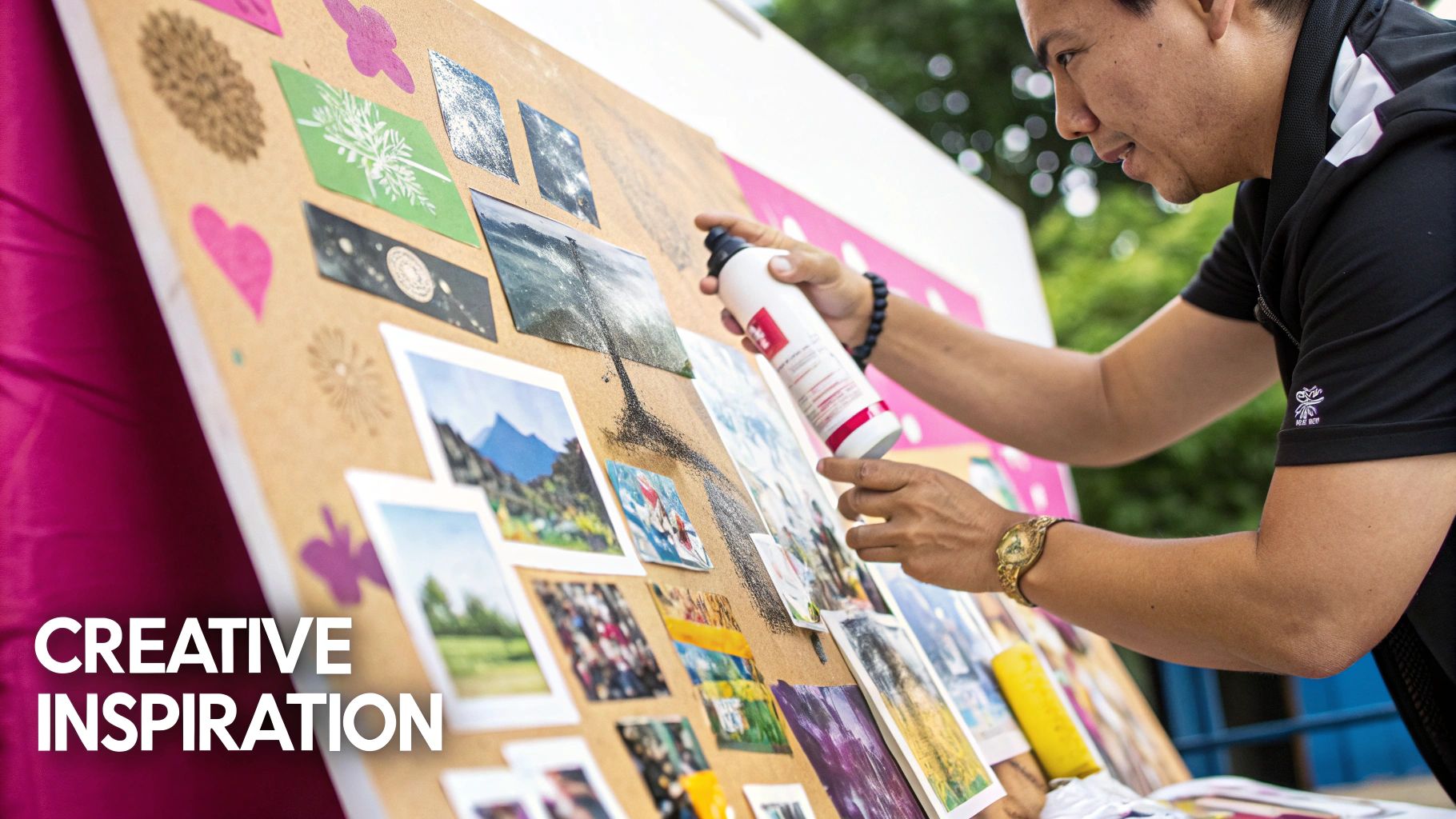
Every art revolution starts with someone breaking the rules, and the story of mixed media is a fantastic tale of artists who refused to color inside the traditional lines. Picture the art world in the early 1900s, a place where a painting was strictly paint on canvas. Then, artists like Pablo Picasso and Georges Braque began gluing bits of newspaper, wallpaper, and even chair caning directly onto their work. This technique, called collage, was shocking. It was like a classical composer weaving traffic sounds into a symphony—it just wasn't done.
This bold move sent a ripple through the art world, setting the stage for future generations to push boundaries even further. The journey from scandalous to celebrated wasn't overnight; each new wave of artists had to navigate resistance before their methods found acceptance.
From Dada to Abstract Expressionism
After the first collage experiments, the Dada movement used mixed media to voice its feelings of chaos and protest. Artists would gather "found objects" or everyday junk to challenge the artistic and social rules of a world they felt had failed. Fast forward to the mid-20th century, and you find Abstract Expressionists like Jackson Pollock and Willem de Kooning adding things like sand, broken glass, and metal scraps into their paint. For them, it wasn't about shock; it was about injecting raw texture and emotional depth into their art. These materials added a physical and emotional weight to their massive canvases.
This history reveals a clear cycle of how artistic innovation takes hold:
- Initial Rebellion: The first use of a non-art material is often seen as an attack on fine art itself.
- Conceptual Justification: The artists and their advocates explain the "why" behind their choices, whether it's for political statement, emotional expression, or pure visual exploration.
- Gradual Acceptance: Over time, critics, buyers, and fellow artists start to understand and eventually adopt the new approaches.
- Canonization: What was once a rebellious experiment becomes a respected technique, studied in art schools and displayed in museums.
The Modern Era: An Expanded Palette
This cycle of rebellion and acceptance has continued to this day, dramatically broadening what an original mixed media artwork can be. While the Cubists’ early experiments were foundational, the popularity of mixed media in the art market has grown significantly in recent decades. Today's artists work with everything from recycled computer parts and digital projections to biodegradable elements and textiles, mirroring our own complex, layered world. The market has welcomed this variety, seeing that these challenging works open up new forms of expression and opportunities for collectors. You can learn more about key art market predictions and trends here.
Decoding the Artist's Expanded Creative Toolkit
Imagine stepping into a modern artist's studio. It's less like a traditional painter's loft and more like a creative laboratory. You'll see the familiar canvases and acrylic paints, but they share space with a wild assortment of other items: stacks of old photographs, spools of industrial wire, jars filled with sand, and even discarded computer motherboards. This isn't chaos; it's a carefully selected original mixed media artwork toolkit.
This method, however, introduces some unique technical challenges. The artist must be part creator, part chemist, and part engineer. They have to think about how different materials will react with each other over time. For example, will a water-based glue cause the ink on a digital print to run? How can you attach a heavy, 3D object to a flat canvas so it stays secure for decades? The artwork's survival depends on solving these material puzzles. A skilled artist knows that long-term stability is as crucial as initial visual appeal.
The Logic Behind the Layers
The choice of materials is rarely just about how they look; it’s woven into the artwork's meaning. An artist might use rusted metal to bring up feelings of decay and the past, or use light, see-through fabrics to suggest something delicate and fleeting. Each layer adds to the story. This infographic shows how the combination of texture, depth, and different materials creates a powerful and engaging viewing experience.
As the graphic illustrates, these three elements—texture, depth, and material variety—are not separate. They work together, each one strengthening the others to build a rich and interesting final piece. The artist's skill in blending these elements comes from lots of practice and a deep knowledge of how each material behaves.
This thoughtful process is what turns a collection of random objects into a unified and enduring piece of art. The artist's decisions shape both the emotional connection a viewer has with the work and its future value. For those interested in the strategic side of art-making, you can learn more about goal analysis and planning for creatives in our studio talks. This deliberate approach is what sets a lasting, meaningful artwork apart from a temporary experiment.
What Drives Value in Original Mixed Media Artworks
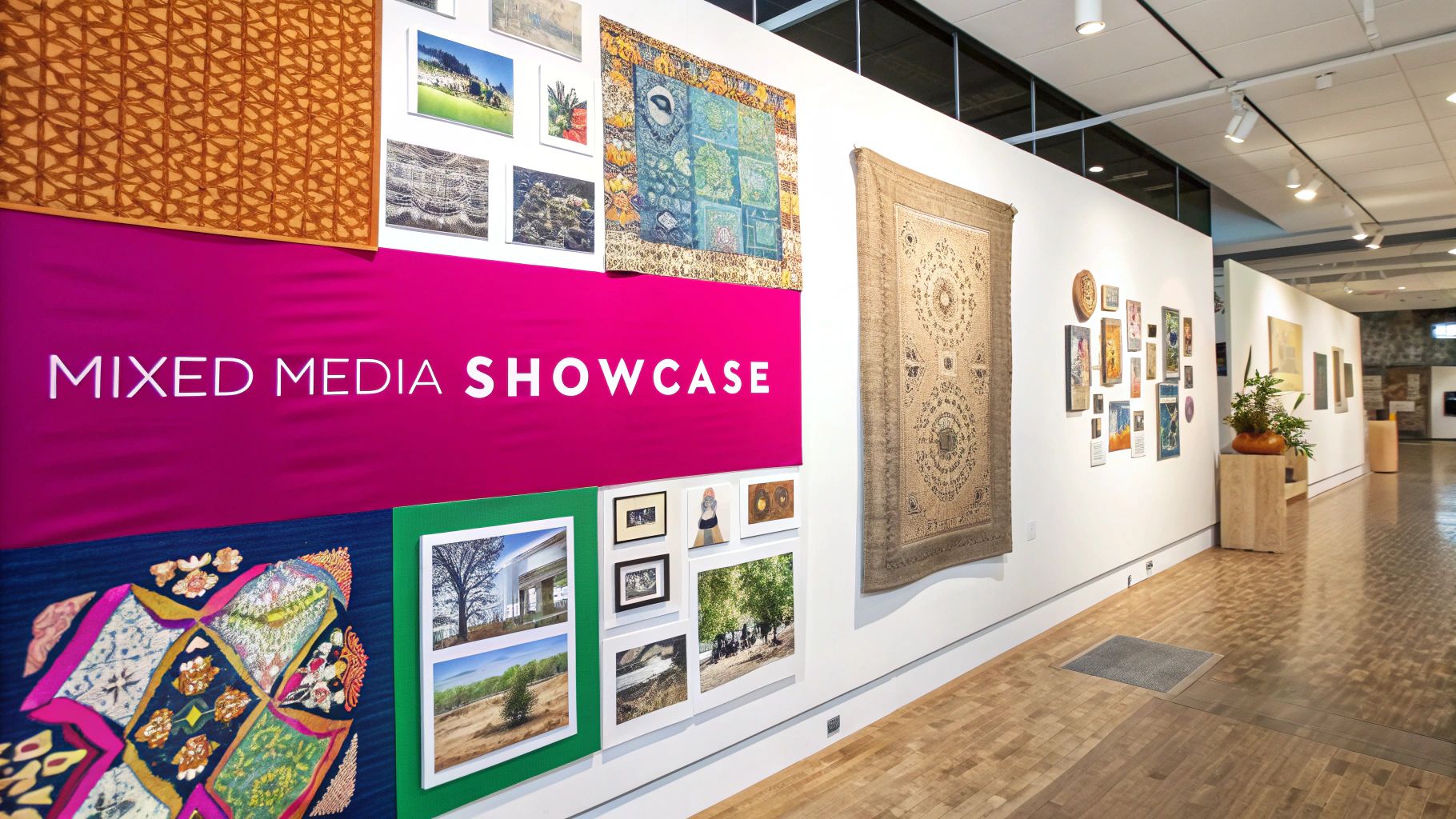
Figuring out the value of original mixed media artworks is a different game than assessing a traditional painting. While an artist's reputation is always part of the equation, mixed media brings its own unique factors to the table. Smart collectors know it's not just about whether a piece looks good; it's about understanding why the artist made certain choices and how those choices impact the work’s meaning and durability.
Think of it like appreciating a custom-built motorcycle. Its visual appeal is just the start. You also have to consider the ingenuity of its engineering, the quality of its parts, and the creativity behind its design. In the same way, the value of mixed media art is built from a collection of connected elements. When you look at auction results and gallery prices, the artworks that sell for more almost always stand out in a few specific areas.
Key Drivers of Artistic and Financial Worth
The value of these artworks is built on much more than the artist's signature. A few essential components need to work together to create a piece that is truly special. For anyone looking to collect, recognizing these signals is key to making a sound decision.
- Conceptual Strength: Does the artwork communicate a compelling idea? The most valuable pieces possess a strong concept or story that makes sense of the material choices. The materials aren't just thrown together; they actively support the work's message.
- Technical Execution: How well are the different materials put together? High-value art shows a high level of skill in combining various elements. The connections are seamless, the glues are archival grade, and the entire structure is solid and made to endure. Poor craftsmanship can dramatically lower a piece's value, no matter how great the idea behind it is.
- Material Innovation: Is the artist using materials in a fresh or surprising way? Pushing the envelope with unusual pairings—like weaving LED lights into an oil painting or fusing metal sheets with fragile fabrics—can make an artwork historically significant and more appealing to collectors.
- Artist’s Trajectory: Is the artist’s career on an upward path? Collectors watch for artists who are consistently showing their work, earning positive reviews, and developing their style. An artist with a clear path and a growing reputation gives a collector more confidence in their purchase.
In the end, the most desirable original mixed media artworks are those where the idea, the execution, and the material selection all align perfectly. This creates a piece that is not only striking to look at but also rich with meaning.
Navigating the Mixed Media Market Like a Pro
Stepping into the art market can feel like joining an exclusive club, but becoming a collector is less about insider knowledge and more about developing a sharp eye. It’s a journey that often starts with trusting your own instincts. Many great collections began when a first-time buyer discovered a promising new artist at a local art fair. The secret isn't a huge budget but a willingness to look, listen, and learn. When you're considering original mixed media artworks, this process has a few extra, fascinating layers.
One of the first challenges is evaluating authenticity and quality. Unlike a straightforward oil painting, a mixed media piece might bring together photography, textiles, and found objects. Your task is to look for intention and skill. Does the combination of materials feel purposeful and well-executed? A key sign of a quality piece is the artist’s ability to make diverse elements feel like they belong together, creating a unified whole rather than a random jumble.
Understanding the Market Segments
The market for mixed media art isn't a single entity but a series of tiers, each offering different opportunities. At every level, building relationships is vital. You can start by visiting local galleries, attending artist talks, and following artists you admire online. These connections are more than just networking; they provide the context and understanding you need to appreciate the work you love.
To give you a clearer picture, this table breaks down the main segments of the mixed media art market, outlining what to expect at each level.
Mixed Media Market Segments and Opportunities
Strategic overview of price ranges, artist profiles, and investment potential across different market levels
| Market Level | Typical Price Range | Artist Experience | Where to Find | Growth Potential |
|---|---|---|---|---|
| Emerging | $200 – $2,500 | Early-career artists still developing their signature style. | Art fairs, student shows, online platforms, and local galleries. | High risk, high reward. A great entry point for new collectors. |
| Mid-Career | $2,500 – $15,000 | Artists with established recognition and consistent exhibitions. | Reputable galleries and regional art fairs. | Moderate risk with potential for steady, long-term growth. |
| Established | $15,000+ | Artists with a museum presence and a strong auction history. | Major galleries, auction houses, and private art consultants. | Lower risk, often considered a more stable, blue-chip investment. |
As the table shows, there's a place for every type of collector, from those just starting out to seasoned investors. The key is to find the segment that aligns with your budget and goals.
Building Your Collection and Reputation
As you start to buy, always choose pieces that you personally connect with. A collection built on passion is always a success, no matter its eventual market value. When it comes to discussing price, always be respectful. A common mistake is to make an unreasonably low offer, which can harm your relationship with a gallery or artist. A better approach is to simply ask if there is any flexibility in the price. Many galleries offer a 10-15% discount to serious and repeat collectors.
Finally, proper documentation is essential. Always get a certificate of authenticity and a detailed receipt for every purchase. This paperwork is crucial for insurance, proving the artwork's history (provenance), and any future sales. By following these steps, you build a reputation as a thoughtful, serious collector, which can open doors to better opportunities and deeper connections within the art world.
Protecting Your Mixed Media Investment
Owning original mixed media artworks is an incredible experience. It also means you’ve become the caretaker of a unique, and often fragile, object. The same complexity that makes these pieces so fascinating also creates specific challenges for their preservation. Unlike a standard oil painting, a mixed media piece might blend materials with very different needs, making its care a careful balancing act to protect both its artistic integrity and financial worth.
Thinking about long-term care right from the moment of purchase is essential. Imagine a piece that joins oil paint with delicate fabric and metal parts. You can't just wipe it down; a cleaner that's safe for the paint might ruin the textile. This is why understanding the specific needs of your artwork is so important for preventing accidental damage.
Creating a Safe Environment
Just as with any piece of fine art, the environment is a major factor. For mixed media, however, the stakes are higher because different materials react to their surroundings in unique ways.
- Sunlight: Direct sunlight is a problem for almost all art, but it can be particularly harmful to mixed media. UV rays can fade pigments, turn paper yellow and brittle, and break down plastics or fabrics at varying speeds. This can create stress within the artwork itself. Placing your art away from direct UV light is the single most important step you can take.
- Temperature and Humidity: Big swings in temperature or humidity can make materials expand and contract. Wood might swell while metal stays the same, which could cause glues to fail or surfaces to crack. Your goal should be a stable environment, so avoid placing art near radiators, air vents, or on damp walls.
- Dust and Pollutants: Dusting a textured surface can be difficult. A soft brush is often a better choice than a cloth that could snag on different elements. For artworks that include electronic components, dust can become a serious operational problem.
When to Call a Professional
A responsible collector knows their limits. For anything more than a light dusting, or if you spot issues like lifting, discoloration, or general instability, it's time to talk to a professional conservator. It is vital to find a specialist with experience in original mixed media artworks, as they will have a deep understanding of the complex chemical reactions between different materials.
Think of professional conservation as an investment in the artwork's future, making sure it can be appreciated for generations to come. It’s also wise to document your artwork with detailed photos and keep all purchase records. This information will be incredibly useful for insurance purposes and for planning any future care.
Your Path From First Purchase to Confident Collector
Every great art collection begins with a single moment—a spark when a piece catches your eye and you feel an undeniable connection. This emotional pull is the heart of collecting. But how do you go from that first impulsive buy to building a thoughtful, valuable collection? It’s a journey of blending strategy, patience, and a growing trust in your own taste. For new collectors, the path is often full of questions, like wondering if a price is fair or when to stretch your budget for a work you truly love.
The secret is to balance that essential emotional response with smart, informed thinking. It’s less about having a huge budget and more about developing your eye. You can sharpen your instincts over time by talking to artists, visiting galleries, and looking at a wide variety of original mixed media artworks.
Defining Your Focus and Budget
A strong collection always has a clear point of view. Start by asking yourself what you’re drawn to. Is it a particular theme, like nature or urban life? A specific mix of materials? Or perhaps the work of artists from a certain region? Pinpointing a focus helps you make more deliberate choices.
Next, set a realistic budget that you can build on. Think of your budget not as a restriction, but as a strategic guide. It helps you navigate different areas of the art market, from exciting emerging artists to more established figures. For a deeper dive into this process, our guide on how to collect art offers valuable insights.
Evaluating a Potential Purchase
When you find an artwork you're serious about, step back from the initial excitement and use a practical checklist. Look beyond its visual appeal and consider these key factors:
- Artist’s Consistency: Does this piece align with the artist's overall body of work? A cohesive style is a positive indicator.
- Material Quality: Are the materials archival and built to last? The long-term stability of the piece is vital for its value.
- Condition: Is the artwork in excellent shape? Make note of any wear, fading, or damage.
- Provenance: Can the gallery provide clear documentation of the artwork's history and ownership?
Building relationships is one of the most rewarding aspects of collecting art. A good art dealer will gladly answer your questions and share their knowledge, whereas a mediocre one might seem rushed. Always trust your intuition. By combining passion with careful evaluation, you can build a collection that not only brings you daily joy but also grows in value over time.
Ready to find that piece that speaks to you? Explore the emotionally charged, large-scale original mixed media artworks of Wiktoria Florek and begin your collecting journey today. Visit the Wiktoria Florek official site to discover a world of contemporary expression.