
Understanding Mixed Media Art Investment Fundamentals
Mixed media art presents a unique investment opportunity thanks to its captivating blend of materials and techniques. Unlike traditional art forms like painting or sculpture, mixed media incorporates various elements, creating a dynamic and often textured visual experience. This characteristic layering of materials, from acrylics and inks to found objects and textiles, contributes to the allure and potential value of mixed media art. Investors are drawn to the distinctive nature of these works, recognizing their potential for appreciation.
The evolving art market plays a significant role in the growing interest in mixed media. The global art market is experiencing a resurgence. In 2024, sales reached $67.8 billion, a 4% increase from the previous year. This positive trend indicates a renewed interest in art investment across various forms, including the increasingly popular mixed media. This growth further underscores the increasing appeal of mixed media art within the broader art market. Learn more about the art market recovery.
Evaluating Mixed Media Art
Understanding the fundamentals of mixed media art investment requires a discerning eye and an understanding of key valuation factors. Several elements contribute to a piece's investment potential.
-
Technical Complexity: The artist's skill in seamlessly and innovatively combining diverse materials influences value. Intricate and well-executed techniques often command higher prices.
-
Artistic Merit: The conceptual depth, originality, and overall artistic impact of the work are key contributors to its long-term value.
-
Market Trends: Current market demand for specific styles, themes, and artists influences pricing. Recognizing these trends is crucial for strategic investment.
-
Artist's Reputation: An artist's established presence, exhibition history, and critical acclaim can significantly boost the value of their work.
You might be interested in: Viewing my portfolio.
Incorporating Mixed Media into Your Portfolio
Mixed media art can be a valuable addition to a diversified investment portfolio. However, like any investment, it carries inherent risks. Therefore, due diligence is essential.
-
Provenance: A clear and documented history of ownership adds to a piece's authenticity and value.
-
Condition: The artwork's physical state is critical. Damage or deterioration can significantly impact its value.
-
Authenticity: Verifying the artwork's creator is essential. Reputable galleries and art appraisers can assist with authentication.
Understanding these factors and conducting thorough research are vital steps toward making informed decisions. Carefully assess the artist’s background, the artwork's unique qualities, and the prevailing market conditions. This strategic approach helps mitigate risks and positions your mixed media art investments for potential growth.
Market Trends Shaping Mixed Media Art Investment Today
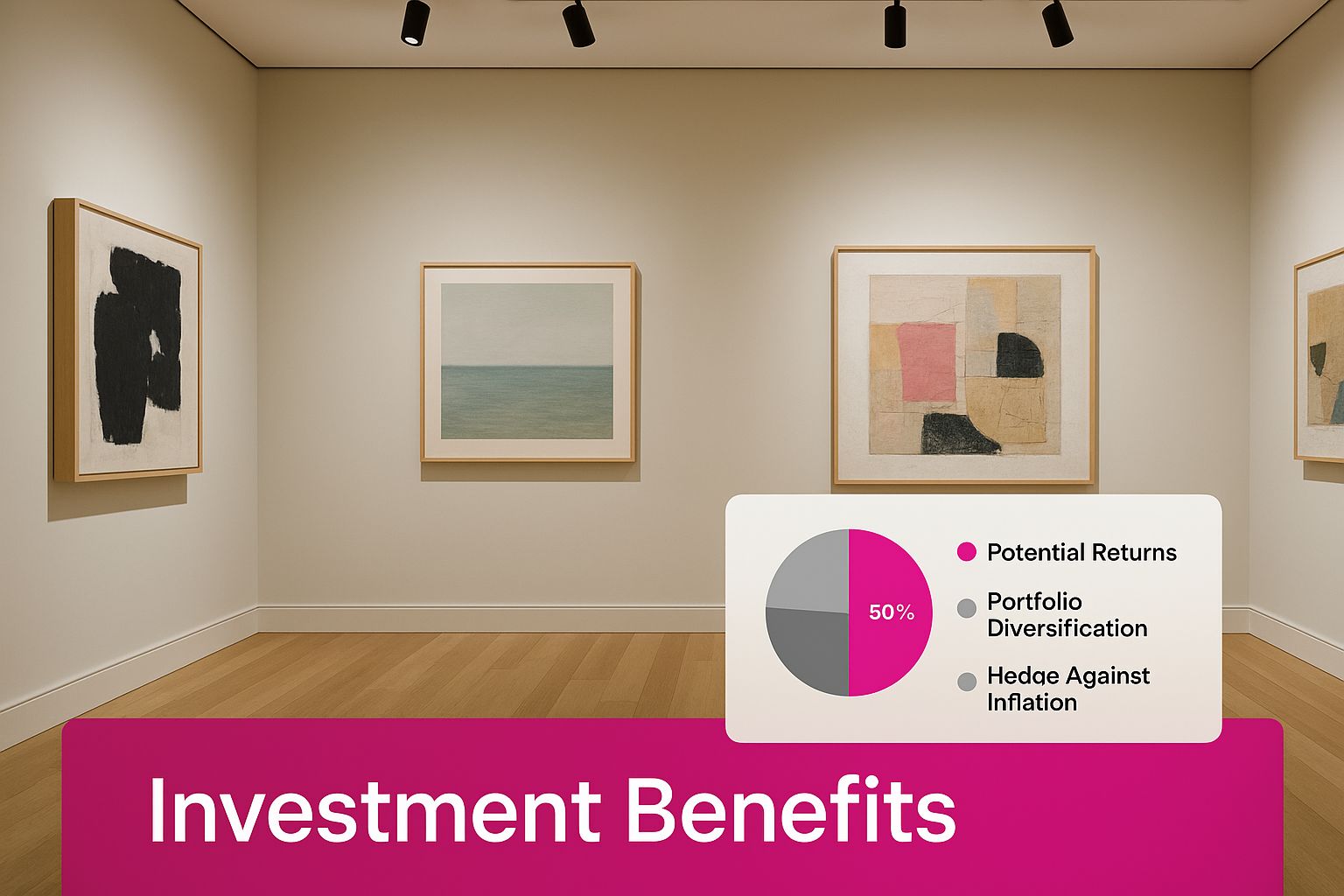
The infographic above illustrates the various investment advantages associated with mixed media art, particularly within a gallery setting. It visually connects the artwork, its presentation, and its potential for increased value within the art market. This perceived value is influenced by evolving market trends that are changing collector behavior and investment approaches.
Global Market Recovery and Strategic Collecting
The art market is always changing, and recent years have seen some big shifts. In 2024, the global art market rebounded strongly, reaching $67.8 billion in sales. This shows that art remains a desirable investment. This recovery, combined with a focus on well-known artists and serious collectors, suggests that strategic investments in mixed media art are becoming more popular. You can learn more about this in the 2025 Art Market Report. This move from speculative buying to longer-term investment plans is driving this trend.
The Rise of Calculated Investment
This change toward calculated investment is reshaping how collectors view mixed media art. Short-term market fluctuations used to encourage speculative buying. Now, investors prioritize informed decisions based on artistic merit, the artwork's history (provenance), and thorough market research. This approach emphasizes understanding the artist's career path, the unique qualities of the piece, and its potential for long-term value growth. Part of this calculated approach also includes buying from established sources like galleries and artists directly.
Geographic Diversification and Emerging Markets
Geographic diversification is becoming more important in mixed media art investment. Traditional art centers like New York and London still hold significant influence, but emerging markets in Asia and the Middle East offer exciting new possibilities. This broader art market allows artists and investors to diversify their holdings and explore the rising global interest in mixed media. It also creates new ways for people to appreciate mixed media and could lead to higher returns for investors who explore these emerging markets.
For example, the growing art scenes in Dubai and Hong Kong are attracting a lot of attention. They're creating a lively environment for both artists and collectors of mixed media. These developing art markets also connect artists with diverse audiences, offering valuable feedback and new sources of inspiration.
The following table shows a breakdown of market sizes, growth rates, and the opportunities available in mixed media art investment across different regions:
Global Art Market Performance by Region
Regional breakdown of art market sales and growth rates showing opportunities for mixed media art investment
| Region | Market Size (USD Billion) | Growth Rate (%) | Mixed Media Opportunity |
|---|---|---|---|
| North America | 30 | 5 | Established market with high potential for blue-chip mixed media |
| Europe | 25 | 3 | Strong traditional market, growing interest in contemporary mixed media |
| Asia | 8 | 12 | Rapidly expanding market, significant interest in emerging mixed media artists |
| Middle East | 3 | 15 | Emerging market with high growth potential, focus on innovative mixed media |
| Other | 1.8 | 7 | Diverse opportunities in developing markets for mixed media with unique cultural influences |
This table showcases how various regions contribute to the global art market. Asia and the Middle East stand out with their high growth rates, suggesting strong potential for mixed media investment in these areas.
Key Market Indicators for Mixed Media Investors
Savvy mixed media art investors closely watch several key market indicators:
- Auction Results: Examining how mixed media art performs at major auction houses reveals current market values and trends.
- Gallery Exhibitions: Exhibitions at important galleries showcasing both established and up-and-coming mixed media artists can indicate rising interest and potential future value.
- Critical Acclaim: Good reviews from respected art critics and publications can sway collector opinions and create demand.
- Artist Recognition: Awards, residencies, and museum acquisitions can significantly boost an artist's career and the value of their work.
By understanding these trends and indicators, investors can make smart decisions in the active mixed media art market. Staying informed and adapting to this evolving market is key to success for both seasoned collectors and those new to this exciting investment area.
Digital Innovation's Impact on Mixed Media Art Investment

The digital world is changing how we interact with and invest in art, including mixed media. This goes beyond the initial excitement around NFTs. It's about how technology enhances the value and accessibility of these one-of-a-kind pieces, creating opportunities for both artists and collectors.
This shift toward digital art and non-fungible tokens (NFTs) has significantly impacted the mixed media art investment world. Platforms like SuperRare and Foundation now prioritize quality and authenticity over quick returns. The increasing use of augmented reality (AR) and virtual reality (VR) further immerses viewers in mixed media art, making it even more attractive to investors and collectors. Learn more about these trends here.
Augmented and Virtual Reality: Enhancing the Mixed Media Experience
AR and VR are changing how we experience mixed media art. Imagine exploring a sculpture not just visually, but also through its textures and layers using a VR headset. This deeper engagement adds a new dimension to appreciating and valuing mixed media, potentially boosting its investment appeal.
AR, for example, can overlay digital details onto a physical artwork, sharing information about its creation, materials, or the artist's inspiration. This deeper connection transforms how collectors appreciate a piece and its value, potentially impacting market prices.
Digital Platforms: Setting New Standards
Digital platforms are becoming key players in the mixed media art scene. Curated platforms like SuperRare and Foundation are dedicated to showcasing high-quality digital and mixed media art. Their focus on provenance and authenticity provides a secure environment for collectors. These platforms elevate mixed media, shifting the focus from speculative markets to spaces that emphasize artistic value and long-term investment.
Expanding Global Reach for Artists
Digital integration offers unprecedented opportunities for mixed media artists to reach a wider audience. Online galleries and virtual exhibitions eliminate geographical barriers, connecting artists with collectors worldwide. This increased visibility can lead to more opportunities and strengthen an artist’s market position, directly impacting the investment potential of their work. This also allows collectors around the globe to discover and invest in mixed media art, further driving market growth. Furthermore, these online platforms enable direct communication between artists and collectors, creating a sense of community and shared appreciation.
Navigating the Digital Transformation
Successfully navigating the digital transformation in mixed media art investment requires a strategic approach. Collectors should research digital platforms, understand how AR and VR are changing the art experience, and learn to evaluate the authenticity of digital representations of physical pieces.
This evolving landscape offers exciting new investment opportunities in mixed media art. By embracing these changes and understanding the available digital tools, investors can capitalize on the growth and innovation within this dynamic art form.
Building A Strategic Mixed Media Art Investment Portfolio
Building a successful mixed media art investment portfolio requires a deep understanding of the art market and a strategic approach. It's more than simply appreciating aesthetics. It involves careful planning, research, and understanding how different mixed media pieces can work together to create a balanced and profitable collection. Just like any other investment strategy, it requires balancing potential risks with expected rewards.
Evaluating Emerging Vs. Established Artists
One of the key decisions for art investors is balancing works by emerging artists with those of established names. Emerging artists offer a higher potential for rapid growth, but also carry greater risk. Established artists offer more stability and proven market value, but the potential for exponential growth might be less. A common strategy is diversifying your portfolio across both categories, allowing you to benefit from both high-growth potential and established market stability.
Provenance and Documentation: Essential Considerations
Provenance, the documented history of an artwork's ownership, is crucial for mixed media art investment. Complete and verifiable provenance significantly increases a piece's authenticity and value. It’s like a detailed history report, tracing the artwork's journey from the artist's studio to its current location. Equally important is comprehensive documentation of the materials used, the artist's creative process, and any exhibitions or publications featuring the artwork. These records provide valuable insights into the artwork's significance and contribute to its long-term value.
You might be interested in: Learning more about collecting art in our studio talks.
Assessing Long-Term Potential
Assessing the long-term potential of mixed media artwork requires understanding several factors. This includes the artist's trajectory, the innovative use of materials and techniques, and the artwork's relevance within broader art historical and cultural contexts. For example, is the artist pushing boundaries and creating truly unique work? Are the materials used likely to stand the test of time? These are essential questions to consider when evaluating a piece's potential for appreciation. Interestingly, research shows the importance of narrative structure in engagement. Analysis of 5,000 highly-cited papers reveals that articles using narrative structures receive 27% more citations and 58% higher reader engagement than traditional formats. Discover more insights about narrative impact. This suggests that understanding the narrative behind an artwork, the artist's story, and the context of its creation can significantly enhance its perceived value.
Portfolio Allocation and Timing
Effective portfolio allocation is another critical aspect of mixed media art investment. Diversifying across different mixed media techniques, styles, and artists helps mitigate risk, similar to diversifying a financial portfolio across different asset classes. Strategic timing also plays a key role. Acquiring artworks before an artist achieves widespread recognition can yield substantial returns. However, this requires a keen understanding of emerging trends and a discerning eye for identifying promising talent.
Managing Collection Growth and Maintaining Quality
As your collection grows, so does the complexity of managing it. Developing a clear acquisition strategy is essential for maintaining quality and focus. This strategy should align with your overall investment goals and consider factors like storage, conservation, and insurance. Regularly reassessing your portfolio and making adjustments based on market trends and your evolving collecting interests is crucial for long-term success. This proactive approach helps ensure your collection not only appreciates in value but also continues to resonate with your personal aesthetic and investment objectives.
Risk Assessment And Due Diligence Strategies
Smart mixed media art investment requires careful evaluation and due diligence. Many new collectors overlook these crucial steps, leading to potential financial pitfalls. This section provides the tools and insights you need to assess potential investments critically and avoid common mistakes. We’ll explore how to authenticate mixed media works, understand the conservation challenges, and assess market liquidity.
Authentication and Provenance
Authenticating mixed media art can be complex because of the diverse materials involved. It requires verifying the artist’s creation and tracing the artwork’s ownership history (provenance). Look for certificates of authenticity, gallery records, and any documentation of the artwork’s creation and exhibition history. For mixed media pieces, understanding the artist’s process and materials is especially important.
This detailed examination helps establish the artwork’s legitimacy and safeguards your investment.
Be wary of pieces with gaps in their provenance or vague ownership details. This can be a red flag, and further investigation might be needed. A clear and well-documented history significantly strengthens an artwork’s value.
Conservation Challenges in Mixed Media
Mixed media artworks present unique conservation challenges. The varied materials react differently to environmental factors like temperature, humidity, and light. Some materials might degrade faster than others, compromising the artwork's integrity and aesthetic appeal.
For example, a piece incorporating organic materials like wood or paper might be more susceptible to insect damage or mold than one made primarily of metal. Understanding these potential issues is critical when assessing long-term preservation and value.
Proper storage and display are essential. Consult with art conservators for guidance on maintaining the artwork in optimal condition. They can offer specialized advice on handling and preserving your investment.
Market Liquidity and Artist Reputation
Market liquidity refers to how easily an artwork can be bought or sold. For mixed media art, liquidity can vary depending on the artist’s reputation, the artwork's size and complexity, and current market trends. Works by established artists with a proven track record often command higher liquidity.
For example, a piece by a well-known artist with a history of museum exhibitions is generally easier to sell than a work by an emerging artist. Building a relationship with reputable galleries specializing in mixed media can provide valuable market insights.
You might be interested in: Learning more in our studio talks.
Artist’s Exhibition History and Critical Reception
The artist’s exhibition history and critical reception are key indicators of investment viability. Has the artist been featured in major exhibitions or biennials? Have reputable art critics reviewed their work favorably?
Positive critical reception and a strong exhibition history can significantly enhance market value. These factors often signal growing recognition within the art world, potentially leading to increased demand.
Look for signs of growing interest in the artist’s work, such as increasing auction prices or representation by prominent galleries. These factors can suggest an upward trajectory in the artist’s career.
Mitigating Risks and Maximizing Returns
Managing risks is essential for successful art investment. Diversify your portfolio by investing in works by different artists and across various mixed media techniques. This spreads risk and protects your overall investment.
Consider obtaining specialized art insurance to cover potential damage or loss. This protects your investment from unforeseen circumstances.
To help you assess risk, we've created a risk assessment matrix. It outlines common risks in mixed media art investment and strategies you can employ to mitigate them.
Mixed Media Art Investment Risk Assessment Matrix
Comprehensive risk factors and mitigation strategies for different types of mixed media art investments
| Risk Factor | Impact Level | Mitigation Strategy | Monitoring Frequency |
|---|---|---|---|
| Material Degradation | High | Consult with conservators, proper storage and display | Annually |
| Market Volatility | Medium | Diversify portfolio, research market trends | Quarterly |
| Authenticity Issues | High | Verify provenance, obtain certificates of authenticity | Upon acquisition |
| Lack of Liquidity | Medium | Invest in established artists, build relationships with galleries | Biannually |
This table summarizes key risk factors and provides corresponding mitigation strategies. By understanding these risks and implementing appropriate strategies, you can navigate the exciting world of mixed media art investment with greater confidence.
Maximizing Returns and Strategic Exit Planning
The ultimate success in mixed media art investment depends on knowing when and how to get the best returns. This involves a deep understanding of market dynamics, strategic planning, and a sharp eye for opportunity. This section explores proven strategies for maximizing your portfolio’s value, drawing on the experiences of successful collectors.
Optimal Holding Periods and Market Timing
Like other investments, mixed media art requires careful consideration of holding periods. Some investors prefer short-term gains, but a longer-term perspective can often yield substantial returns. Factors influencing holding periods include market trends, the artist's career trajectory, and the overall economic conditions.
For example, an emerging artist gaining recognition might present a good opportunity for selling after a shorter time. However, holding onto a piece by an established artist whose value steadily appreciates might be a better long-term strategy. Analyzing auction results and gallery sales can provide valuable insights into market timing.
Exit Strategies: Auctions, Private Sales, and Digital Marketplaces
Several exit strategies are available to mixed media art investors. Auction houses, like Sotheby's, provide a public platform for selling art, often attracting competitive bidding and potentially higher prices. However, they also charge commissions and fees that impact the final return.
Private sales offer greater control over the sales process and allow for direct negotiation with potential buyers. Emerging digital marketplaces offer new avenues for selling, particularly for digitally documented or represented mixed media art.
Enhancing Value Through Art Fairs, Exhibitions, and Media Coverage
Strategic participation in art fairs and exhibitions can significantly enhance the visibility and marketability of a collection. These events offer a platform to showcase your collection to a wider audience of collectors, gallery owners, and art enthusiasts.
Favorable media coverage, including reviews in art publications or features in lifestyle magazines, can further boost an artwork's prestige and desirability. This increased exposure can translate into higher valuations and a stronger selling position. These opportunities help build provenance and create a narrative around the artwork, increasing its value.
Long-Term Returns and Benchmarking
Successful mixed media art investment strategies should aim for sustainable long-term returns that outperform traditional investment benchmarks. This requires continuous learning, adaptation to evolving market dynamics, and a proactive approach to portfolio management.
Regularly reviewing your collection, seeking expert advice, and understanding the evolving trends in the art market are vital for maximizing your investment's value. Consider working with an art advisor who specializes in mixed media. They can provide valuable guidance on acquisition, portfolio management, and exit strategies, helping you navigate the art market.
Explore the dynamic world of mixed media abstract art and discover how it can enrich both your investment portfolio and your appreciation for contemporary expression. Visit Wiktoria Florek’s website to view her collection and learn more about her unique artistic vision.