
Mixed media abstract art is all about freedom. It’s an approach where an artist brings together a whole host of different materials and textures onto a single surface. Think of it less as a rigid style and more as a creative philosophy—one that loves to break the rules by mixing paint with unexpected elements like paper, fabric, or even found objects.
What Is Mixed Media Abstract Art
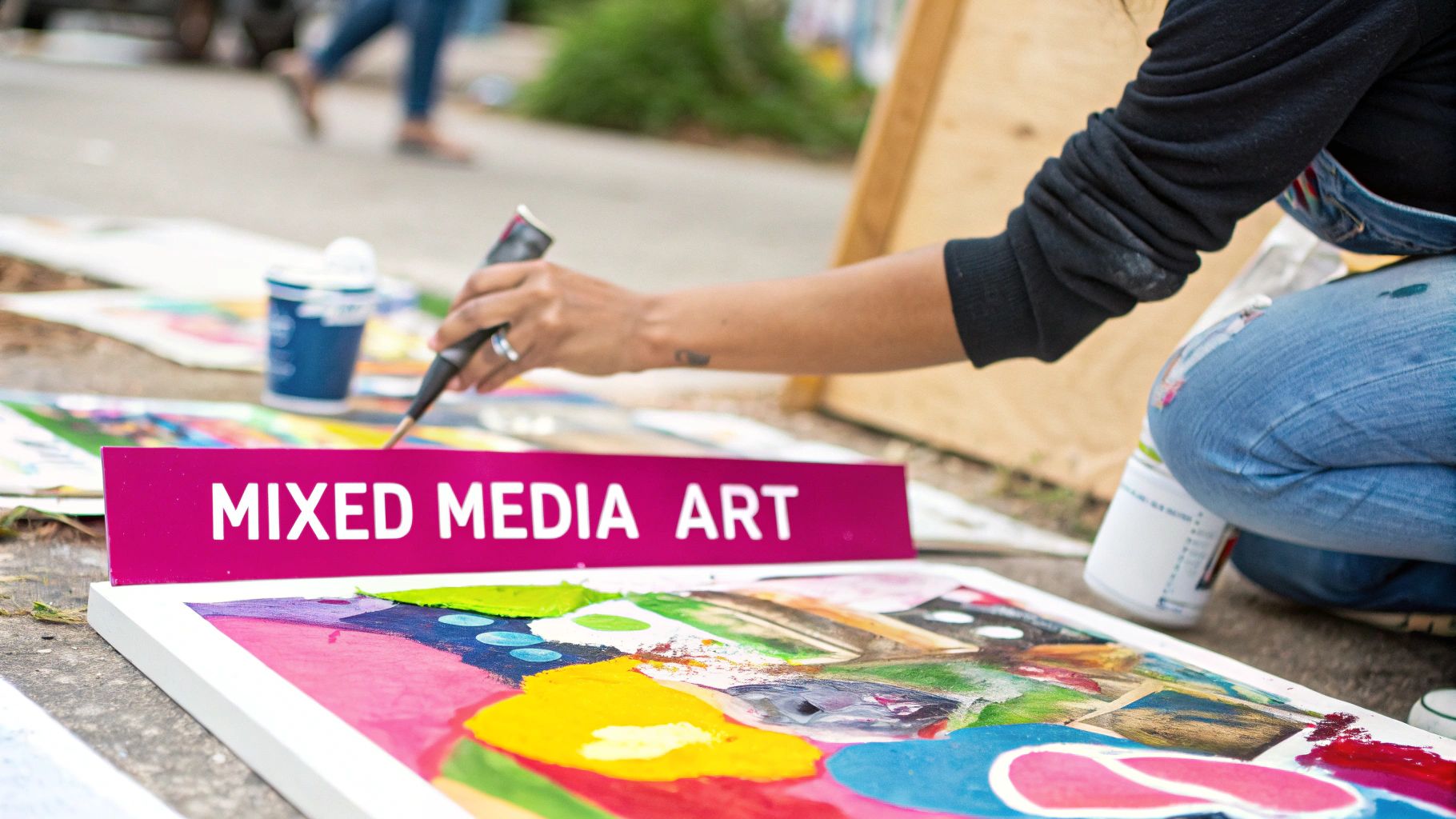
It’s a bit like a chef who would never dream of cooking with just one ingredient. Instead, they layer spices, play with contrasting textures, and toss in surprising flavors to create something totally new. That’s really the heart of mixed media abstract art. It frees artists from the confines of a single medium, letting them build a visual experience that’s rich and complex.
At its core, this artistic method is all about combination and layering. An artist might lay down a base of acrylic paint on canvas, then start introducing other materials to build up depth, add meaning, and create a truly tactile quality. The goal isn't just to make something you see, but something you almost feel.
The Power of Fused Materials
When you combine different materials, they don't just sit next to each other on the canvas; they start a conversation. The smooth, flowing line of ink might push up against the gritty texture of sand. A piece of delicate, transparent fabric might be used to soften the hard edge of a paper collage. Every choice is deliberate, designed to spark a specific feeling or idea.
You'll often see a few key techniques at play:
- Layering: Artists build up surfaces with multiple applications of paint, paper, and other media. This creates a sense of history and complexity within the piece.
- Texture: By bringing in materials like sand, fabric, wood, or even metal, the artwork becomes a physical, almost touchable experience.
- Collage: This involves weaving in found objects, old photographs, or newspaper clippings to add a layer of story or symbolism.
This fusion is what turns a flat, two-dimensional piece into something more. It pulls you in, inviting you to look closer, to trace the lines with your eyes, and to uncover the story the artist has tucked into every layer. If you're just starting to explore this world, getting a handle on the basics can make all the difference. For a deeper dive, check out our guide on how to understand abstract art.
Why This Art Form Resonates Today
The appeal of mixed media abstract art is definitely on the rise, particularly when it comes to large, statement-making pieces. Both collectors and interior designers are drawn to these works because they can anchor a room and feel at home in all sorts of spaces, from sleek, modern minimalist to cozy, rustic industrial. The trend is hard to miss: big, bold abstract art is becoming a major player in the contemporary art world. People are looking for unique pieces that offer both an emotional punch and real investment potential.
Ultimately, this approach is about pushing boundaries. It challenges what a "painting" can be and opens the door to endless experimentation, making every single piece a unique journey through material and emotion.
2. A Look Inside the Artist's Toolbox
To really get what mixed media abstract art is all about, you have to imagine yourself stepping into the artist's studio. The materials and methods they choose aren't just tools. They're the words and sentences the artist uses to tell a story, spark a feeling, or nail down a memory. It all starts here, with this creative toolkit that turns a blank surface into a playground of texture, color, and depth.
For many artists, the journey begins with acrylic paint. It's incredibly versatile and dries fast, making it the perfect foundation. An artist might lay down big, bold blocks of color or create soft, subtle washes to set the initial mood. But that’s just the first step.
On top of that base, the real fun begins. Charcoal or graphite can add raw, energetic lines that feel both spontaneous and deliberate. Artists can also weave in stories using collage, incorporating bits of old newspapers, handwritten letters, or delicate handmade papers. Every scrap has its own past, adding a layer of found history to the final piece.
Core Techniques: How Artists Build Layers of Meaning
The way an artist applies these materials is guided by a few key techniques. Think of them as the grammar that gives structure to their visual language.
- Layering: This is the big one. Artists build up their surfaces, letting hints of what's underneath peek through. It creates a sense of history within the piece, a feeling that there’s more to the story than what you see on top.
- Impasto: Here, artists use a palette knife or a thick brush to apply paint so heavily that it becomes almost sculptural. The paint literally lifts off the canvas, catching the light and casting shadows. It turns a flat painting into something you could almost reach out and touch.
- Sgraffito: This is a cool one. It involves scratching through a wet layer of paint to reveal the color or texture hiding beneath. It's a process of removal, almost like an archaeological dig, uncovering hidden truths right on the canvas.
This visual shows just how many different influences—from art history to modern life—come together to shape this unique art form.
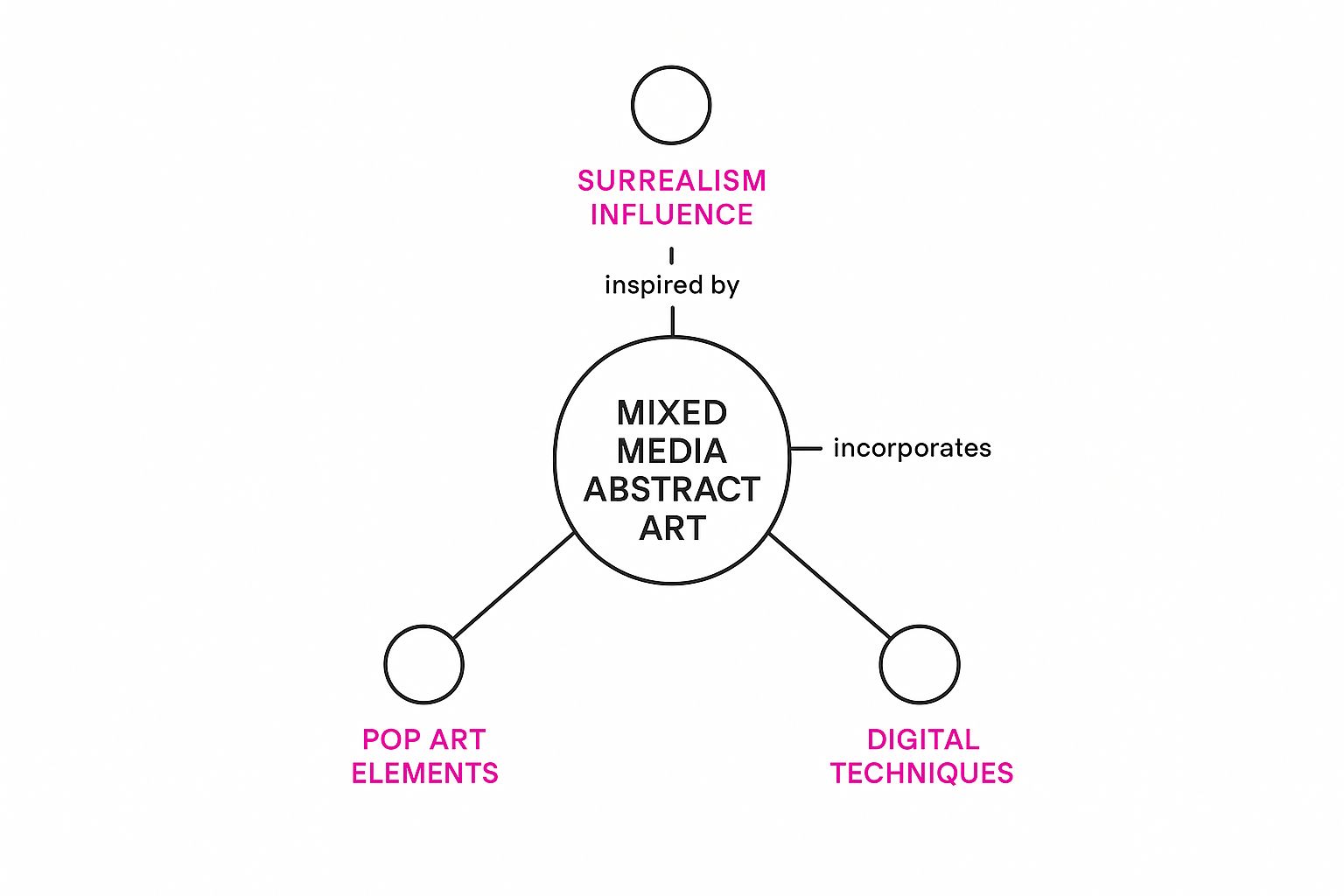
As you can see, mixed media abstract art isn't just one thing. It’s a melting pot of ideas, borrowing the psychological depth of Surrealism, the punchy visuals of Pop Art, and even the endless possibilities of digital tools.
How Material Pairings Create Different Effects
The real magic of mixed media abstract art happens in the conversation between materials. When an artist chooses to combine certain things, they're aiming for a specific emotional and visual gut-punch. For instance, mixing gritty sand with smooth, glossy paint can create a raw, urban vibe. In contrast, layering delicate, translucent papers might suggest the fragility of a memory.
This intentional pairing is how artists dial in their vision. Here’s a quick look at how different combinations can produce wildly different results.
How Material Pairings Create Different Effects
| Material Combination | Primary Technique | Resulting Effect |
|---|---|---|
| Acrylic Paint & Sand | Layering & Impasto | Creates a raw, earthy, and highly tactile surface that feels grounded and ancient. |
| Ink Wash & Charcoal | Sgraffito & Line Work | Produces a dramatic, high-contrast look with both fluid and sharp, energetic marks. |
| Collage Paper & Gesso | Layering & Texturizing | Builds a complex, semi-opaque surface rich with history and hidden details. |
When you really dig into the artist's toolkit, you start to see that every single choice matters. From the first coat of paint to the last scratch on the surface, each material and technique is a word in a sentence, coming together to create the powerful, silent poetry of abstract art.
How Rule-Breakers Shaped This Art Form
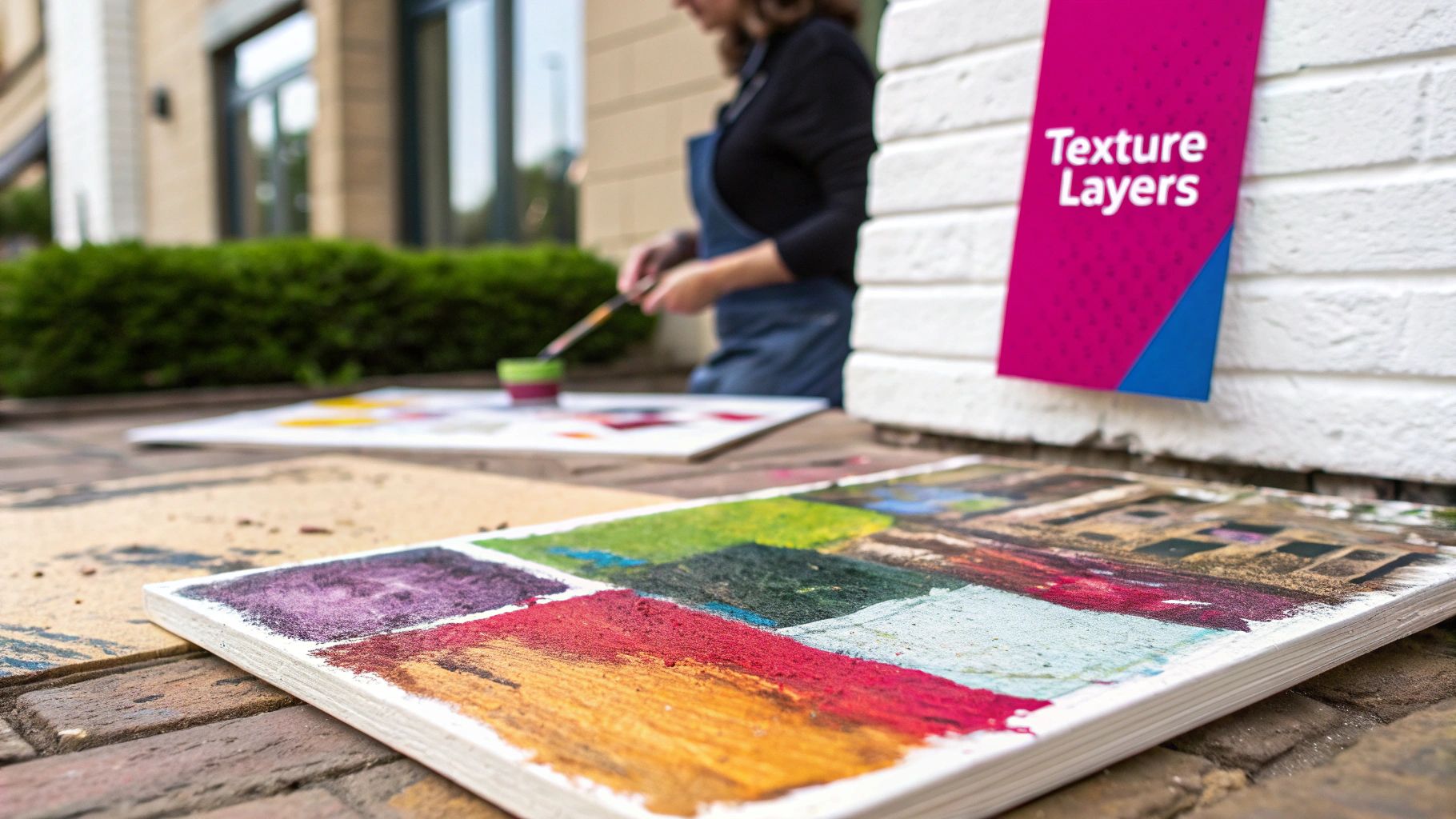
The story of mixed media abstract art is really a story of rebellion. It didn’t just pop up out of nowhere; it was hammered into shape by artists who had the guts to ask, "What is art even made of?" That one question sent shockwaves through the art world and pushed creators to look far beyond the traditional canvas.
You can trace the first tremors of this revolution back to the early 20th century, right to the studios of the Cubists. Artists like Pablo Picasso and Georges Braque did something that was, for the time, absolutely radical. They started gluing bits of everyday life—newspaper scraps, wallpaper, even pieces of chair caning—right onto their canvases.
These works, which they called papiers collés (pasted papers), bulldozed the invisible wall between the "high art" of painting and the stuff of ordinary life. By sticking a piece of the real world into their work, they weren't just painting a picture of a table; they were putting the actual table in the painting. This was a monumental first step.
From Defiance to Dreams
Hot on the heels of the Cubists, the Dada movement grabbed this rule-breaking spirit and cranked it all the way up. Born from the ashes and disillusionment of World War I, Dada artists threw logic out the window and embraced total absurdity. For them, using non-art materials was a direct protest against an art establishment they believed had failed society.
Kurt Schwitters, a major player in this scene, built his famous "Merz" pictures from literal trash he’d find on the street—used tickets, candy wrappers, and broken bits of wood. Schwitters saw a kind of poetry in these discarded fragments, a way to tell the story of modern city life. His work made people question what creativity and value even meant.
By bringing the debris of the everyday into the gallery, these artists proved that art could be made from anything. This powerful idea laid the essential groundwork for the entire mixed media abstract art genre.
This spirit of adventure carried on with the Surrealists, who turned their focus inward. They were obsessed with dreams and the subconscious mind, using collage and assemblage to build strange, otherworldly scenes. Artists like Max Ernst even invented new techniques like frottage (rubbing) and grattage (scraping) to conjure up textures that felt both accidental and deeply meaningful, adding even more tools to the mixed media kit.
Post-War Pioneers and the Love of Texture
After World War II, a new wave of artists, especially in America, took these ideas and ran with them. Robert Rauschenberg became known for his "Combines," massive hybrid pieces that were neither painting nor sculpture but something else entirely. He famously bolted objects like tires, bedding, and even a stuffed goat to his canvases, completely dissolving the line between 2D and 3D art.
Meanwhile, over in Spain, Antoni Tàpies was pioneering a style that was almost entirely about texture. He would mix clay, marble dust, and sand right into his paint to create thick, wall-like surfaces, which he would then gouge and carve into. For Tàpies, the material was the message. His artworks weren’t pictures of something; they were the thing itself—raw, scarred, and rich with history.
This incredible journey—from the first scrap of newspaper on a canvas to a whole tire bolted to a frame—shows how mixed media abstract art was built on decades of fearless experimentation. Each generation of artists passed the torch, adding their own materials and ideas to the fire. They taught us that art isn't just about what you can see, but what you can feel, touch, and discover in its complex layers.
Understanding the Market for Mixed Media Art
Beyond the studio walls, mixed media abstract art isn't just an artistic pursuit—it's a lively and growing segment of the contemporary art market. Collectors and investors are increasingly drawn to it, not only because it's visually stunning but also because it represents a genuinely compelling asset. The fusion of different materials and the raw emotion packed into each piece make it a hot commodity.
Think of it this way: in a world flooded with digital copies and mass-produced prints, a mixed media piece is defiantly singular. You simply can't perfectly replicate its unique textures, intricate layers, or the physical objects embedded within. This inherent uniqueness gives it a special kind of value, one that speaks directly to collectors searching for a work of art that is truly one-of-a-kind.
The Digital Shift and Market Growth
The way we all discover and buy art has changed profoundly, and mixed media abstract art has ridden this wave beautifully. Online galleries and digital platforms have torn down the old geographical barriers, giving artists a direct line to a global audience of potential buyers. This digital evolution has opened up the art world like never before.
And the market is responding. The online fine art market, where mixed media plays a huge role, isn't just holding steady—it's expanding at an impressive clip. Currently valued at around USD 15.71 billion, the market is projected to more than double, hitting an estimated USD 35.34 billion by 2034. This reflects a robust compound annual growth rate (CAGR) of 9.32%, fueled by new digital buying habits that really took off during the pandemic. New tools like blockchain for verifying authenticity and augmented reality for "trying on" art virtually are only going to accelerate this growth. You can explore the full report on the digital art trade to dig deeper into these industry-shaping trends.
What does this online boom really mean? It means a collector in New York can now easily find and purchase a piece from an artist like Wiktoria Florek working out of her studio near Barcelona. The playing field has been leveled, giving talented artists everywhere a chance to connect directly with people who truly value their vision.
What Determines an Artwork's Value
When you're considering a piece of mixed media abstract art for your collection, its market value is determined by a mix of factors. It's part tangible quality, part story, and part market buzz.
- Artist's Reputation and Career Trajectory: Where has the artist shown their work? Are they getting press? Is a respected gallery backing them? Collectors often track an artist's career, looking for a consistent record and signs of growing recognition.
- Complexity and Material Innovation: A piece that showcases incredible skill, a complicated layering process, or a totally new way of using materials will often fetch a higher price. The artist's unique "recipe" is a huge part of its value.
- Authenticity and Provenance: Having a clear, documented history of ownership (the provenance) is critical. It proves the work is genuine and adds to its story, making it far more desirable.
- Scale and Visual Impact: While it's not everything, size does matter. Larger, statement pieces that can anchor an entire room often carry a higher price tag simply because of their powerful, commanding presence.
Ultimately, the value of mixed media abstract art is a story told by many voices—the artist, the materials, the market, and the collector. It’s a dynamic interplay of skill, story, and demand.
Navigating this market is about more than just spotting a beautiful object. It’s about understanding the forces that make a particular piece resonate, both culturally and financially. When you learn to recognize these key drivers, you can approach collecting not just as a passion, but as a savvy and deeply rewarding adventure.
How to Start Your Own Art Collection
Starting an art collection can seem intimidating, but it’s really about personal connection, not a massive budget. Your journey doesn't begin in a gallery; it starts with a simple question: what do you love? Before you even think about buying, just look. Go to local art fairs, browse galleries online, and see what artists are sharing on social media.
Pay attention to what catches your eye. Is it the raw energy of bold colors? The quiet calm of muted tones? Or maybe the fascinating complexity of a heavily textured surface? Figuring this out helps you define your personal taste, which will be your best guide. This discovery phase is all about building a collection that truly feels like you.
Setting a Realistic Foundation
Once you have a better feel for what you like, it’s time to get practical. You don't need a fortune to become a collector. Plenty of talented emerging artists create incredible work at very accessible prices. Setting a clear budget just helps you narrow your search and make decisions you feel good about.
Keep in mind that the price of mixed media abstract art isn’t just about size. It’s a reflection of the artist’s experience, the complexity of their techniques, and the quality of the materials they used. A smaller, more intricate piece can easily be more valuable than a larger, simpler one.
It's also worth knowing that the art world is changing. New collectors are jumping in, and cities like Milan and Dubai are becoming major art hubs. Many of these new buyers see art as a serious asset and prefer the privacy of direct sales, which keeps categories like mixed media strong. These trends can create great opportunities for anyone starting out.
Evaluating Quality and Longevity
So, you’ve found a piece that speaks to you. What’s next? It’s time to look closely at its quality, and with mixed media, that means checking both the craftsmanship and the materials.
A well-made piece shows intention in every single layer and texture. You can see that the materials were chosen and combined thoughtfully, not just tossed together. That level of detail is a great sign of a skilled and dedicated artist.
Don't be shy—ask about the materials. Are they archival quality? This is a huge deal. Archival-grade paints, papers, and glues are made to last, resisting fading and breaking down over time. An artwork made with high-quality materials is an investment that you and your family can enjoy for generations. For a deeper dive, Wiktoria Florek talks about how to collect art with confidence and what to look for.
Framing and Displaying Your Art
After you've brought your first piece home, how you display it makes all the difference. For textured mixed media art, a frame isn't just decoration—it's protection.
Here are a few great options:
- Shadow Box Frames: Perfect for pieces with a lot of depth or delicate elements. This frame creates a safe pocket of air between the art and the glass.
- Floating Frames: A really popular choice for canvases. It leaves a small gap all the way around the art, making it look like it’s floating inside the frame and highlighting its 3D quality.
- Protective Glazing: Think about using UV-protective glass or acrylic. It acts like sunscreen for your art, shielding it from the light that causes colors to fade.
The right display doesn't just protect your investment. It lets the unique textures and layers of the piece truly shine, turning it into a stunning focal point in your home.
A Look Inside Wiktoria Florek's Process
Theory is one thing, but to really understand how these ideas take shape, let's step inside an artist's studio. Wiktoria Florek, a Polish artist living near Barcelona, gives us a perfect window into how personal vision and a bit of material magic can create truly profound mixed media abstract art. Her process isn't a strict recipe; it's more like an intuitive, energetic dance.
For Florek, a painting doesn’t start with a sketch. It starts with a feeling—a memory, an emotion, a quiet spiritual nudge. She often gravitates toward huge canvases, which become arenas for raw expression and bold, physical movement. This scale lets her put her whole body into the work, creating lines and shapes that feel both spontaneous and incredibly deliberate.
Her art is a direct line to her philosophy, creating a bridge between the thinking mind and gut instinct. Each piece acts as a kind of energetic portal, starting a conversation between chaos and calm that pulls you in and asks you to look deeper.
A Signature Blend of Materials
Florek’s creative toolbox is a thoughtful collection of materials, each chosen for the texture and meaning it brings to the canvas. While acrylics often provide the base, it’s the way she combines them with other elements that gives her work its signature depth.
- Natural Pigments and Inks: These materials ground her work in the earth. They add an organic, almost unpredictable feel that plays beautifully against the reliable nature of acrylic paint.
- Gold Leaf: Used sparingly and with intention, gold leaf brings moments of light and reverence. It’s not just for decoration; it's a symbol of something sacred and transformative.
- Textural Mediums: She’s a master at mixing in different mediums to build up surfaces that are almost sculptural. You can see and feel the history of the painting in these layers, a physical record of her creative journey.
This deliberate layering is what makes her art so captivating. You can trace the history of its creation—from the soft washes of ink hiding beneath a thick, confident brushstroke to the subtle glint of gold catching the light. It’s a powerful testament to choosing your materials wisely.
Florek’s work is a powerful reminder that in mixed media abstract art, materials are not just tools; they are part of the story. Each element is chosen to evoke a specific feeling, creating a rich tapestry of emotion and substance.
The Story Behind the Layers
Many of Florek's collections are intensely personal, exploring themes that we can all connect with. Her art often grapples with profound human experiences, capturing the kind of complex emotions that are hard to find words for. A great example is how she translates the deeply personal journey of motherhood into her paintings, a theme central to her Motherhood collection.
If you're curious about how artists turn real-life experiences into abstract forms, you can learn more about Wiktoria Florek's 'Motherhood' abstract collection and the stories that inspired it.
By looking closely at an artist like Wiktoria Florek, we see the principles of mixed media abstract art come alive. Her work is a beautiful illustration of how combining diverse materials with a strong personal vision creates pieces that are not only stunning to look at but are also emotionally charged and full of meaning. It's a real-world example of how theory becomes a modern masterpiece that speaks right to the soul.
Your Questions About Mixed Media Art Answered
So, you're curious about mixed media abstract art. Whether you're thinking about buying your first piece or you're an artist itching to try something new, a few questions always seem to pop up. It's a genre built on texture, layers, and sometimes surprising materials, so it's only natural to wonder about the practical side of things.
Let's clear up some of the most common questions. My aim here is to give you straightforward, practical answers that help you feel more confident as you dive into this incredible art form.
How Should I Care For and Preserve a Mixed Media Piece?
This is easily one of the first things new collectors ask. When a single piece has everything from paint and paper to sand and fabric on it, how in the world do you keep it looking great for years to come?
Thankfully, the artist has already done most of the heavy lifting. A finished piece is almost always sealed with a high-quality archival varnish. Think of this clear coat as a protective shield, guarding all those delicate textures against dust, humidity, and the fading that UV light can cause over time.
On your end, the care is pretty simple. Just follow these guidelines:
- Keep it out of the sun. Find a spot for your artwork away from windows where it won’t be hit by direct, harsh sunlight all day.
- Aim for a stable environment. Extreme swings in humidity can make materials like paper or wood expand and contract, so a room with a relatively consistent climate is best.
- Dust with care. A soft, dry brush (a clean makeup brush works perfectly) is all you need to gently dust the surface. Never, ever use water or chemical cleaners.
Can I Try Making Mixed Media Art Myself?
Yes, you absolutely can! That’s one of the most beautiful things about this art form—it’s incredibly accessible. You don't need a fine art degree to start playing around. Many artists get their start by just experimenting with whatever materials they have on hand.
A great way to begin is to gather some basics: a canvas or even just some heavy paper, a bit of acrylic paint, some glue, and a few "found" items. This could be anything—old newspaper, scraps of fabric, or even dried leaves from your yard. The whole point is to just see how different textures and colors work together.
The spirit of mixed media is rooted in experimentation and discovery. There are no hard rules, which makes it a wonderfully freeing creative outlet for beginners.
Start with a simple project. Maybe create a small abstract design with a few lines and shapes, then try filling each section with a different material or technique. It's a low-pressure way to learn what you enjoy working with and to discover combinations you never would have expected. You’ll be amazed at how quickly you can build incredible depth and tell a visual story just by layering a few different elements.
At Wiktoria Florek, we believe art is a powerful conversation between the creator, the materials, and the viewer. Explore visionary works that blend raw emotion with sophisticated technique by visiting the official Wiktoria Florek website.