
Understanding The Booming Handmade Market Opportunity
The handmade market is booming, offering incredible opportunities for artisans. This isn't a passing fad; it's a significant shift in consumer behavior. People are increasingly seeking unique, personalized items that reflect their individuality, moving away from mass-produced goods. Knowing how to sell handmade crafts (jak sprzedawać rękodzieło) is now more important than ever. This demand for authenticity and craftsmanship presents a real chance for artisans who understand the market and connect with their customers.
What's Driving the Demand for Handmade?
Several factors contribute to this market growth. There's a growing appreciation for the artistry and skill involved in handmade goods. Consumers value the story behind a product and the artisan's personal touch. The desire for sustainable and ethical consumption also plays a key role. Handmade items often have a smaller environmental footprint than mass-produced goods and support independent creators. Many artisans use locally sourced materials and eco-friendly methods, attracting environmentally conscious buyers.
The Rise of Online Marketplaces
E-commerce platforms have significantly expanded the reach of handmade businesses. These online marketplaces give artisans a global stage to showcase their work and connect with customers worldwide. This accessibility empowers artisans to build their brands and reach a larger audience. The global handicrafts market has seen significant growth. Reaching USD 906.8 billion by 2024, it's projected to hit USD 1.94 trillion by 2033, with a CAGR of 8.83% between 2025 and 2033. You can find more statistics here: Learn more about the booming handmade market. This impressive growth shows the immense potential for artisans in this evolving market.
Identifying Emerging Trends
Staying ahead of the competition means understanding current handmade market trends. This includes knowing the most in-demand craft categories, like personalized jewelry, home decor, and sustainable fashion accessories. Keeping up with emerging trends allows you to adapt to changing consumer preferences. You might experiment with new materials, techniques, or product categories to capture evolving interests. By actively researching and observing market dynamics, you can position yourself for success in the dynamic world of handmade crafts.
Creating A Craft Brand That Commands Attention
Your brand is more than just a logo. It's the emotional connection you build with customers, transforming casual browsers into loyal fans. This is especially important when you're learning how to effectively sell handmade crafts (jak sprzedawać rękodzieło). Building a strong brand requires a strategic combination of storytelling, visual consistency, and clear communication.
Defining Your Unique Story
Every handcrafted item has a story. What's yours? Your brand story should showcase your passion, the inspiration behind your crafts, and what makes your creations unique. This narrative helps customers connect with you personally, adding value that goes beyond the product itself.
Sharing your creative process or the origin of your materials, for example, creates a deeper bond with your audience. This emotional connection fosters loyalty and encourages repeat purchases.
Visual Consistency Across Your Brand
Visual consistency, from your logo to your packaging, is crucial. Choose brand colors that resonate with your target audience and reflect the style of your crafts. Developing a consistent visual language strengthens brand recognition.
Thoughtful packaging also enhances the customer experience, making your products even more appealing. This attention to detail shows your commitment to quality and reinforces your brand identity.
Communicating Your Value Proposition
Clearly communicating your value proposition is essential. What benefits do customers receive beyond the physical item? Perhaps it's the meticulous craftsmanship, the sustainable materials, or the unique design.
Highlighting these aspects sets you apart from competitors and justifies your pricing. This effective communication strengthens customer relationships and boosts sales. The infographic below illustrates the connection between material cost, average selling price, and profit margin.
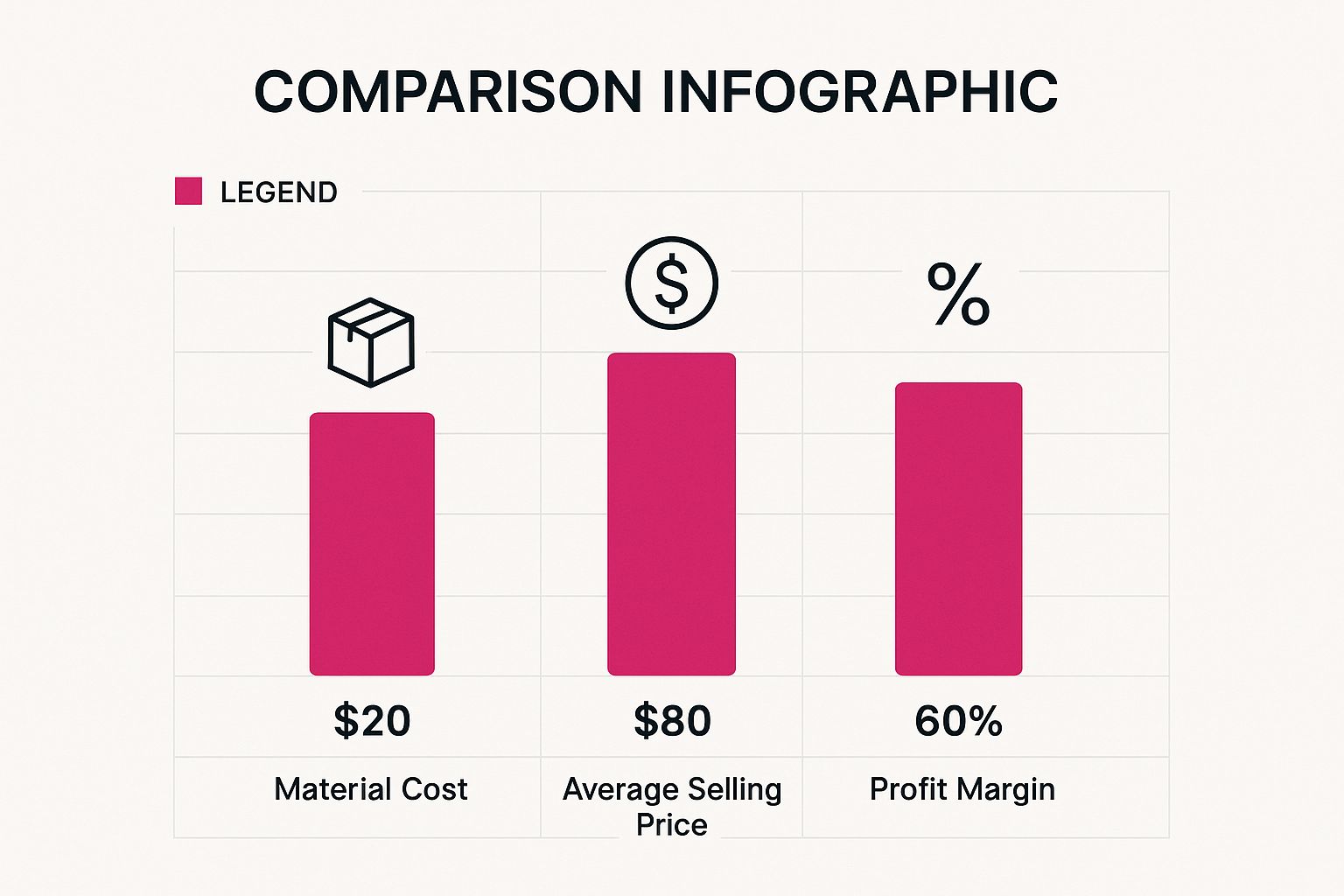
As the infographic shows, effectively managing material costs directly affects your profit margin. This allows you to strike a balance between a competitive selling price and sustainable profitability.
To further understand how different brand-building elements contribute to success, let's look at a comparison table. This table breaks down the impact, difficulty, and cost associated with each element.
Brand Building Elements Comparison
Essential brand components and their impact on craft business success
| Brand Element | Impact Level | Implementation Difficulty | Cost Range |
|---|---|---|---|
| Storytelling | High | Medium | Low to Medium |
| Visual Consistency (Logo, Packaging) | High | Medium | Low to High |
| Value Proposition Communication | High | Medium | Low |
| Social Media Presence | Medium | Medium | Low to Medium |
| Craft Shows/Markets | Medium | High | Medium to High |
| Website/Online Shop | High | High | Medium to High |
As you can see, some elements, like storytelling and communicating your value proposition, offer a high impact with relatively lower implementation difficulty and cost. Other elements, like maintaining a website, can be more demanding but also offer significant potential. Balancing these elements strategically is key to maximizing your brand-building efforts.
Ultimately, a strong craft brand cultivates trust, builds a loyal following, and significantly contributes to your success in the handmade marketplace.
Mastering Online Platforms For Consistent Sales

Successfully selling handmade crafts (jak sprzedawać rękodzieło) relies heavily on a robust online presence. This means strategically selecting the right platforms and optimizing your product listings for maximum visibility. Remember, each platform attracts a different audience and requires a tailored approach.
Choosing the Right Platforms
First, consider where your ideal customer shops. Are they on Etsy looking for unique gifts? Or perhaps they prefer browsing local deals on Facebook Marketplace? Your product type, price point, and target demographic are key factors when selecting platforms.
- Etsy: This platform is perfect for handcrafted items, vintage finds, and craft supplies. Etsy boasts a large, established audience actively searching for handmade products.
- Amazon Handmade: Leveraging Amazon's massive reach, Amazon Handmade provides access to millions of potential customers. Be aware, however, that competition can be fierce.
- Facebook Marketplace: This platform connects you directly with local buyers. It's ideal for larger items or those offering local pickup.
- Your Own Website: A dedicated website provides complete control over your brand and customer experience. It serves as a central hub for your business. For more information, check out our article on how to master product layout.
Diversifying across multiple platforms can be beneficial, but don't spread yourself too thin. Concentrate on the platforms that best align with your specific business goals and target customer base.
Optimizing Your Listings
After choosing your platforms, optimize your listings to capture buyers' attention. High-quality product photography is crucial. Images should clearly showcase your craft's unique features and quality.
Think well-lit, crisp photos, perhaps even showcasing the item in use, to truly enhance its appeal. Compelling product descriptions are equally important. Highlight the item's benefits and tell its story to convert browsers into buyers.
Utilizing SEO for Handmade Products
Search Engine Optimization (SEO) is essential for increasing your listing visibility. This involves using relevant keywords that potential buyers are actively searching for. For instance, if you sell handmade jewelry, use terms like "handmade necklace," "artisan jewelry," or specify the materials used.
This helps customers easily find your products in online searches. Including relevant keywords in your titles, descriptions, and tags can significantly boost your search ranking. The increasing demand for handmade items is also linked to the growing preference for sustainable and ethically sourced products. This growth is driven by consumers seeking locally made, artisanal goods, reflecting a broader trend towards eco-conscious buying. The rise of e-commerce further fuels this expansion, providing artisans with global reach. You can explore more about the handmade market boom.
By mastering these online platform strategies, you can build a thriving handmade business and connect with a larger audience.
Pricing Your Crafts For Profit And Confidence
Pricing is a critical aspect of any business, especially for handmade crafts. Many skilled artisans undervalue their work, neglecting the true worth of their time, skills, and creative input. This section covers effective pricing strategies to ensure fair compensation while staying competitive.
Pricing your crafts correctly can be the difference between making a living and just barely getting by. Finding that sweet spot takes practice. Fortunately, there are some tried and tested strategies to make the process a whole lot smoother.
Calculating Your True Costs
Calculating costs accurately involves more than just adding up the price of materials. Direct costs, such as materials and supplies, are straightforward. However, indirect costs, including overhead, packaging, marketing, and selling fees, are often overlooked.
Think about factors like studio rent, electricity, and even website costs. These are real business expenses.
Remember to value your time. Set an hourly rate, considering your skills and experience. Accurately calculating these expenses gives you a baseline price covering all costs and contributing to profitability. This is your break-even point.
Researching Market Prices
It's essential to understand what your target market is willing to pay. Researching competitor prices for similar items provides valuable insights. Browse online marketplaces like Etsy and attend local craft fairs to observe pricing trends.
However, don’t rely solely on competitor pricing. Your unique brand, story, and the quality of your craftsmanship justify different pricing. This research provides context for positioning your products within the market. You might be interested in: How to master goal analysis and planning.
Psychological Pricing Strategies
Psychological pricing influences how buyers perceive value. Charm pricing, using prices ending in .99, creates a sense of a bargain. Prestige pricing, using higher, rounded numbers, conveys luxury and exclusivity.
Pricing a necklace at $49.99 instead of $50 seems much more appealing, doesn't it? Conversely, a handcrafted sculpture at $500 suggests higher quality than one priced at $495. Small adjustments can have a big impact.
To help illustrate different pricing approaches, let’s take a look at the following table. It summarizes the pros, cons, and ideal profit margins associated with various pricing methods.
Pricing Strategy Comparison
| Pricing Method | Best For | Pros | Cons | Profit Margin |
|---|---|---|---|---|
| Cost-Plus Pricing | Beginners | Simple to calculate | Doesn't consider market value | 10-20% |
| Value-Based Pricing | Established businesses | Reflects perceived value | Requires market research | 20-50% |
| Competitive Pricing | Market analysis | Stays competitive | Can erode profits | Varies |
| Premium Pricing | High-end crafts | Conveys exclusivity | Smaller target market | 50%+ |
As you can see, each strategy offers a different approach, and selecting the right one will depend on your specific circumstances. Experimentation is key to finding what works best for you and your products.
Handling Price Objections
Handling price questions confidently builds customer trust. Emphasize the value of handmade items, the quality of your materials, and the time invested in each piece. Clearly explain the benefits customers receive beyond the physical object itself.
Share the unique story behind your work and describe your artistic process. This adds perceived value.
Raising Prices Strategically
As your skills and brand grow, periodically raise your prices. Communicate these changes transparently with your customers, explaining improvements in materials or craftsmanship. Gradual increases are less disruptive than sudden jumps.
This shows that you value your customer relationships while maintaining profitability. By strategically implementing these pricing practices, you build a profitable and sustainable craft business.
Building Your Audience Through Strategic Social Media
Social media is essential for selling handmade crafts. True success, however, isn't about posting constantly. It's about fostering genuine connections and building a community around your brand. Let's explore how to use social media strategically to boost your sales.
Choosing the Right Platforms
Different platforms attract different demographics. Instagram, with its visual emphasis, is perfect for showcasing visually appealing crafts like jewelry or ceramics. Pinterest acts like a visual search engine, driving traffic to your online shop. Facebook allows for community building through groups, connecting you with fellow crafters and potential customers.
The best platform for you depends on where your target audience spends their time. If your ideal customer is a young adult interested in fashion, Instagram might be your main focus. If your market is older and interested in home decor, Pinterest might be more effective.
Content Strategies That Engage
Engaging content is the key to a loyal following. Share behind-the-scenes looks at your creative process, giving your audience a personal connection to your work. Live demonstrations of your craft can be incredibly effective, showcasing your skills and captivating viewers. Create interactive content, such as polls or Q&A sessions, to build a sense of community.

Also, consider market trends. The arts and crafts market is growing rapidly. Valued at approximately USD 45.28 billion in 2024, it's projected to reach USD 74.27 billion by 2033. This growth is driven by increasing interest in creative hobbies and the easy availability of supplies. Learn more about this expanding market. This trend offers a great opportunity for craft businesses to expand their reach through targeted social media campaigns.
Collaborating with Influencers
Influencer marketing can significantly broaden your audience. Partnering with influencers in your niche introduces your brand to new potential customers and builds credibility. Choose influencers whose values align with your brand and who genuinely appreciate your work.
Collaborations can include sponsored posts, giveaways, or joint projects. These partnerships benefit both parties, providing the influencer with engaging content and giving your brand greater visibility.
Building a Community Around Your Brand
Building a community fosters long-term growth. Encourage customers to share photos of their purchases using a dedicated hashtag. This generates user-generated content, organically promoting your brand. Respond to comments and messages promptly, showing your audience that you value their engagement. Host online events, such as virtual workshops or behind-the-scenes tours, to strengthen community ties.
By using social media strategically, you can create a thriving online presence for your handmade craft business and cultivate a loyal following. This approach transforms casual followers into enthusiastic customers and brand advocates.
Expanding Beyond Digital: Local Markets and Wholesale Success
While online sales are vital for reaching a broad audience, exploring local markets and wholesale opportunities can significantly boost your revenue and brand visibility, especially for handmade crafts. These avenues provide unique benefits, such as direct customer interaction and the possibility of bulk orders. Combining online and offline selling creates a powerful synergy for growth.
Identifying the Right Craft Fairs and Local Markets
Choosing the right venues is crucial. Research local craft fairs and markets to understand their target audience and product focus. Ask yourself if the event aligns with your brand aesthetic and price point. Consider factors like foot traffic, vendor fees, and the overall atmosphere. Participating in well-curated events enhances how people see your brand.
Creating Eye-Catching Displays
Your booth is essentially your physical storefront. Make it inviting and visually appealing. An effective display showcases your products and draws customers in. Think carefully about layout, lighting, and signage. Organize your products logically and use props to enhance the presentation. Consider using your brand colors and incorporating your brand's story into the display.
Logistics of In-Person Selling
Successful in-person selling requires planning and execution. Establish a system for inventory management, payment processing, and customer interactions. Bring enough stock, clearly display prices, and offer various payment options like cash, credit cards, and mobile payment apps. Train yourself or your staff to engage customers, answer questions about your crafts, and handle transactions smoothly. Positive interactions create a memorable experience for your customers.
Building Wholesale Relationships
Wholesale partnerships can greatly expand your business. Nurture relationships with local retailers that complement your brand. Understand wholesale pricing structures that ensure profitability for both you and the retailer. Begin by contacting boutiques or shops that carry similar products. Offer samples and clearly communicate your brand story and what makes your products special.
Efficient Production for Larger Orders
Scaling up for wholesale demands efficient production. Develop systems to manage larger orders without sacrificing quality or becoming overwhelmed. This might involve streamlining your production process, investing in new tools, or perhaps even hiring help. Efficient systems enable you to meet increased demand while maintaining quality and craftsmanship. Balancing these elements sets you up for sustainable growth in both local markets and wholesale ventures.
Scaling Your Craft Business Without Losing Your Soul
Growing a craft business from a hobby into a reliable source of income requires thoughtful planning and clever strategies. This means understanding your target market and customers, and also creating systems that let you expand without sacrificing the unique quality and creativity of your brand.
Managing Growth Effectively
As your business expands, effective management becomes critical. Implement inventory tracking systems like Zoho Inventory to prevent running out of stock or having too much inventory. This helps you anticipate customer demand and keep production running smoothly.
Providing excellent customer service is essential for building a loyal customer base. Respond to questions promptly, resolve issues efficiently, and personalize interactions whenever possible. This creates a positive experience that encourages repeat business.
Financial Planning for Sustainability
Solid financial planning is the foundation of any successful business. Carefully track your income and expenses, and create a budget that accounts for seasonal changes in sales. This helps you understand your profit margins and identify areas for improvement.
Remember to set aside money for taxes and reinvestment in your business. This ensures you have the resources to grow and can handle any unexpected costs.
Knowing When to Delegate
As your workload grows, learning to delegate or outsource tasks is key. This could mean hiring an assistant for administrative work, outsourcing packaging and shipping, or working with other artisans on specific projects. This frees up your time to focus on your creative work and important business decisions. For more insights on balancing motherhood and business, check out this helpful article: How to master being a mom and running a business.
Creating Passive Income Streams
Explore ways to create passive income. This could involve developing digital products, such as tutorials or patterns related to your craft. You could also sell prints of your designs or license your designs for commercial use. These extra revenue streams contribute to long-term financial stability and allow you to expand your business beyond your individual production capacity.
Licensing Your Designs
Licensing your designs can be a smart way to scale your business while retaining creative control. This involves giving another company permission to use your design on their products in return for royalties. This expands your brand's visibility and generates income without requiring you to manufacture the products yourself.
Staying True to Your Creative Vision
As your business grows, it’s important to stay connected to your original passion. Set aside regular time for creative exploration and experimentation. This keeps your work fresh and exciting, reminding you of the joy that started you on this path. It also prevents burnout and ensures your work remains personally fulfilling.
Remember that your artistic vision is what makes you stand out in a competitive market. Maintaining that unique perspective is essential for attracting the right customers and ensuring your business reflects your personal values.
Are you ready to take your art business to the next level? Explore the world of vibrant abstract art and connect with art collectors globally. Visit Wiktoria Florek's website today to discover captivating mixed-media paintings and find the perfect piece to inspire your space.