
So, you're thinking about starting an abstract art collection. That's fantastic. The best part? It’s not about having a huge budget. It’s about diving in, discovering what you love, and building what I like to call a "visual library."
This whole process is a journey of self-discovery first and buying art second. You'll explore different styles, maybe pop into a few galleries or studios, and most importantly, learn to trust your gut when a piece of art speaks to you.
How to Start Your Abstract Art Collection
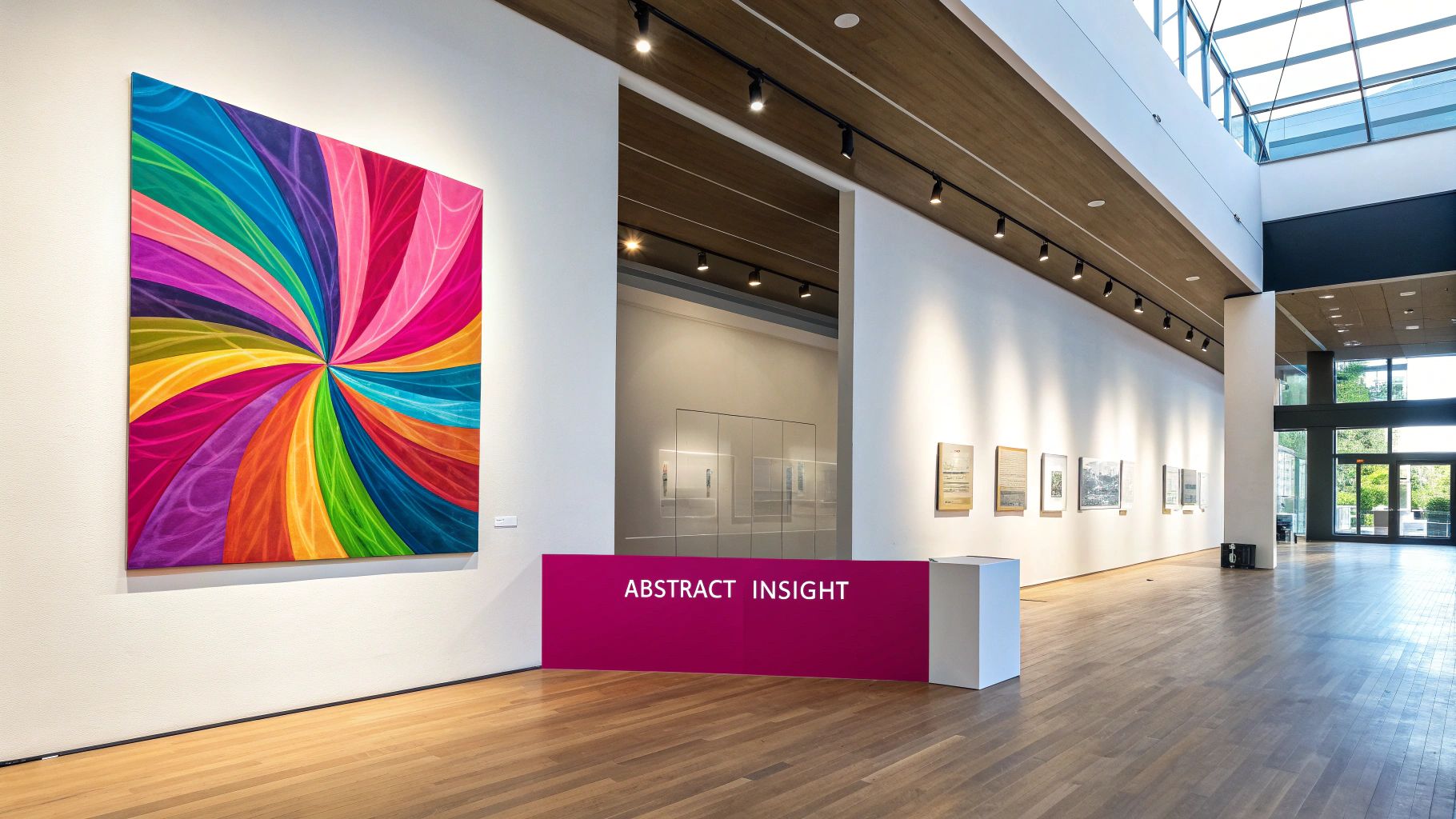
First things first: forget any stuffy rules you think exist for art collectors. The real first step to collecting powerful abstract art is just to look. Look at everything you can get your eyes on. The goal isn't to buy anything right away; it’s to build up a mental catalog of what moves you.
This discovery phase is everything. It’s how you build a collection that feels like you, not just a random assembly of paintings. You’re figuring out what "powerful" really means to you.
Build Your Visual Library
Before you even think about your wallet, immerse yourself in the world of abstract art. I tell new collectors to think of themselves as visual detectives, piecing together clues about their own tastes. It’s fun, there's zero pressure, and it's absolutely crucial for training your eye.
Here are a few practical ways to get started:
- Dive Into Online Galleries: Websites like Artsy and Saatchi Art are treasure troves. You can browse for hours, filtering by style, medium, and price to see an incredible variety of art from all over the globe.
- See Art in the Real World: Nothing—and I mean nothing—beats seeing art in person. Go to local art fairs, gallery openings, and open studio events. This is where you get to see the texture, appreciate the true scale, and feel the presence of a piece.
- Follow Artists on Social Media: Instagram, in particular, is a fantastic place to find contemporary artists. Following creators you're drawn to gives you a daily dose of inspiration and a peek behind the curtain into their creative process.
The single most important tool you have as a new collector is your own curiosity. Let yourself be pulled toward a piece without trying to figure out why. That immediate gut reaction is the most honest feedback you'll ever get.
Start Noticing the Different Styles
As you look at more art, you'll start to recognize different "languages" within the abstract world. Learning to tell them apart helps you put words to what you like, which is incredibly helpful.
For example, do you find yourself drawn to the raw, untamed energy of gestural expressionism? Or do you prefer the crisp lines and satisfying order of geometric abstraction? Maybe it’s the rich, layered depth of mixed media that really grabs you.
Sometimes, understanding an artist's personal story can create a powerful link. Learning the inspiration behind a specific motherhood-focused abstract collection, for instance, can add a whole new layer of meaning to their style. Pinpointing these preferences is a huge step toward finding art that you’ll love having in your life for years to come.
Understanding the Abstract Art Market
Diving into the art market can feel like trying to learn a new language. But once you get a feel for the landscape, you’ll realize it's far more approachable than it first seems. You don't need an insider's pass to start collecting powerful abstract art—just a good sense of direction.
The market is split into two main arenas: the primary and the secondary market. Knowing the difference is one of the first and most important things a new collector can learn.
The Primary Market: Where Art Begins Its Journey
This is where a piece of art is sold for the very first time. Think of it as the art's debut. You're getting in on the ground floor and connecting directly with the art's origin story.
You can engage with the primary market in a couple of ways:
- Buying from Galleries: Galleries are your allies. They discover and represent artists, put on exhibitions, and are a fantastic place to find new talent. A good gallerist is an incredible resource; they can walk you through an artist's portfolio and give you insight into their career.
- Buying Directly from Artists: Thanks to artist websites and social media, you can often buy straight from the source. This gives you a unique chance to connect with the person who made the work, ask them about their process, and understand their vision on a personal level.
Buying on the primary market means you're directly supporting a living artist's career, and you're often getting the work at its most accessible price.
The Secondary Market: Where Art Finds a New Home
This is where art is resold. It’s the world of high-profile auctions at places like Sotheby's and Christie's, but it also includes private sales between collectors.
An artwork's value on the secondary market is shaped by its history—its "provenance." This includes who has owned it, where it's been exhibited, and the artist's overall reputation. While this is where you hear about those headline-grabbing, multi-million-dollar sales, it’s not exclusively for the super-rich.
Key Takeaway: The primary market is about discovery and building relationships with emerging artists. The secondary market offers a chance to acquire works from more established names. Knowing where to look helps you build a smart collection strategy.
The global art market is more vibrant and accessible than ever. While total sales hit around USD 57.5 billion, what’s really interesting for new collectors is that the number of transactions actually grew by 3%. According to the 2024 Art Market Report, much of this growth came from smaller dealers and auctions for works under $5,000.
This data proves you don't need a massive budget to get started. In fact, many of today's most respected collectors began by focusing on emerging artists whose work spoke to them personally.
Before you buy, though, the most important thing is to build your own confidence. You need to trust your eye. For a great starting point, check out our guide on how to understand abstract art. This knowledge is what will empower you to make choices based on a genuine connection, not just market buzz.
Setting a Realistic Budget for Your Collection
Let's talk about money. One of the biggest myths I hear is that you need to be a millionaire to even think about collecting art. That's just not the case. Getting started with powerful abstract art has far less to do with the size of your bank account and much more to do with making smart, informed choices that fit your life.
Think of a budget as your personal roadmap. It turns a vague desire—"I'd love to own some art"—into a concrete, actionable plan. This clarity gives you the confidence to buy what you love without any financial anxiety. The point isn't to spend a fortune; it's to build your collection with intention.
You might be surprised by how many places you can find incredible work. It’s not just about stuffy, high-end galleries anymore.
As you can see, discovery happens everywhere, from bustling local art fairs to curated online platforms. There are accessible entry points for everyone.
Planning for the Full Cost
The price you see on the wall is rarely the final price. To avoid any unwelcome surprises, you need to think about the other costs that come with bringing a piece of art home. These aren't "hidden" fees in a sneaky sense; they're just a standard part of the process that experienced collectors always plan for.
So, what else should be on your radar?
- Framing: A great frame does more than just look good—it protects the artwork. But quality framing is an art in itself, and the cost can range from reasonable to significant depending on the size, materials, and complexity.
- Shipping & Handling: Unless you're buying locally and can carry it home yourself, you'll need to budget for professional packing and insured shipping. This is not the place to cut corners.
- Insurance: Once your collection starts to gain value, you'll want to protect it. Adding an art-specific rider to your homeowner's policy or getting a separate fine art policy is a smart move.
A good rule of thumb is to set aside an extra 10-15% on top of the artwork's price to cover these essentials. This gives you a true picture of your total investment.
A well-planned budget is liberating. It removes the guesswork and empowers you to act decisively when you find a piece you love, because you already know you can afford it.
Finding Your Financial Entry Point
No matter your budget, there are fantastic options out there. The trick is simply knowing where to look. To give you a clearer idea, I've broken down what's possible at different price points.
Sample Budget Tiers for New Art Collectors
| Budget Tier | Typical Price Range Per Piece | Types of Artworks to Target | Where to Look |
|---|---|---|---|
| Emerging Collector | Under $500 | High-quality limited-edition prints (signed), small original works on paper from emerging artists. | Online print shops like Artfully Walls, university MFA shows, local art fairs. |
| Developing Collector | $500 – $2,500 | Original paintings on canvas or paper from promising emerging artists, smaller sculptures. | Emerging artist galleries, online galleries like Saatchi Art, artist-run studios. |
| Committed Collector | $2,500 – $10,000 | Works by mid-career artists with established exhibition records, larger-scale pieces. | Reputable contemporary art galleries, art consultants, select auctions. |
This table shows that you don't have to wait until you have a massive budget to start. You can begin building a meaningful collection right now.
If you're just starting out, limited-edition prints are a brilliant way in. They are created in a set number, often signed by the artist, and give you an affordable way to own work from a creator you admire.
As you get more comfortable, you can move into original works on paper or small canvases by up-and-coming artists. There's a unique thrill in owning a one-of-a-kind piece and knowing you're directly supporting someone's career. Start small, buy what speaks to you, and let your collection grow organically over time.
Finding Your Art and Making Sure It's Real
With a budget set, it's time for the best part: the hunt. This is where you really start to develop your eye for powerful abstract art. Learning where to look and how to make sure a piece is legitimate is what turns you from a casual browser into a smart, confident collector.
Your search can be anything you want it to be. You might spend a quiet evening scrolling through online galleries from your couch, or you could dive into the electric buzz of a packed art fair. Each route gives you a totally different way to connect with art and the people who make it.
Where to Discover Powerful Abstract Art
Finding artists whose work speaks to you is a deeply personal journey. There isn't a secret formula or one "right" place to look. The trick is to just start exploring different avenues and see what clicks. Cast a wide net at first, and then zero in on what truly gets you excited.
Here are a few of the best places I've found to discover new art:
- Online Platforms: Sites like Saatchi Art are fantastic launching pads. You can filter by style, medium, and price, which lets you see a ton of work without any pressure. It's a great way to train your eye right from home.
- Art Galleries: Don't underestimate the power of a good relationship with a local gallerist. These people live and breathe art. They can introduce you to up-and-coming artists and give you the kind of backstory you’ll never find online. Seriously, don't be shy—their entire job is to share their passion with people like you.
- Art Fairs: Local and regional art fairs are discovery goldmines. They cram dozens, sometimes hundreds, of artists and galleries under one roof. It’s an incredible opportunity to see a massive variety of work in person and even talk directly with the artists themselves.
Your best tool is simple curiosity. Ask questions. Talk to gallery owners. Chat with the artists. The stories behind the art are often what forge the strongest connections.
Why Verification Is Non-Negotiable
Okay, you’ve found a piece that stops you in your tracks. What’s next? This next step is absolutely critical: verifying its authenticity. This isn't just about protecting your money; it’s about respecting the artist and building a collection with integrity.
The most important piece of paper you’ll deal with is the Certificate of Authenticity (COA). This is a signed document from the artist or the gallery that confirms the artwork is the real deal. It should list key details like the title, dimensions, medium, and when it was made. My advice? Never buy an original work without one.
Beyond the COA, doing your own homework is what separates the novices from the savvy collectors. It’s not as intimidating as it sounds.
A couple of quick checks can make all the difference:
- Check the Artist’s Track Record: A little digging goes a long way. Does the artist have a consistent history of exhibitions? Have they been written about in art publications or won any awards?
- Look at the Provenance: For any piece that's been owned before (what we call the secondary market), "provenance" is its ownership history. A clear, unbroken chain of ownership adds tremendous value and legitimacy.
These steps give you the confidence to buy, knowing the powerful abstract art you bring home has both personal meaning and real, verifiable value. Don't forget about auction houses, either. They're not just for the ultra-wealthy anymore. While a Jean-Michel Basquiat piece did fetch over $100 million in 2024, auctions are becoming more accessible. They now account for about 30-35% of global art sales and are starting to feature exciting emerging artists. Plus, with new digital bidding options, collectors from anywhere can participate. You can learn more about how the art market is changing on Composition.gallery.
Making Your First Art Purchase
So, you’ve done your homework. You’ve set a budget, explored countless works, and finally, one piece of abstract art has grabbed you and won’t let go. This is it. This is the moment you transition from simply looking to actually owning.
Buying your first piece is a huge thrill. Knowing what to expect during the transaction will help you move forward with confidence, whether you’re in a polished gallery, clicking "bid" online, or standing in the artist's own studio.
How the Deal Gets Done
When you’re ready to commit, the first talk is usually about the price. If you're in a gallery, don't be shy about asking if the price is negotiable. It's not like haggling at a flea market, and big discounts are rare, especially for up-and-coming artists. Still, a gallery might offer a modest 5-10% discount, particularly to welcome a new collector. A polite inquiry never hurts.
Once you’ve settled on a price, you'll get an invoice. Read this document carefully before you pay. It’s not just a receipt; it’s the birth certificate of your artwork's history, its provenance.
Make sure it clearly lists:
- The artist's full name and the title of the work.
- The piece's dimensions, medium, and the year it was created.
- The final price, including any sales tax.
- Separate costs for shipping or framing, if you’ve arranged for them.
This piece of paper is crucial. For a deeper dive into how artists view the collecting process from their side, check out our studio talk with Wiktoria Florek for some fantastic behind-the-scenes insights.
Your first purchase really sets the foundation for your collection. Go into it with equal parts excitement and attention to detail. A transparent, positive transaction builds a great relationship with the artist or gallery—a connection that can be priceless as you continue collecting.
From the Gallery to Your Wall
With the payment sorted, the art is officially yours! Now for the final step: getting it home and finding its perfect spot.
Most galleries can help you arrange shipping with professional art handlers. Yes, it’s an extra cost, but for a piece you love, it’s a small price to pay for the peace of mind that it will arrive in perfect condition.
Once it's home, the real fun starts. The way you frame and display your new piece can completely change its impact.
-
Framing is Key: The right frame should elevate the art, not overpower it. For modern abstract canvases, a simple floater frame is often a perfect choice. It gives the piece a clean, gallery-worthy look without distracting from the work itself.
-
Let There Be (the Right) Light: Good lighting is a game-changer. Keep your art out of direct sunlight, which will bleach the colors over time. Instead, use adjustable spotlights or a picture light with a warm, neutral bulb to really make the artwork sing.
-
Find the Perfect Spot: Think about the flow and sightlines of your room. A good rule of thumb is to hang art so its center is at eye level, which is usually around 57-60 inches from the floor. And give it some breathing room! Don’t clutter the wall with too much else.
This final part is all about making the art a part of your daily life. Every time you walk past it, you’ll be reminded of that initial spark and the exciting journey you took to bring it home.
Last-Minute Questions? Let's Talk Them Through
Even the most well-prepared collector has those nagging "what if" questions pop up right before taking the plunge. It's completely normal. Think of this as clearing up that last bit of fog so you can move forward with confidence and excitement.
Getting these common worries out of the way helps you avoid simple mistakes and makes the whole experience of buying your first piece of abstract art feel a lot less intimidating.
"Am I Allowed to Just Buy What I Like?"
Yes. Absolutely. In fact, you should. This is the golden rule of collecting.
While it’s smart to understand an artist's background and the market, the first and most important test is your own gut feeling. You're the one who will live with this art. It’s going to hang on your wall, and you'll see it every single day. It must be something that moves you, something you genuinely love looking at.
Building a collection that truly reflects who you are starts with trusting your own taste. Trends come and go, but the connection you feel with a piece of art? That's forever.
Above all else, your collection should be a source of joy for you. If a work speaks to you, that's the only seal of approval that matters. Never let anyone make you feel like your taste is wrong.
"What Happens If I Change My Mind Later On?"
It happens! Your eye develops. Your tastes refine. What you’re drawn to as a new collector might be different from what you seek out five years from now. Don't frame this as a mistake—see it as a sign of your growth.
If you find yourself falling out of love with a piece, you aren't stuck with it forever. You’ve got options:
- Give it a new home (in your home). Try moving the art to a different room. Sometimes a new wall or different lighting is all it takes to see it with fresh eyes and fall in love all over again.
- Sell it. The secondary market is a great option. You can consign the piece with a gallery, use an online art marketplace, or even go through an auction house if it’s a particularly valuable work.
- Pass it on. Gifting the artwork to a friend who you know will cherish it, or donating it to a local charity or hospital, is a beautiful way to give the piece a new story.
"Should I Be Buying Prints or Originals?"
There’s no "correct" answer here—it really boils down to your budget and what you want to achieve with your collection.
- Originals are one-of-a-kind. There's nothing quite like owning the actual canvas an artist worked on, complete with all the unique textures and brushstrokes. It’s a direct piece of their creative energy.
- Limited-Edition Prints are a fantastic way to start. They make collecting more accessible and allow you to own a piece by an artist you love for a fraction of the cost of an original. Because they’re produced in a small, fixed number (and often signed by the artist), they still have a special, exclusive feel.
Honestly, most collectors I know started with prints. It's a great way to dip your toes in the water. As your confidence grows and your budget expands, you can then begin acquiring original works. Both paths are equally valid and incredibly rewarding.
Ready to find art that makes you feel something? Discover the powerful, emotionally charged mixed-media works of Wiktoria Florek, an artist whose paintings are energetic portals designed to transform the spaces they inhabit. Find a piece that speaks to your soul and begin your collection today at wiktoriaflorek.com.