
Understanding What Makes Abstract Art Emotional
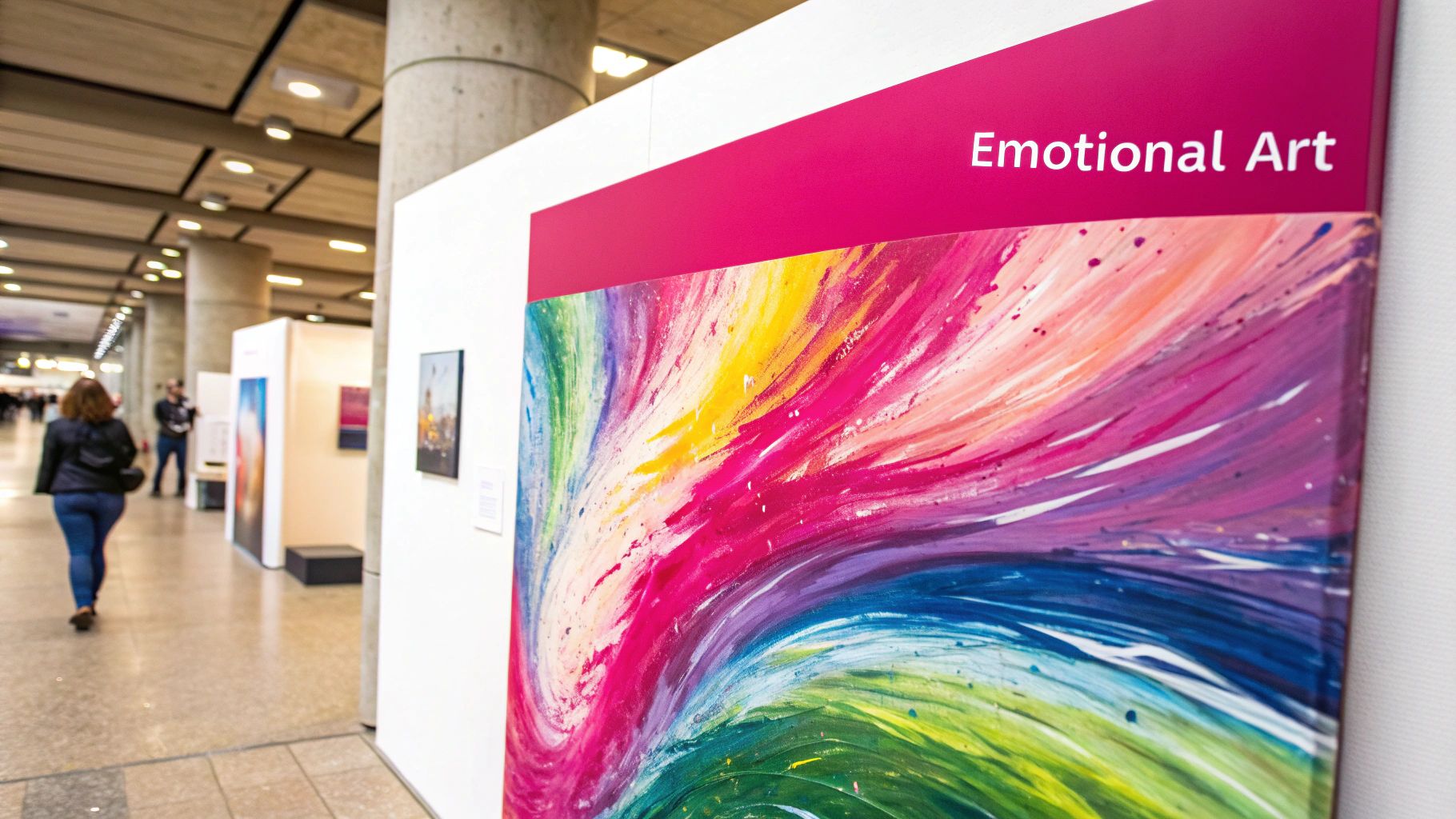
Why can one combination of color and shape move us to tears, while another simply looks like a nice decoration? The answer is found in the unique power of emotional abstract art. While a realistic painting shows you what to see—a person, a landscape, a building—abstract art speaks directly to the part of our brain that feels, not just thinks. It creates a raw, intuitive connection that doesn't rely on a recognizable subject.
Think of it like listening to an instrumental song. A somber cello piece doesn't need words to make you feel melancholic, just as a chaotic splash of vibrant paint doesn't need to depict a specific scene to communicate pure joy or frantic energy. The artist uses visual elements as if they were musical notes. This is why seasoned collectors learn to trust their initial gut feeling; it’s not a random guess, but a genuine emotional reaction to a complex visual language. Learning how to understand the nuances of abstract art is about tuning into this unspoken dialogue.
The Psychology of Visual Triggers
Our bond with an abstract piece is often tied to deep-seated psychological associations. The artist, whether intentionally or by intuition, uses these triggers to shape our experience. The emotional bridge is built with a few key elements:
- Color Combinations: Specific color palettes can bring up certain moods or memories. A wash of soft, muted blues might remind you of a peaceful sunrise, whereas harsh reds and blacks can create a sense of conflict or urgency.
- Texture and Form: The physical surface of the artwork—from thick, sculpted paint to a smooth, glass-like finish—has a powerful effect. Rough textures can feel raw and dynamic, while soft, blended areas feel much more calming.
- Scale and Presence: The size of a painting completely changes its impact. A small, intimate piece might invite you to lean in for quiet reflection. On the other hand, a massive canvas can be a full-body experience, creating an environment that surrounds and almost consumes you.
This immersive quality is becoming more and more important in the art world. In fact, projections indicate that large-scale abstract art is set to dominate contemporary painting trends in 2025 because of its ability to transform an entire room. These oversized works use their sheer size to amplify the emotional weight of their colors and textures, making the act of viewing a memorable event. To see what else is shaping the future of art collections, you can read the full 2025 art market trend report on auroraathena.com. This is why some abstract art stays with you long after you've seen it—it doesn't just show you something; it makes you feel something.
The Hidden Techniques Behind Emotional Impact
The deep feeling you get from a piece of emotional abstract art is rarely a fluke. Artists act like emotional architects, using specific methods to build a particular response in the viewer. They don't just throw paint at a canvas; they make intentional choices about every line, layer, and even the empty space to shape your experience. This isn't about a strict formula but rather about mastering a visual language.
Think of it like a filmmaker who uses camera angles, lighting, and sound to create tension or calm. An abstract artist has a similar toolkit for building feeling. The way a brush moves can suggest either frantic energy or peaceful stillness. Thick, built-up paint can give a sense of history and substance, while thin washes feel lighter and more dreamlike. It's the technical skill behind these decisions that makes a work of art truly moving.
The Power of Color and Contrast
Color is one of the most effective tools an artist has. They strategically use color temperature—the sense of warmth or coolness in a hue—to set the emotional tone. Warm reds and yellows often feel like they are coming toward you, suggesting passion and energy. In contrast, cool blues and greens tend to recede, creating a feeling of calm or distance. This is a fundamental concept in the psychology of art. The visualization below shows some common color-emotion connections.
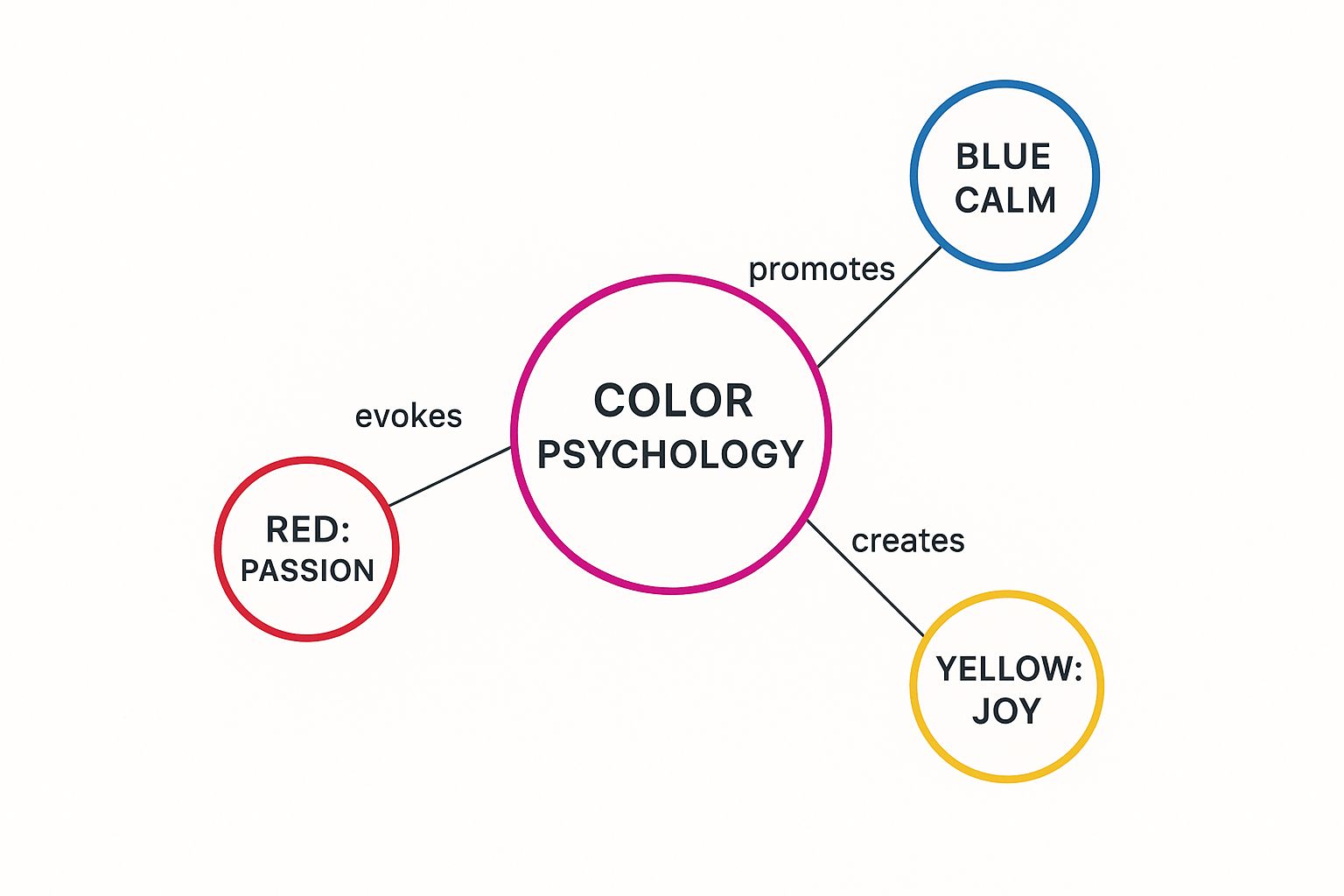
This simple chart shows how basic colors can act as emotional shortcuts for the artist. But individual colors are only part of the story. Contrast is also essential. The dynamic relationship between light and dark, rough and smooth textures, or bright and subdued areas creates focal points and visual excitement.
To help you better understand how artists manipulate these elements, the following table breaks down common techniques and their intended emotional effects.
| Technique | Visual Effect | Emotional Response | Notable Artists |
|---|---|---|---|
| Impasto | Thick, visible layers of paint that create a three-dimensional texture. | Conveys weight, intensity, passion, or inner turmoil. The texture adds a raw, physical presence. | Vincent van Gogh, Willem de Kooning |
| Color Field | Large, flat areas of solid color that dominate the canvas. | Creates an immersive, meditative, or overwhelming experience. The focus is on the pure power of color. | Mark Rothko, Barnett Newman |
| Action Painting | Energetic, spontaneous application of paint through drips, splashes, and gestures. | Suggests speed, freedom, chaos, or a release of subconscious energy. | Jackson Pollock, Franz Kline |
| Sfumato/Washes | Soft, blurred transitions between colors and tones, often using thin, transparent layers. | Elicits a sense of calm, mystery, dreaminess, or subtlety. | Helen Frankenthaler, Morris Louis |
This table shows that an artist's choice of technique is a deliberate act designed to provoke a specific feeling. A textured impasto surface feels dramatically different from a smooth, meditative color field.
Strategic Use of Space and Composition
What an artist leaves out is just as important as what they put in. Negative space—the empty areas around the main subjects—gives your eyes a place to rest and your mind space to interpret. A crowded composition can feel chaotic and intense, which might be exactly what the artist wants you to feel. On the other hand, generous negative space can suggest serenity and focus.
The real emotional dialogue starts in the relationship between the shapes, the colors, and the space they inhabit. By learning to spot these techniques, you can move from just looking at art to understanding how it is actively working on your emotions.
Artists Who Are Redefining Emotional Expression
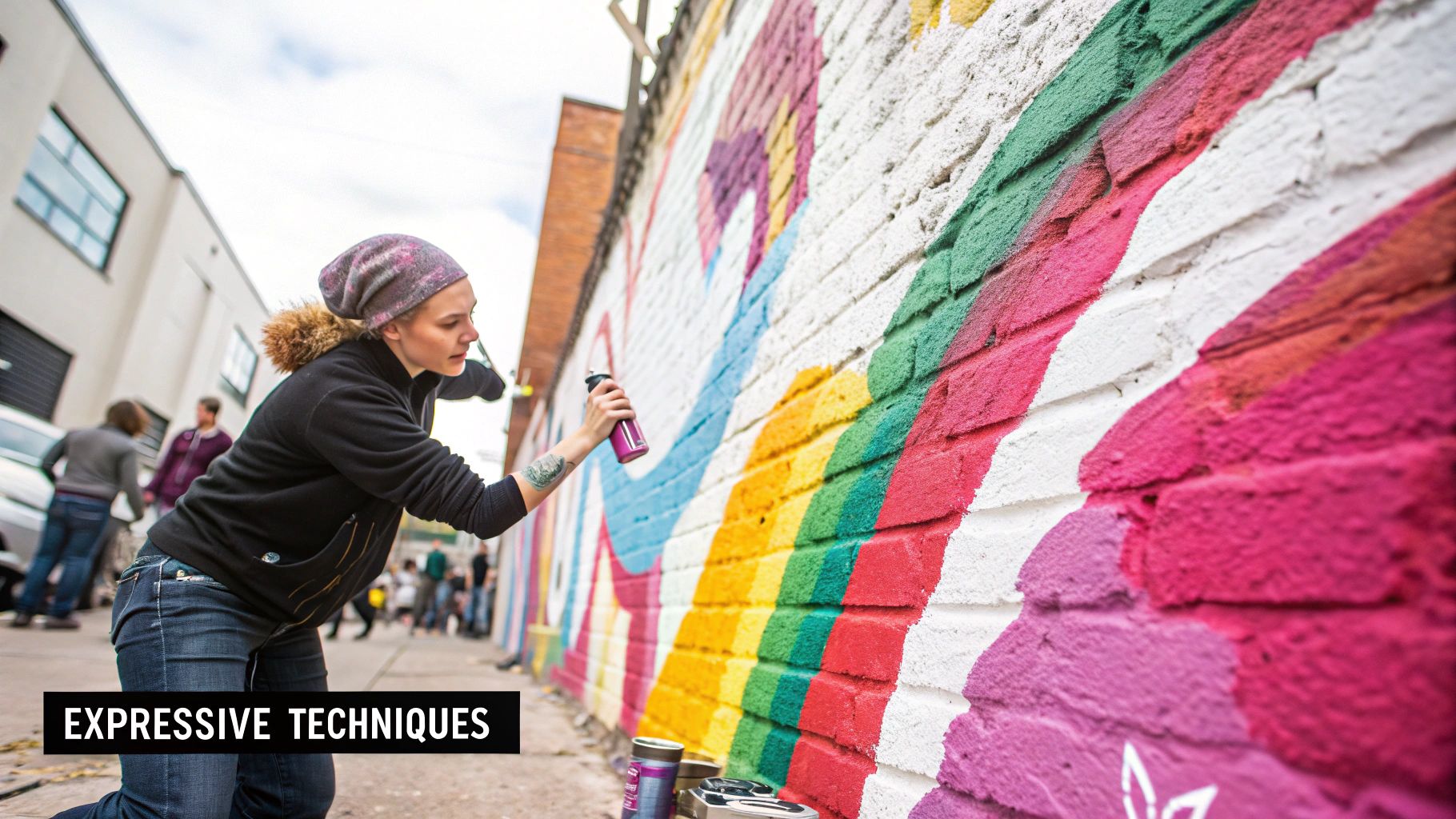
While techniques offer the "how," it is the artist's personal story and vision that gives a canvas its soul. The world of emotional abstract art is constantly being shaped by creators who translate their lived experiences into their work. These artists do more than just paint; they convert complex feelings like sorrow, joy, and self-reflection into a visual language that connects directly with the viewer. Their backgrounds, philosophies, and emotional journeys are the invisible ink that gives each piece its depth.
For these creators, the canvas becomes a diary, a confessional, or a stage for exploring their inner world. They understand that emotion isn't always neat or logical—it's often messy, layered, and full of contradictions. This insight allows them to produce art that resonates on a deeply personal level, helping collectors feel seen and understood. The most powerful artists are those whose authenticity you can feel in every single brushstroke.
Wiktoria Florek: An Architect of Emotion
A compelling example of this practice is the Polish abstract artist Wiktoria Florek. Living near Barcelona, Florek creates work that embodies the idea of art as a channel for internal change. Her large, mixed-media pieces are not just decorative objects; she describes them as "energetic portals" intended to trigger deep emotional and spiritual responses. Her prior experience in economics gives her a distinct viewpoint, helping her connect structured thinking with pure, intuitive creation.
Florek's creative process is a dynamic interplay between deliberate action and spontaneous discovery. She uses a blend of materials to construct her compositions:
- Layered Textures: She mixes acrylics with textural mediums to build surfaces that feel aged and profoundly resonant.
- Symbolic Elements: Materials like gold leaf are added not only for their visual appeal but for their symbolic link to divinity and inner light.
- Intuitive Movement: She allows gestural marks and bold forms to arise from a place of subconscious feeling rather than meticulous planning.
This method produces artworks that are simultaneously chaotic and graceful, strong and calm. For collectors, owning a piece by an artist like Florek is about more than just bringing a painting into their home; it's about engaging with a piece of the artist's own emotional and spiritual narrative. Her work, which is part of private collections across Europe, demonstrates how a unique artistic voice can broaden our understanding of what emotional expression can be.
You can learn more about her creative philosophy and see her captivating collections on her official site, Wiktoria Florek Mixed Media Abstract Painter. By getting to know an artist’s personal story, we can form a much deeper connection to their art.
Market Dynamics and Smart Collecting Strategies
Grasping the emotional power of abstract art is one side of the coin; navigating its energetic market is the other. The demand for art that strikes a deep emotional chord isn't just a small trend—it's a major and expanding movement in the art world.
This growing interest shows up in real market numbers. For instance, recent analysis shows that between 2023 and 2024, total auction sales in the abstract art category leaped by over 30% compared to the previous year. This significant growth signals a clear shift: collectors are increasingly seeking the profound, personal connections that emotional abstract art offers. You can see more data on this trend by reading a full analysis of recent market shifts on manatee-snail-dyfs.squarespace.com.
With this surge in demand, collectors need effective strategies to build a collection that is both personally meaningful and financially sound. It’s less about chasing what's popular and more about finding works with enduring emotional and monetary value.
Identifying Emerging Artists and Value
The secret to smart collecting often lies in spotting talented emerging artists before their work becomes widely known. A good acquisition isn't a blind gamble; it's a decision based on recognizing an artist's unique perspective, technical ability, and consistent creative output. Here are a few things to look for that suggest strong potential:
- A Distinct Artistic Signature: Seek out artists with a clear, recognizable style that feels genuine and not like a copy of someone else's work. Their art should communicate a consistent emotional viewpoint across their pieces.
- Growing Recognition: Keep an eye on artists who are being featured in group exhibitions, mentioned in art magazines, or bought by respected collectors. These are signs that their work is starting to get noticed by the art community.
- Personal Connection: Ultimately, the most valuable piece you can own is one that moves you. This emotional bond is what provides lasting fulfillment, no matter how the market changes.
Evaluating Price and Building Your Collection
Figuring out a fair price for a piece of art involves some homework. Compare the artist’s pricing with others who are at a similar point in their careers. Consider their sales history, the size and detail of the artwork, and the standing of the gallery or platform where it's being sold.
Building a collection is a journey that mixes passion with practicality. It’s about discovering pieces that not only resonate with you but also stand as thoughtful purchases. For anyone looking to learn more, Wiktoria Florek offers valuable insights on how to start collecting art in her studio talks. A great collection is built one emotionally powerful and well-researched piece at a time.
Building Your Personal Connection to Abstract Art
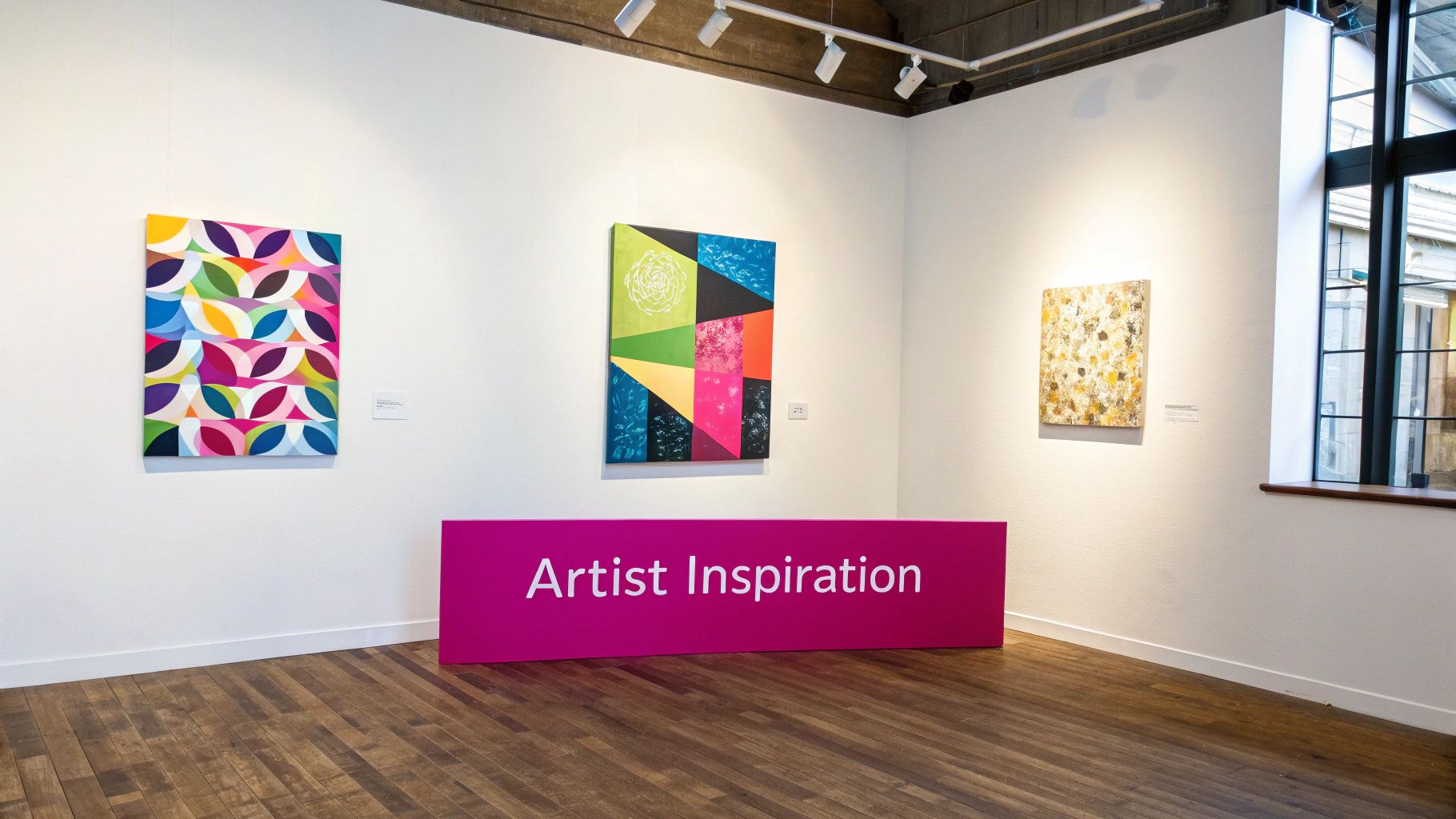
It’s a common feeling: you’re standing in front of an abstract painting, and you feel… lost. Many people believe there's a secret code to crack or a single correct answer to find. This can be intimidating, but building a personal response to emotional abstract art is more straightforward than it seems. The first step is to change your objective from trying to "understand" it to simply "experiencing" it.
Think about listening to instrumental music or smelling a complex perfume. You don’t need a degree in music theory to feel melancholy in a cello solo, nor do you need to be a professional perfumer to find a scent refreshing. Your reaction is instant, personal, and completely valid. The same is true for abstract art; your gut feeling is the most important piece of information you have.
Trusting Your Emotional Compass
Experienced art collectors learn to trust their instincts above all else. They know that a piece's real worth is found in the genuine emotional conversation it starts. Instead of asking, "What am I supposed to be seeing?" they ask themselves, "How is this making me feel?" This simple shift from intellectual problem-solving to emotional awareness is everything.
Your personal history, memories, and unique personality all influence your reaction. This is what makes your connection to a piece of art special and explains why a work that resonates deeply with you might leave someone else unmoved. For instance, an artist’s work often reflects their own life journey. You can see this in the powerful collections of Wiktoria Florek; just explore her "My Motherhood" collection to see how personal experiences become compelling visual stories.
Practical Steps to Deepen Your Connection
Creating this relationship with art requires a bit of time and focus. While there are no shortcuts, the journey itself is incredibly rewarding. Here are a few practical ways to develop your visual vocabulary and build confidence in your own judgment:
- Give It Time: Don't just glance and move on. Spend at least a full minute with the artwork. Let your eyes wander across the canvas without a specific goal. Pay attention to which colors, shapes, or textures capture your interest.
- Articulate Your Feelings: Try to name your emotional response, even if the words seem basic. Do you feel calm, energized, confused, or nostalgic? Putting words to your reaction helps solidify the connection you're making with the piece.
- Imagine a Story: Allow your mind to create a narrative for the artwork. What might be happening in the scene? What could have happened just before this moment, and what might come next? This creative exercise helps you form a personal bond with the art.
Your Practical Guide to Collecting Emotional Abstract Art
Making the move from admiring emotional abstract art to owning it is a thrilling journey. This guide is designed to help you with the real-world steps of building a collection that feels uniquely yours. It’s about more than just finding a pretty picture; it involves setting a budget, identifying trustworthy sources, and understanding what it means to care for fine art. By learning these basics, you can make sure every piece you buy brings you lasting joy.
Starting a collection is best done with a clear plan. The path you take will vary greatly depending on your budget and where you decide to purchase art. Making smart decisions from the start helps you sidestep common mistakes and build a collection that aligns with both your personal taste and financial goals. The goal is to match your resources to the right places to buy.
Finding Art That Fits Your Budget and Goals
Building a meaningful collection doesn't require a massive budget. Your price range will naturally point you toward different kinds of artworks and sellers, each with its own advantages and things to consider.
To help you figure out where to start, the table below outlines common entry points into the art market. It offers a practical breakdown of different collecting approaches based on budget.
Emotional Abstract Art Collecting: Budget and Source Comparison
A practical breakdown of different collecting approaches, budget ranges, and acquisition sources for emotional abstract art
| Budget Range | Acquisition Source | Artwork Type | Investment Potential | Risk Level |
|---|---|---|---|---|
| $500 – $2,000 | Direct from Artist, Online Galleries, Art Fairs | Original Works on Paper, Small Canvases, Limited Edition Prints | Moderate | Low to Moderate |
| $2,000 – $10,000 | Emerging Artist Galleries, Established Online Platforms | Medium to Large-Sized Original Paintings | Moderate to High | Moderate |
| $10,000+ | Established Art Galleries, Reputable Auction Houses | Major Works by Mid-Career or Established Artists | High | Moderate to High |
As you can see, starting your collection by buying directly from an artist or through an online gallery is often a lower-risk way to get original work. This approach can also help you build a personal connection with the creator, adding another layer of meaning to your collection.
Key Considerations for Every Collector
No matter your budget, a few core principles are always important. Authenticity is non-negotiable; always request a certificate of authenticity signed by the artist or the gallery. You also need to think about the logistics of owning the art.
Consider where you'll display the work, making sure to protect it from direct sunlight and high humidity, which can cause damage over time. For more valuable pieces, investing in art insurance is a smart move to protect against potential damage or theft.
Ultimately, the most critical factor is the artwork’s emotional connection with you. A great collection is built on pieces you truly love and feel a bond with. Trust your gut and focus on buying art that speaks to you personally—this is the secret to building a collection that will bring you happiness for many years.
Key Takeaways for Your Abstract Art Journey
Your journey into the world of emotional abstract art is a deeply personal one, combining intellectual curiosity with a heartfelt connection. As you move forward, whether making your first purchase or adding to a growing collection, remember this is about building a relationship—not just with the art, but with your own emotional world. The most insightful collectors are those who pair passion with knowledge, trusting their intuition while making well-reasoned choices.
This final section brings together our discussion into a clear guide. Think of these takeaways as a compass, helping you build confidence and find pieces that will bring meaning to your life for years to come.
Trust Your Instincts, Then Do Your Homework
The most reliable sign that a piece is right for you is the immediate emotional pull. Does it make you feel something? Does it capture and hold your attention? This gut reaction is your most valuable tool. But emotion alone doesn't make for a smart acquisition. Once a piece has your heart, it's time to use your head.
Try this two-step process:
- Feel First: Let yourself connect with the artwork on a purely emotional level. Notice how its colors, textures, and forms affect your mood. This connection is the true foundation of a meaningful collection.
- Research Second: Look into the artist's background, their creative philosophy, and their standing in the art market. Examine their sales history and see how their prices compare to similar artists. This step transforms an emotional impulse into a confident decision.
Actionable Steps for Confident Collecting
Building a collection is an active, engaging process. It’s not about waiting for the perfect piece to find you, but about actively seeking out art and artists that speak to you. Here is a simple checklist to guide you:
- Visit and View: Make time for galleries, art fairs, and open studio events. Experiencing art in person is completely different from seeing it online. Pay attention to how a work's scale, texture, and physical presence impact you.
- Build Relationships: Don't hesitate to talk with gallery owners and the artists themselves. Ask about their process, their inspiration, and their vision. These conversations can add incredible depth to your appreciation.
- Start Small: You don’t have to buy a massive canvas to begin your collection. Original works on paper or smaller pieces by emerging artists are excellent starting points. A budget of $500 – $2,000 can often secure a beautiful, authentic piece from a promising artist.
Ultimately, your journey is about discovering art that makes your life richer. It’s about finding those special works that feel like they were created just for you.
To see how a true visionary channels emotion into her craft, explore the powerful and energetically charged collections of Wiktoria Florek. Discover art that speaks to your soul on wiktoriaflorek.com.