
Unlocking the World of Collectible Abstract Paintings
This listicle explores six collectible abstract paintings, offering strategic insights for both seasoned collectors and those just beginning their art acquisition journey. We'll analyze why these specific works have become so valuable, going beyond simple descriptions to uncover the underlying factors driving their market performance.
What makes an abstract painting collectible? More importantly, how can you identify an artist with future potential? We'll dissect what makes masterpieces by artists like Jackson Pollock and Mark Rothko so compelling to the art market. We'll explore the stylistic innovations and artistic narratives that contribute to their enduring value.
This analysis goes beyond aesthetics. We'll delve into the market mechanics, examining how specific techniques and artistic choices impact an artwork's investment potential. You'll learn to recognize key characteristics that signal a strong investment in the abstract art world. By understanding the "why" behind these successful works, you can develop a sharper eye for collecting and a deeper appreciation for the forces shaping the market. Prepare to uncover actionable strategies for navigating the exciting world of collectible abstract paintings.
1. Jackson Pollock's Drip Paintings
Jackson Pollock's drip paintings revolutionized abstract expressionism and remain highly collectible. Created primarily between the late 1940s and early 1950s, these works utilize his signature "action painting" technique. This method involves pouring, dripping, and flinging paint onto a canvas laid horizontally on the floor. Pollock's process rejected traditional brushstrokes, favoring a dynamic interplay of color, movement, and layered textures. The resulting works are visually arresting and continue to fascinate collectors. Their enduring appeal lies in their unique aesthetic and the revolutionary process behind their creation. This makes them coveted pieces within the broader category of collectible abstract paintings.
Understanding Pollock's Impact
Pollock's drip paintings mark a pivotal shift in art history. They moved away from representational art towards a focus on the artist's gesture and the act of creation itself. This dynamic energy, coupled with complex compositions, distinguishes Pollock's work and solidified his position as a key figure in Abstract Expressionism. This artistic innovation dramatically influenced subsequent generations of artists and cemented his paintings as highly collectible. The ongoing fascination with his artistic process contributes to their sustained value.
Notable Examples and Market Performance
Several of Pollock's drip paintings have achieved record-breaking prices, demonstrating their investment potential. No. 5, 1948 famously sold for $140 million in 2006, setting a benchmark for contemporary art at the time. Blue Poles, acquired by the National Gallery of Australia for $2 million in 1973, became a national treasure and further solidified Pollock's global recognition. Other significant works, such as Convergence, housed at the Albright-Knox Art Gallery, showcase the range and depth of his drip technique. Learn more about Jackson Pollock's Drip Paintings. These landmark sales illustrate the consistent desirability of Pollock's works for serious collectors.
The following infographic visualizes the market value range of Pollock's drip paintings, comparing entry-level, top-tier, and record auction prices.
As the chart illustrates, the value of Pollock’s work spans a wide range, peaking with the record-breaking sale of No. 5, 1948. This data underscores both the investment potential and the varying accessibility of owning a Pollock, depending on budget and collecting goals.
Collecting Strategies and Tips
For those interested in collecting Pollock's drip paintings, several key considerations can guide the process:
- Authentication and Provenance: Focus on works with clear and verifiable provenance, ideally accompanied by documentation from the Pollock-Krasner Foundation. Authentication is paramount in ensuring a piece's legitimacy and value.
- Entry-Level Collecting: Smaller works on paper, or studies related to larger paintings, can offer more accessible entry points for new collectors.
- Preservation: Proper storage is essential. Ensure climate-controlled environments and UV protection to preserve the long-term integrity of these valuable works.
By understanding the market dynamics, the importance of authentication, and the options for entry-level collecting, aspiring collectors can confidently navigate the world of Pollock's drip paintings. These iconic works not only offer aesthetic richness but also represent a significant investment in art history.
2. Wassily Kandinsky's Compositions
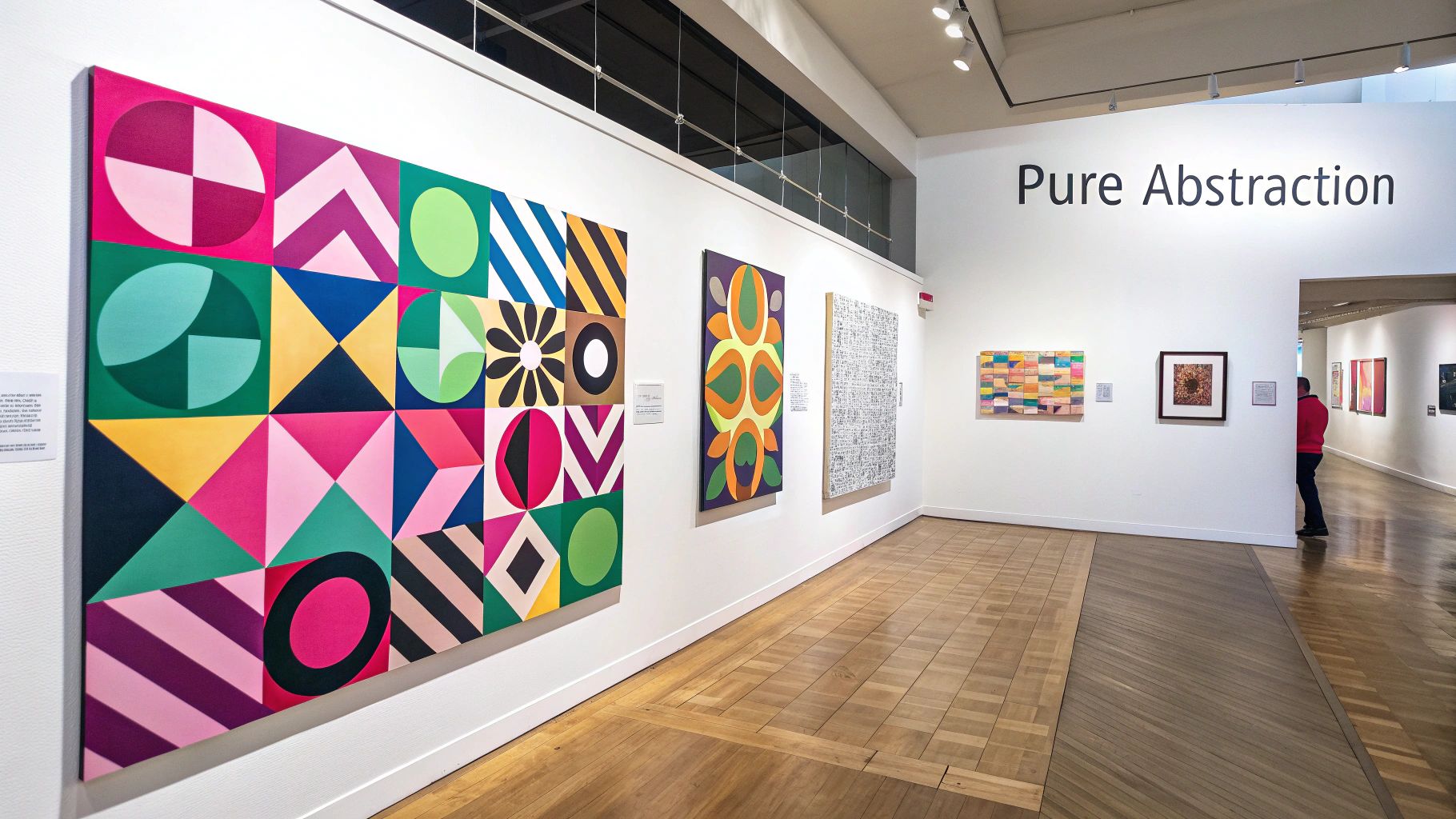
Wassily Kandinsky's Compositions series revolutionized art, marking a pivotal moment in the transition to abstraction. Created between 1910 and 1939, these works are considered among the first purely abstract paintings in Western art. Kandinsky believed that abstract art could convey spiritual and emotional content through color, form, and line, without relying on representational elements. His groundbreaking approach redefined painting and continues to influence artists today. These paintings are not only aesthetically powerful but also historically significant, securing their place as highly collectible abstract paintings.
Understanding Kandinsky's Impact
Kandinsky's exploration of non-representational art was truly innovative. He sought to create a visual language that communicated directly with the soul, using color and form as its vocabulary. This radical departure from traditional painting paved the way for abstract expressionism and other modern art movements. His theoretical writings, including Concerning the Spiritual in Art, further solidified his influence on the development of abstract art. Learn more about Wassily Kandinsky's Compositions.
Notable Examples and Market Performance
Kandinsky's Compositions are highly sought after by collectors. Composition VIII (1923), housed in the Guggenheim Museum, exemplifies his mature style, with dynamic geometric shapes and vibrant colors. Composition VII (1913), located in the Tretyakov Gallery, Moscow, is another significant work, showcasing the artist's early exploration of abstraction. Composition X (1939) demonstrates a further evolution of his style, utilizing biomorphic forms and a more refined palette. These key works illustrate the breadth and significance of the Compositions series within the broader art market.
Collecting Strategies and Tips
For those interested in collecting Kandinsky's Compositions, careful consideration is essential. Authenticity is paramount; verifying provenance through established sources like the Kandinsky catalogue raisonné is crucial. While major Compositions can be difficult to acquire due to their rarity and institutional ownership, smaller abstract works or studies offer more accessible entry points. Exploring works from different periods of Kandinsky's career can provide insight into his stylistic evolution. Finally, studying Kandinsky's theoretical writings offers a deeper understanding of the concepts and philosophies underpinning his revolutionary approach to art.
3. Mark Rothko's Color Field Paintings
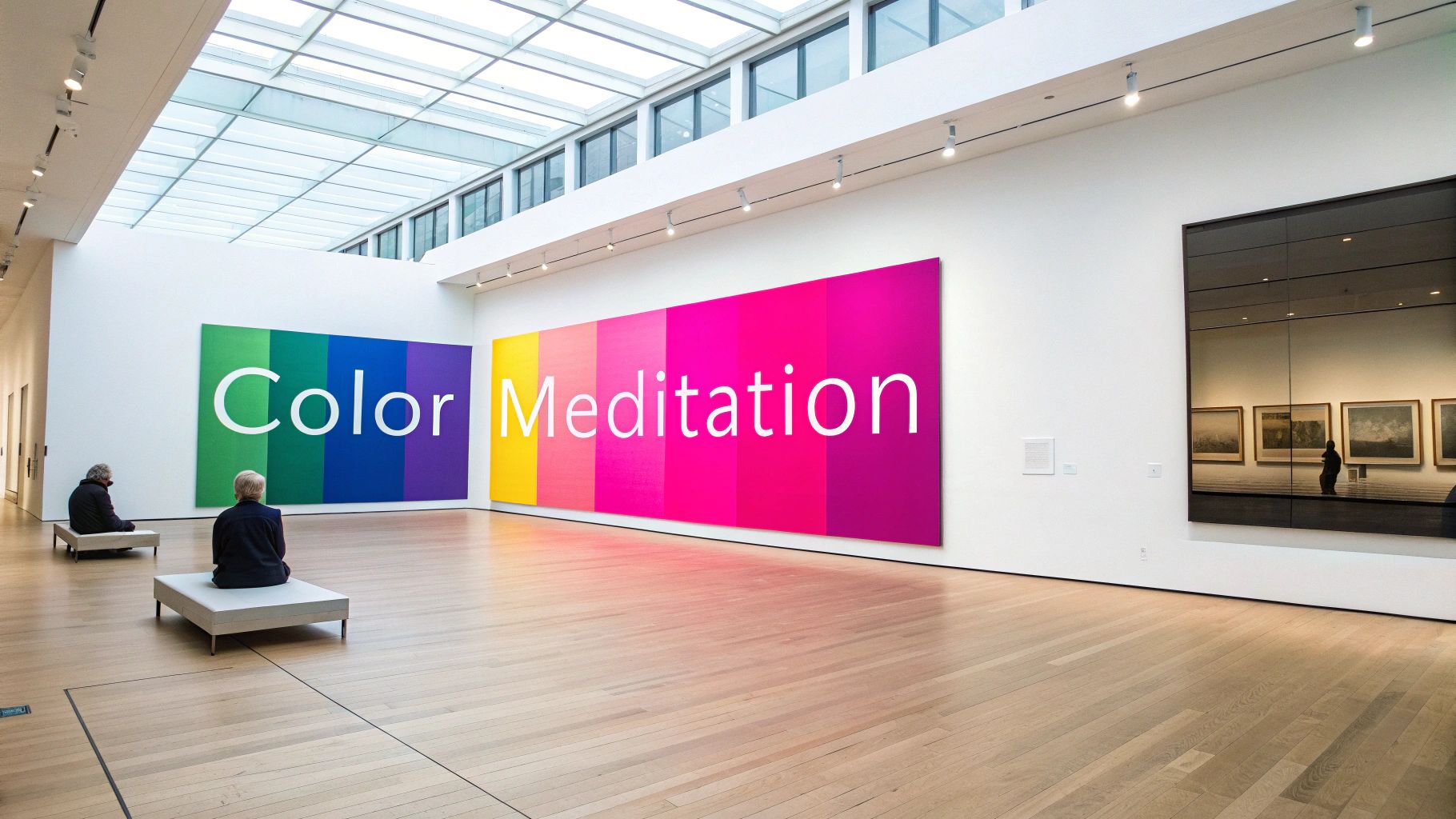
Mark Rothko's mature color field paintings, primarily from the 1950s and 1960s, represent a pinnacle of American Abstract Expressionism and color field painting. These works feature large rectangles of color that appear to float on the canvas, creating a sense of depth and luminosity. Rothko's intention was to evoke profound emotional and spiritual responses in the viewer through carefully orchestrated color relationships and the sheer scale of the canvases. These contemplative works invite viewers to immerse themselves in the subtle interplay of hues and experience a sense of transcendence. His distinctive style, characterized by its emotional depth, has cemented these works as highly collectible abstract paintings.
Understanding Rothko's Impact
Rothko moved away from traditional representational art, focusing instead on the evocative power of pure color and form. His paintings encourage introspection and a personal connection with the artwork. This emphasis on emotional and spiritual experience differentiates Rothko's work within Abstract Expressionism and contributed to his widespread influence. Learn more about Mark Rothko's Color Field Paintings. His innovative approach continues to resonate with collectors who value the contemplative nature of his art.
Notable Examples and Market Performance
The market performance of Rothko's color field paintings reflects their significance in art history and their desirability among collectors. Orange, Red, Yellow sold for a staggering $86.9 million in 2012. No. 6 (Violet, Green and Red) achieved $75 million in 2014. These impressive figures highlight the investment potential of Rothko's works. The Rothko Chapel in Houston, housing a series of 14 monumental paintings, further exemplifies the profound impact and enduring legacy of his art. These examples demonstrate the consistent demand for Rothko's paintings and their status as blue-chip investments in the art market.
Collecting Strategies and Tips
For those interested in collecting Rothko's color field paintings, careful consideration is key. Authentication is crucial, particularly given the complexity of his technique and the existence of forgeries. Consulting the Rothko authentication board is essential. Understanding the spiritual dimension of Rothko's work enriches the collecting experience. Proper lighting is vital for preservation, avoiding direct sunlight to protect the delicate pigments. Smaller works or paintings on paper offer more accessible entry points for new collectors. These strategies will allow aspiring collectors to engage with Rothko's impactful color field paintings.
4. Willem de Kooning's Abstract Expressionist Works
Willem de Kooning's abstract expressionist paintings, spanning from the 1940s to the 1980s, represent a powerful fusion of figuration and abstraction. His signature style, characterized by gestural brushwork and dynamic compositions, features aggressive paint handling, complex layering, and a unique approach to form. These elements not only distinguish his work but also significantly influenced generations of artists. This enduring impact positions de Kooning's paintings among the most sought-after collectible abstract paintings.
Understanding de Kooning's Impact
De Kooning's work stands out within Abstract Expressionism for its insistent dialogue between recognizable forms, often the human figure, and pure abstraction. His "Women" series, while controversial at the time, exemplifies this tension. The paintings present fragmented and distorted female figures, pushing the boundaries of representation. This exploration of form and the raw energy conveyed through his brushwork cemented de Kooning's place as a crucial figure in the movement. His constant experimentation and evolution as an artist contribute to the continued interest and value of his work.
Notable Examples and Market Performance
De Kooning's paintings have achieved remarkable prices in both public auctions and private sales. Interchange, a prime example of his abstract landscape style, sold for a staggering $300 million in a private sale in 2015. Woman III, from his iconic "Women" series, fetched $137.5 million in 2006. Untitled XXV, showcasing his later, more abstract style, sold for $66.3 million in 2016. These sales figures underscore the substantial investment potential of de Kooning's works and their appeal to high-end collectors.
Collecting Strategies and Tips
For collectors interested in acquiring de Kooning's work, several strategies can be beneficial:
- Focus on Peak Periods: Works from the 1940s to the 1960s are generally considered his most important and therefore tend to command higher prices.
- Authentication is Key: Due to the value and complexity of his oeuvre, verifying authenticity through the Willem de Kooning Foundation is crucial.
- Entry-Level Options: Drawings and works on paper offer more accessible entry points for those beginning to collect de Kooning.
- Stylistic Periods: Familiarize yourself with de Kooning's various stylistic periods, from his early figuration to his later, more abstract works, to inform your collecting decisions.
By understanding the nuances of de Kooning's artistic journey, the importance of authentication, and the potential investment value, collectors can strategically navigate the market for these highly desirable abstract expressionist masterpieces.
5. Piet Mondrian's Neoplasticism Works
Piet Mondrian's mature Neoplasticism paintings, primarily from the 1920s-1940s, represent a revolutionary approach to abstract art and remain highly collectible. These works are instantly recognizable for their strict geometric compositions, characterized by grids of horizontal and vertical black lines intersecting and filled with blocks of primary colors (red, yellow, and blue) along with white, gray, or black. This highly reductive style aimed for a "universal" aesthetic language, expressing a harmonious balance. The resulting works, with their iconic modernist aesthetic, have significantly influenced modern design, architecture, and art. They continue to captivate collectors for their timeless appeal and historical significance.
Understanding Mondrian's Impact
Mondrian's Neoplasticism paintings mark a radical departure from traditional art. They reject representation and embrace pure abstraction, seeking to express a spiritual harmony through the relationships between lines, colors, and forms. This pursuit of a universal aesthetic, combined with his involvement in the De Stijl movement, made Mondrian a pivotal figure in the development of abstract art. His innovative approach profoundly impacted subsequent artistic movements and solidified his works as highly collectible. This enduring influence on art and design contributes to their sustained value.
Notable Examples and Market Performance
Several of Mondrian's Neoplasticism works are housed in prestigious museums globally and have achieved significant prices at auction. Composition No. 10 sold for $50.6 million in 2022, illustrating the enduring market demand for his paintings. Composition with Red Blue and Yellow, held at the Tate Modern, exemplifies his signature grid style and use of primary colors. Broadway Boogie Woogie, residing at the Museum of Modern Art, showcases a later evolution of his style, incorporating more dynamic rhythms and reflecting the energy of New York City. These prominent examples underscore the consistent desirability of Mondrian's works among collectors and museums alike.
Collecting Strategies and Tips
For those interested in collecting Mondrian's Neoplasticism works, several key considerations are essential:
- Understanding the Evolution: Study the evolution of Mondrian's style from his earlier representational landscapes to his mature abstract works. This knowledge can inform purchasing decisions and broaden collecting options.
- Consider Early Works: Earlier landscapes or transitional pieces can offer more accessible entry points for new collectors while providing insights into his artistic development.
- Verification and Provenance: Authenticating Mondrian works is crucial. Consult the Mondrian catalogue raisonné and seek expert advice to verify provenance and ensure a piece's legitimacy.
- De Stijl Context: Understand the broader context of the De Stijl movement and its influence on Mondrian's work to appreciate its historical significance and artistic value.
By understanding Mondrian's artistic journey, the importance of authentication, and exploring different collecting avenues, aspiring collectors can confidently navigate the market for these highly collectible abstract paintings. These iconic works not only offer aesthetic richness and historical depth but also represent a significant investment in 20th-century art.
6. Cy Twombly's Gestural Abstractions
Cy Twombly's gestural abstractions represent a unique fusion of drawing, painting, and writing. Created primarily from the 1950s through the 2000s, these large-scale works often incorporate references to classical mythology, poetry, and personal experiences. Twombly developed a distinctive visual language using scribbled lines, color washes, and incorporated text elements. His work bridges the gap between Abstract Expressionism and contemporary art, making his pieces highly collectible abstract paintings.
Understanding Twombly's Impact
Twombly's work stands apart through its raw, emotional energy and intellectual depth. His gestural abstractions move beyond pure abstraction, incorporating layers of meaning derived from literature, history, and personal reflection. This combination of emotional intensity and intellectual engagement makes his work highly sought after by collectors who value both aesthetic power and conceptual richness. His influence on subsequent generations of artists has solidified his position as a key figure in late 20th and early 21st-century art. This impact contributes directly to the collectibility of his work.
Notable Examples and Market Performance
Twombly's works have consistently performed well in the art market. Untitled (New York City), a 1968 painting, sold for $70.5 million in 2015. This demonstrates the strong investment potential of his pieces. The Leda and the Swan series, featuring interpretations of the Greek myth, are held in major museum collections worldwide. His iconic Blackboard paintings, featuring childlike scribbles on gray backgrounds, have also gained significant recognition and are housed in prestigious institutions. These examples highlight the breadth and depth of Twombly's oeuvre and its appeal to both private collectors and major museums.
Collecting Strategies and Tips
For those interested in collecting Twombly's gestural abstractions, careful consideration and research are crucial.
- Classical and Literary Knowledge: Familiarize yourself with the classical references and literary sources that inform Twombly's work. This understanding can enhance appreciation for the layers of meaning embedded within his art.
- Entry-Level Options: Consider works on paper or smaller paintings, which can provide more accessible entry points for new collectors. These works often retain the essential elements of Twombly's style and offer a starting point for building a collection.
- Authentication: It is essential to verify authenticity through the Cy Twombly Foundation. Due to the unique nature of his work, authentication is paramount to ensure the piece's legitimacy and protect your investment.
- Study the Series: Twombly's work is often grouped into series or periods. Understanding these distinctions can be invaluable in appreciating the evolution of his artistic practice and selecting pieces that resonate with your collecting goals.
By considering these factors, collectors can navigate the world of Twombly's gestural abstractions with confidence. These works represent not only a significant investment but also an opportunity to acquire pieces of art history that embody emotional power and intellectual depth.
Key Features Comparison of 6 Abstract Painting Styles
| Artist & Style | Implementation Complexity 🔄 | Resource Requirements ⚡ | Expected Outcomes 📊 | Ideal Use Cases 💡 | Key Advantages ⭐ |
|---|---|---|---|---|---|
| Jackson Pollock's Drip Paintings | Moderate – Dynamic layering and drip technique requiring skillful control | High – Large canvases, multiple paint layers, specialized materials | High – Recognizable energetic abstract works with texture and depth | Collectors seeking pioneering Abstract Expressionism; museums valuing historic pieces | Strong market demand and investment potential; unique technique; museum-quality pieces |
| Wassily Kandinsky's Compositions | High – Pure abstraction with complex color theory and symbolism | Moderate – Requires mastery of abstract forms and color symbolism | High – Emotionally and spiritually charged abstract works | Intellectual collectors and institutions interested in early abstract art foundations | Deep theoretical grounding; strong scholarship and consistent market interest |
| Mark Rothko's Color Field Paintings | Moderate – Large-scale canvas with subtle color gradations | High – Requires precise color layering and controlled lighting conditions | High – Meditative, emotional impact with atmospheric color fields | Collectors focused on contemplative, spiritual abstract expressionism | Strong collector demand; long-term investment; emotionally resonant pieces |
| Willem de Kooning's Abstract Works | High – Gestural brushwork and complex layering | Moderate – Thick paint application with conservation needs | High – Dynamic and aggressive abstract expressionism blending figuration | Collectors valuing technical innovation and energetic compositions | Good availability; strong market performance; historical significance |
| Piet Mondrian's Neoplasticism Works | Moderate – Precise geometric grid and color balance | Moderate – Strict color palette and mathematical composition | High – Iconic modernist aesthetic influencing design and architecture | Collectors and designers seeking geometric abstraction and modernist icons | Broad appeal; strong institutional demand; long-lasting investment value |
| Cy Twombly's Gestural Abstractions | High – Integration of drawing, painting, and writing elements | Moderate – Large-scale works needing delicate conservation | High – Unique blend of mythology, poetry, and personal symbolism | Collectors of contemporary classics and multi-disciplinary abstraction | Bridges art movements; strong auction results; distinctive visual language |
Navigating the Landscape of Collectible Abstract Art
This exploration of collectible abstract paintings has highlighted key elements driving value and aesthetic impact. From Pollock's revolutionary drip technique to Mondrian's geometric precision, each artist offers unique insights for collectors. Understanding the "why" behind their success is crucial for navigating this dynamic market.
Key Takeaways for Collectors
- Historical Context Matters: The artistic movements and historical periods surrounding a painting significantly influence its value. Knowing the story adds depth to appreciation and investment potential.
- Technique and Innovation: Analyzing the artist's techniques, like Rothko's layered color fields or Twombly's gestural abstractions, reveals their unique contributions and artistic merit.
- Market Dynamics: Collectible abstract paintings operate within a complex market. Understanding factors like provenance, past sales, and critical acclaim can inform strategic acquisition.
Actionable Steps for Building Your Collection
- Research and Education: Deepen your knowledge of art history, artistic movements, and individual artists. This foundation will empower you to make informed decisions.
- Engage with the Art World: Visit galleries, attend auctions, and connect with art professionals. Direct experience is invaluable.
- Develop Your Eye: Train yourself to recognize quality, originality, and artistic merit. Trust your instincts while also considering expert opinions.
The Value of Strategic Collecting
Mastering these concepts allows you to approach collectible abstract paintings with both passion and strategy. It's about building a collection that resonates with you personally while also recognizing its potential for long-term appreciation. This approach transforms art collecting from a passive hobby into an active and engaging pursuit.
Beyond the Established Masters
While the artists discussed here represent pillars of abstract art, the art world is constantly evolving. Exploring contemporary artists pushing boundaries offers exciting opportunities. These artists, often overlooked in the initial stages of their careers, can provide exceptional value and aesthetic impact for discerning collectors.
For collectors seeking cutting-edge abstract art with investment potential, explore the dynamic mixed media works of Wiktoria Florek. Her innovative approach to abstract expressionism positions her as a rising star in the contemporary art scene. Discover her captivating portfolio at Wiktoria Florek Mixed Media Abstract Painter.