
So, you’re thinking about starting an art collection. Let's get one thing straight right away: forget the myth that this is a world reserved for the ultra-wealthy. It's not. The real journey begins with a simple shift in mindset—from passively admiring art to actively seeking out pieces you genuinely love. It's a rewarding process that brings incredible personal meaning and character to your space.
Starting Your Art Collection Without the Intimidation
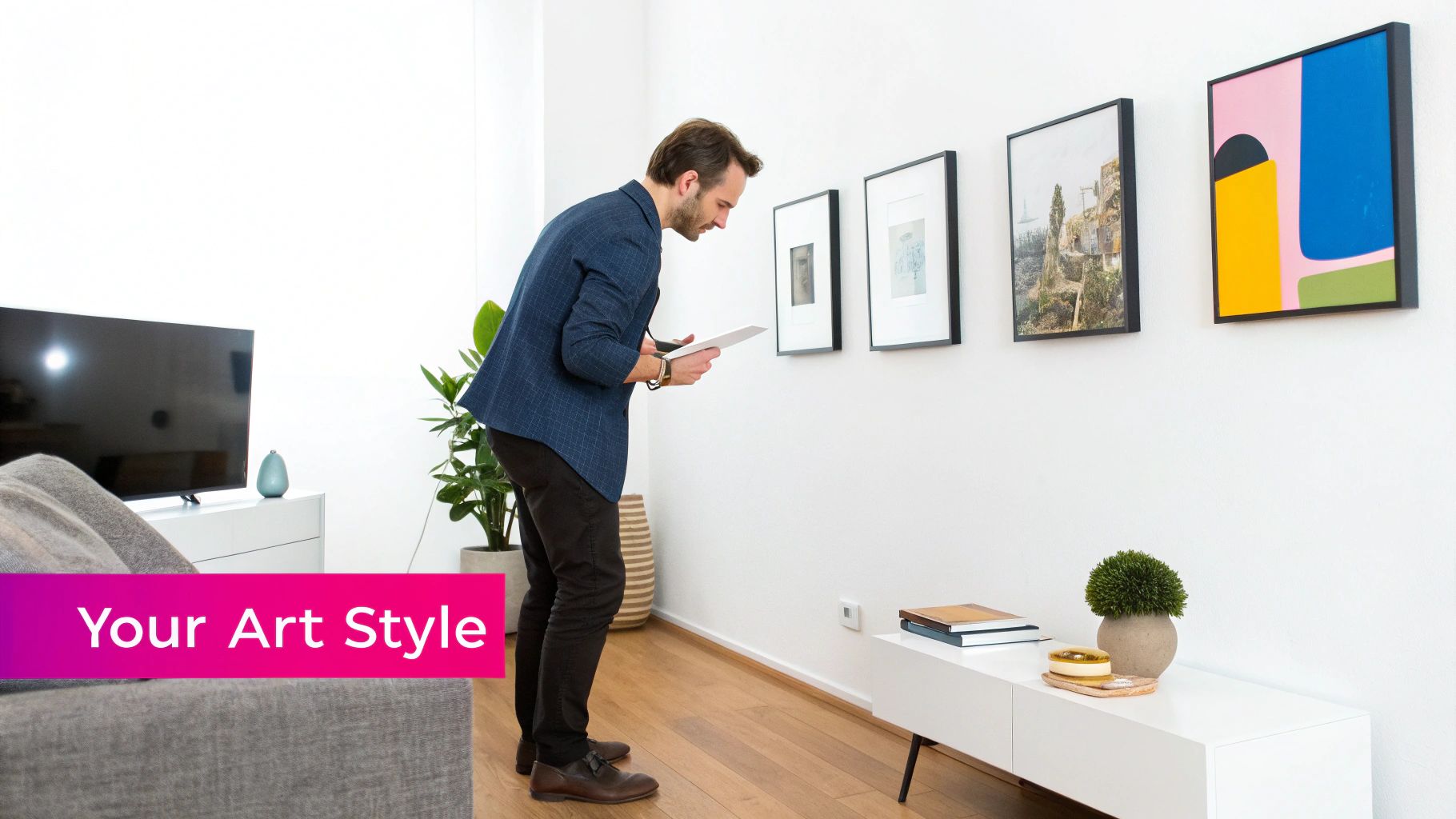
Welcome to the genuinely exciting world of collecting art. I know the whole idea can feel a bit overwhelming, conjuring images of stuffy, exclusive galleries and eye-watering auction prices. But the reality? It's so much more accessible than you think.
This guide is here to pull back the curtain and give you a clear, practical roadmap for art collecting for beginners. My goal is to give you the confidence to explore, discover, and ultimately buy art that feels like you. We're moving beyond just looking at art and getting into the real, practical steps of building a collection that is yours, starting with that very first piece. This is less about financial speculation and much more about personal expression.
What to Expect on This Journey
Think of this as a personal adventure. It’s all about training your eye, figuring out what truly moves you, and learning where to find work that fits both your taste and your budget. You’ll quickly find that fantastic art is everywhere—from your local weekend art fair to the Instagram profiles of up-and-coming artists.
The key is that you’ve connected with each piece, for some reason or another, and that means each piece is a part of your story. Your collection is a reflection of you.
This guide will give you the foundational knowledge to navigate this new territory. We’ll walk through how to:
- Discover Your Taste: Pinpoint the styles, mediums, and subjects that you keep coming back to.
- Set a Realistic Budget: Plan your spending without feeling like you need a fortune to even get started.
- Find and Verify Art: Learn where to look for great artists and how to make sure a piece is the real deal.
- Care for Your Collection: Understand the simple, practical ways to preserve your art so you can enjoy it for years.
By the time we're done, the art world will feel less like an exclusive club and more like a vibrant community you’re excited to be a part of. Let's dive in.
Figuring Out Your Style and Setting a Budget
Before you even think about buying, the first real step is a bit of self-discovery. You need to train your eye. Think of it as a personal mission to figure out what genuinely moves you, what stops you in your tracks, and what stories you want the art on your walls to tell.
The best way to do this? Immerse yourself. Just look. Go to local galleries, wander through museums, and check out community art fairs. Don't worry about prices or names. Just pay attention to what you're drawn to. Is it the energy of bold, abstract paintings? Or maybe the quiet mood of a landscape? Notice the colors, textures, and subjects that consistently grab you.
Online platforms are a goldmine for this initial exploration. Following galleries and artists on Instagram is like getting a daily, curated art show delivered right to you. You can browse without any pressure, saving posts of pieces that resonate. After a few weeks of this, take a look at everything you've saved. I guarantee you’ll start to see a pattern—that's the beginning of your personal taste taking shape.
Pinpointing Your Focus
Once you have a general feel for what you like, it's time to narrow things down a bit. This doesn't mean you're locked into one style forever, but having a starting point makes the whole process feel much less overwhelming. It's the difference between saying "I like art" and knowing "I'm on the hunt for pieces by emerging abstract painters."
To help you find your direction, ask yourself a few questions:
- What materials do I love? Are you drawn to the thick texture of oil paint, the delicate feel of works on paper, or the solid presence of sculpture?
- What ideas or themes connect with me? Do you find yourself drawn to art about nature, human emotion, social issues, or pure, beautiful abstraction?
- What’s my main goal right now? Are you trying to support local artists, build a small collection around a specific theme, or just find that one perfect statement piece for your living room?
Your collection is, at its heart, a reflection of you. It’s not about chasing trends or what someone else says is valuable. The best, most meaningful collections are always built on a genuine, personal connection to each and every piece.
Creating a Budget That Actually Works
Okay, let's talk about money. You absolutely do not need to be wealthy to start a collection, but you do need a plan. Setting a realistic budget from the get-go keeps the process fun and prevents you from getting in over your head. This budget could be a few hundred dollars for a fantastic print or a few thousand for an original painting from an artist on the rise.
The trick is to think beyond the price tag of the art itself. Your total art budget must include the "hidden" costs that catch so many new collectors by surprise. Factoring these in gives you a true financial picture.
Here’s what to plan for:
- Framing: A great frame does more than just protect the art; it completes it. Custom framing can be a significant cost, sometimes even matching the price of the artwork for larger or more complex pieces.
- Shipping & Handling: If you buy a piece online or from a gallery out of town, you'll need to account for professional packing and shipping. You want to make sure it arrives in one piece.
- Insurance: For any significant purchase, it's wise to add the artwork to your homeowner's or renter's insurance policy. Give your provider a call to see what their process is.
When you plan for these extra expenses upfront, you can hunt for art with confidence, knowing you can afford the whole package. It makes the journey into collecting sustainable, rewarding, and a whole lot less stressful.
How to Navigate the Art Market
Figuring out where to buy art is just as important as knowing what you love. The art world can feel like a maze at first, but once you understand the main avenues, you'll be able to make moves with confidence. It's not as complicated as it seems.
You'll primarily be dealing with two distinct territories: the primary market and the secondary market. The easiest way to think about it is like buying a car. The primary market is the dealership—you're getting a brand-new piece, and you're the very first owner. This is where you buy art straight from the artist's studio or from the gallery that represents them. For most new collectors, this is the most exciting and straightforward place to start.
The Primary Market: Your First Stop
When you buy on the primary market, you're doing more than just acquiring a piece of art; you're directly investing in a living artist's career. This is your chance to forge a real connection, not just with the work itself, but sometimes with the person who made it. Galleries are the gatekeepers here, carefully curating the artists they believe in and helping to build their careers.
- Commercial Galleries: I know, they can feel a bit stuffy and intimidating. But they're incredible places to see high-quality, professionally curated art up close. Prices will be higher because they factor in the gallery's commission for their work, but that gallery backing also adds a layer of validation to an artist's career.
- Artist-Run Initiatives and Open Studios: This is a much more direct and personal route. There's nothing quite like buying a piece directly from the artist's studio. You get to see where the magic happens and hear the story behind the art straight from the source. It’s an unforgettable experience.
One of the biggest mistakes I see new collectors make is trying to get a discount by going directly to an artist who also has gallery representation. This is a huge faux pas in the art world. Artists have to keep their pricing consistent everywhere to protect their gallery relationships and the integrity of their market.
The Secondary Market and Online Platforms
The secondary market is essentially the "pre-owned" world of art. This is the realm of auction houses and private dealers, where art that has already had at least one owner finds a new home. While this is where you hear about record-breaking sales, it can be a tougher playground for beginners because of the heavy emphasis on provenance and investment history.
But this is where online art marketplaces have completely changed the game. Platforms like Artsy, Saatchi Art, and even Instagram have blown the doors wide open. Now, you can browse thousands of works from artists and galleries all over the world without leaving your couch. These sites have great search filters, making it surprisingly easy to narrow down the options to fit your exact taste and budget.
The global art market is a serious economic engine, hitting an estimated value of around $68 billion in 2022. The United States absolutely dominates, pulling in a record $30.2 billion, or 45% of all sales. This boom shows just how much more accessible and popular art collecting has become. If you're curious, you can dig into a deeper breakdown of the art market's scale and recent trends to get a better feel for the landscape.
For a growing number of artists, a polished online presence is their gallery. This makes it a fantastic way to spot emerging talent before they even get a gallery deal. To learn more about how artists are building their careers online and connecting with people like you, check out this great guide on how to successfully collect art. Learning where to look is a skill that will serve you well for your entire collecting journey.
Finding and Verifying Your First Artwork
Alright, you’ve got a better handle on your taste and what you’re willing to spend. Now for the exciting part—the actual hunt for your first piece.
For a lot of new collectors, the best place to start is with emerging artists. Their work is often more affordable, and there’s a real thrill in knowing you’re supporting an artist at the very beginning of their journey. You get to grow with them.
Instagram has completely changed the game here. It's a visual playground. Follow artists whose work catches your eye, see what they post, and don't hesitate to slide into their DMs to ask about a piece. You'd be surprised how accessible many artists are. Art fairs are also fantastic—they feel much less formal than a stuffy gallery and you can see a ton of different styles all in one go.
Where to Look and How to Ask
When you do walk into a gallery, don’t feel intimidated. Seriously. The people working there are passionate about art and fully expect questions from newcomers. Their job is to bridge the gap between you and the artwork.
Try one of these simple conversation starters:
- "Could you tell me a little more about this artist's background?"
- "What was the story behind this series?"
- "I'm just starting my collection. What should I know about this piece?"
A good gallerist will happily share the story behind the art. If you find yourself drawn to less literal or more experimental work, it can really help to learn how to understand abstract art to get more out of the experience.
Doing Your Homework on Authenticity
Falling in love with a piece is step one. Verifying it is step two, and it's non-negotiable. This is how you protect yourself and ensure you're making a good investment, not just buying a pretty picture. Authentication isn't just for old masters; it's a smart habit for every single purchase.
This process boils down to a few core steps: checking the artwork's history, reviewing its condition, and getting all the right paperwork.
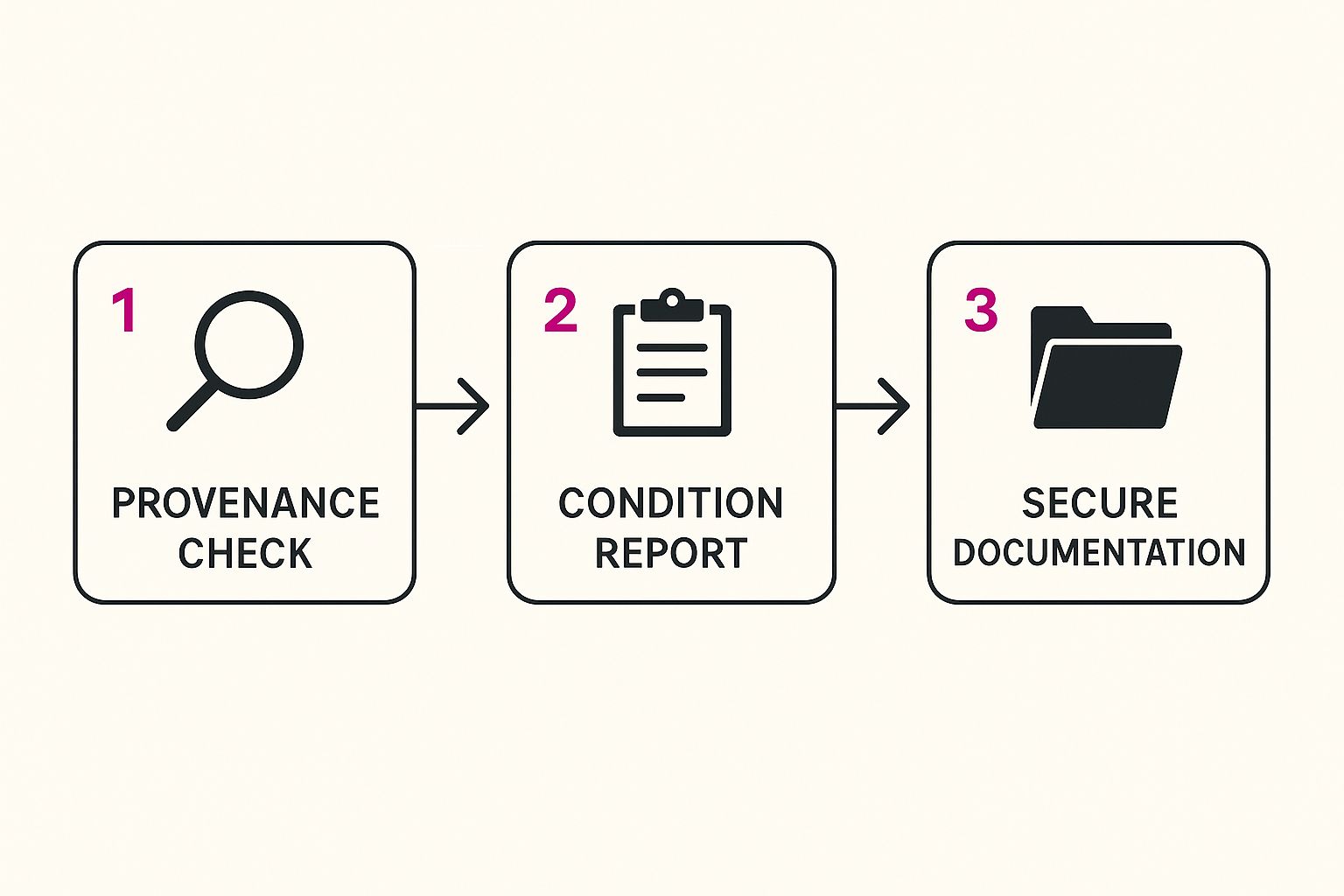
Following these steps protects both your wallet and the artist’s legacy.
Always, always ask for a Certificate of Authenticity (COA). This is a document signed by the artist or their representative (like the gallery) that officially confirms the work is genuine. You’ll also want to know the artwork's provenance, which is basically its ownership history. For a brand new piece from an emerging artist, this is easy—you’re the first owner after it left the studio.
A strong provenance adds not just financial value but also a rich story to the piece. It’s the artwork's documented life story, and now you are part of it.
Here’s an interesting tidbit from the market. While the global art market is a massive $57.5 billion industry, a recent report showed a fascinating trend: Galleries representing over 80% female artists saw their sales grow by 21%. This was significantly higher than less diverse galleries. It goes to show that collecting with an eye on representation isn't just the right thing to do—it can also be a savvy move.
Protecting and Caring for Your New Art
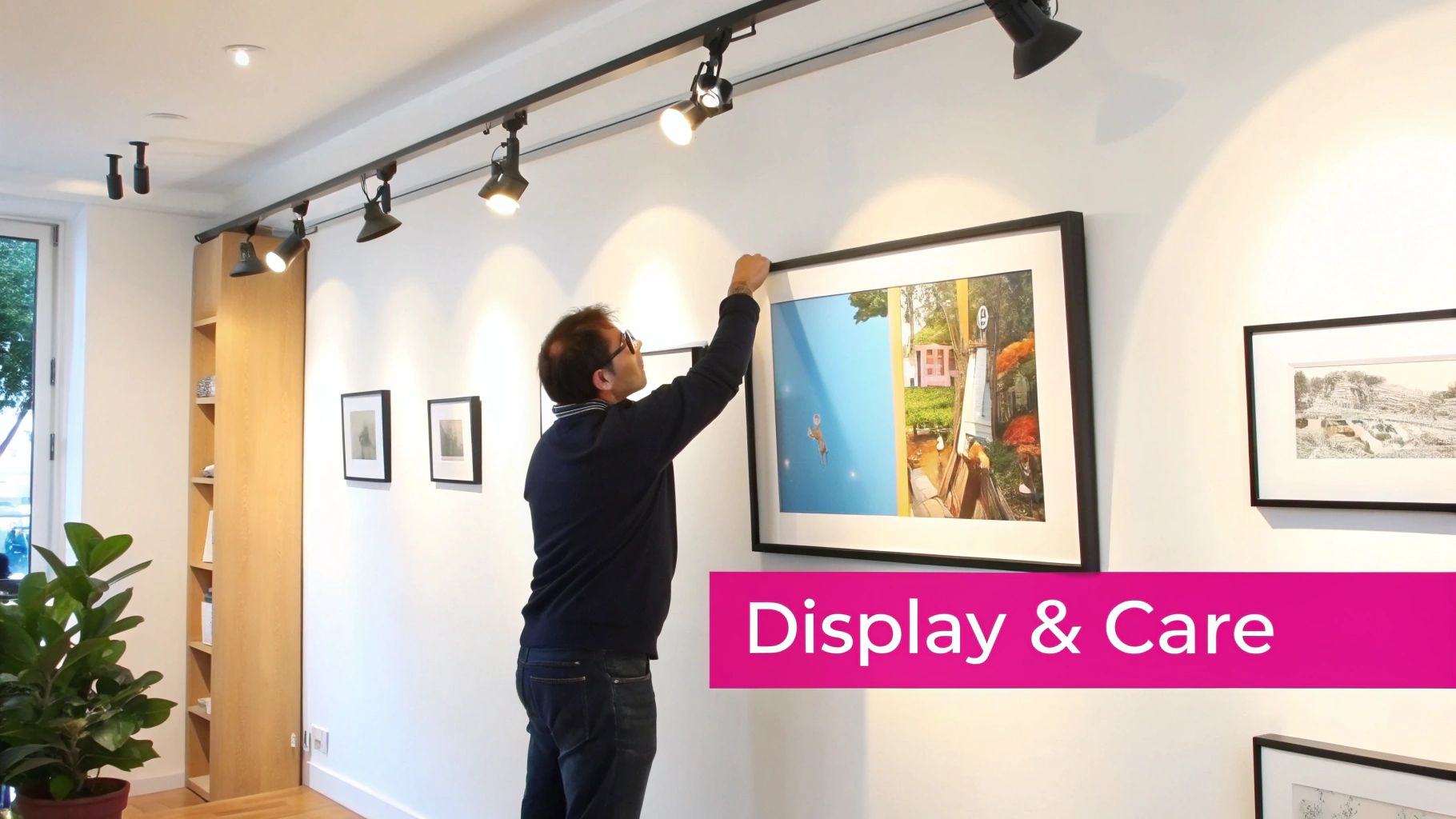
Once you bring a new piece home, your role gracefully shifts from collector to custodian. It's a satisfying part of the journey. You've invested your money and your personal taste, and now it’s time to protect that investment and honor the artist's creation.
Proper care isn't complicated, but it does require a bit of thought. The biggest enemies of any artwork are things we live with every day: direct sunlight, extreme humidity, and big temperature swings. Over time, these can cause irreversible damage, from faded colors in a photograph to a cracked canvas on an oil painting.
Handling and Displaying Your Collection
The moment you get a new piece, whether it’s a large canvas or a delicate work on paper, handling it correctly is crucial. Always use two hands and carry paintings by their sturdy frame sides, never by the top of the frame or a hanging wire. For unframed works, I recommend wearing clean cotton gloves to keep the oils from your skin off the surface.
When picking a spot to hang your art, try to think like a curator. You don’t need a museum-quality home, just a mindful eye for potential hazards. Steer clear of hanging valuable art in places with dramatic environmental shifts.
A few spots to avoid:
- Directly over a radiator or fireplace: The constant heat can dry out and damage canvases and paper.
- In a bathroom or kitchen: High humidity is a recipe for mold, warping, and other moisture-related issues.
- Opposite a window with intense, direct sunlight: UV rays are one of the biggest threats to art, causing colors to fade and materials to break down.
Protecting your art is more than just a chore; it’s a sign of respect for the artist and the work itself. You are preserving a story, ensuring it can be told for decades to come.
The Critical Role of Framing and Storage
Framing is your artwork's first and best line of defense. It's about more than just looking good; a quality frame creates a stable micro-environment for the piece inside.
When you get something framed, always opt for UV-protective glass or plexiglass. This simple upgrade can block up to 99% of harmful ultraviolet rays, adding years to the life of the artwork. It's worth every penny.
Also, make sure that any materials touching the art, like the mat and backing board, are acid-free. Standard acidic materials will slowly "burn" and yellow the art over time. It's a common and heartbreaking thing to see on older, improperly framed pieces.
If you have pieces you need to store, don’t just lean them against a wall in a damp basement or a hot attic. For anyone serious about preservation, there is some great expert guidance on how to properly store artwork that walks you through the right materials and conditions.
Finally, a pro tip: document every piece you own. Take clear photos of the front and back, and keep a simple file with the artist's name, title, dimensions, purchase date, and price. This record is essential for insurance and invaluable for tracking the history—the provenance—of your collection. It’s a simple step that protects your investment and adds to the rich story of each piece you bring home. As your confidence grows, you might even find yourself browsing for your next treasure among an artist's available https://www.wiktoriaflorek.com/product-category/original-art/.
Answering Your Lingering Questions
As you get ready to take the plunge, it's totally normal to have a few last-minute questions. Everyone does! Think of it as part of the process. To help clear up any final doubts, I've put together answers to some of the most common things new collectors ask.
Is Buying Art Actually a Good Investment?
This is probably the number one question I hear. While it's true some pieces can skyrocket in value, treating your first foray into art collecting like a stock market play is a recipe for disappointment. The best advice I can give? Buy what you genuinely love.
Seriously, think of it as an asset you get to enjoy every single day. It's something that brings your space to life and reflects who you are. If it appreciates in value down the road, consider that a fantastic bonus, not the main goal. The art market has its ups and downs, but your connection to a piece you love is constant.
Do I Have to Stick to Original Paintings?
Absolutely not! Thinking beyond the canvas opens up a whole universe of incredible art that’s often much more accessible. A truly compelling collection is often one that mixes things up.
Don't be afraid to explore these great starting points:
- Limited Edition Prints: A fantastic way to own a piece by an artist you admire without the price tag of an original.
- Photography: Fine art photography is a powerful, established medium with a huge range of styles.
- Sculpture: Adding a three-dimensional piece, even a small one, brings a whole new dynamic to your collection.
- Digital Art: This is a fascinating and growing field, offering a chance to get in on the ground floor of what's next.
A collection with a mix of mediums just feels more dynamic and personal. It tells a much richer story.
How Can I Tell if an Artist Is Going to Be Big?
If only there were a crystal ball for this! While no one can predict the future, you can definitely look for clues that an artist is on a solid trajectory. These aren't guarantees, but they show an artist is serious about their career.
Ultimately, your own gut feeling is the most powerful tool you have. The soul of any great collection comes from a real, personal connection to the work. If a piece moves you, that’s the only validation you truly need.
Look for signs of professional momentum. Is the artist represented by a gallery? Have they been in shows, won any awards, or received grants? A consistent exhibition history and an evolving style are also great indicators. But at the end of the day, the real question is: does their work speak to you?
What’s the Biggest Mistake Beginners Make?
One of the most common traps in art collecting for beginners is getting caught up in hype. Buying something just because it’s trendy or you think it might be valuable one day often leads to a collection that feels hollow and disconnected from you.
Another thing people often forget is to budget for the extra costs. It's not just the price of the artwork. You need to account for things like professional framing, shipping, and insurance. These are all part of the real cost of bringing a piece home.
The simplest way to sidestep these issues is to trust your instincts. Start by buying something you can't wait to hang on your wall and see every single day. That's a purchase you'll never regret.
At Wiktoria Florek, we see art as a deeply personal journey. I invite you to explore my collections of original mixed-media abstract paintings to find that first piece that tells your story. Start your collection by discovering more at https://wiktoriaflorek.com.