
Abstract art is all about expression over perfection. It’s one of the most freeing ways to create because you’re not trying to perfectly copy what you see. Instead, it’s about translating your feelings and ideas onto the canvas using color, shape, and texture.
Diving Into the World of Abstract Art
Let's be real, the term "abstract art" can sound a bit intimidating. A lot of people assume you need a formal art degree to make anything that looks good. But honestly, abstract art is more like a personal playground—an invitation to experiment and have fun without the pressure of getting it "right."
The main idea is to let go of recreating reality. You're building a new world on your canvas, one that comes from your emotions, a specific memory, or even just the simple joy of mixing colors.
What Really Matters When You're Starting Out
For now, forget all the dense art theory. As a beginner, abstract art really just comes down to a few core ideas that are all about exploration and freedom.
- Expressing Emotion: Use your materials to show what you're feeling. A bright, sunny yellow might capture a happy mood, while soft, flowing blues could represent a sense of calm. Your brushstrokes can be angry and jagged or gentle and sweeping.
- Playing with Form and Color: See what happens when you put a sharp red triangle next to a soft, blended purple circle. This is your chance to explore how different shapes and colors interact and create a feeling.
- Embracing the "Happy Accident": Some of the most incredible abstract paintings come from moments of pure chance. That unexpected paint drip or a color blend you didn't plan for isn't a mistake—it's an opportunity.
This way of thinking has a fascinating history. It really took off in the early 1900s with pioneers like Wassily Kandinsky. By the 1940s and 50s, artists like Jackson Pollock and Mark Rothko had made Abstract Expressionism world-famous, proving that the process and the emotion were just as important as the final image.
The most powerful thing about abstract art is that it frees you from the need for perfection. It’s your chance to let your imagination run wild and create something that is uniquely yours, without any pressure.
To get a better handle on these foundational ideas, I've put together a quick cheat sheet. It breaks down the core concepts into simple, actionable terms.
Core Concepts of Abstract Art at a Glance
| Concept | What It Means for You | A Simple Way to Try It |
|---|---|---|
| Composition | It's about how you arrange shapes and colors to guide the viewer's eye. Think of it as creating balance—or intentional imbalance. | Place one large shape on your canvas, then add two or three smaller shapes around it. See how it changes the feeling of the piece. |
| Color Theory | Colors create mood. Warm colors (reds, oranges) feel energetic, while cool colors (blues, greens) feel calm. | Pick just three colors: two that are similar (like blue and green) and one that contrasts (like yellow). Create a painting using only those three. |
| Texture | This adds physical depth to your work. It’s what makes someone want to reach out and touch your painting. | Try mixing a little sand or coffee grounds into your acrylic paint. You can also use a palette knife to scrape and build up thick layers. |
| Mark Making | These are the unique lines, dots, and scribbles you make. Your marks are like your creative signature. | Grab a pencil, a crayon, and a brush. On a piece of paper, see how many different kinds of lines you can make with each tool. |
Think of these concepts not as strict rules, but as tools in your creative toolbox. You can pick and choose what you want to focus on for any given painting.
Ultimately, your journey into abstract art is about building confidence through play. It’s an incredibly rewarding process, and you don’t have to go it alone. If you want to dig deeper, our guide on how to understand abstract art breaks down these ideas even further. Your first masterpiece is just a brushstroke away.
Choosing Your First Art Supplies
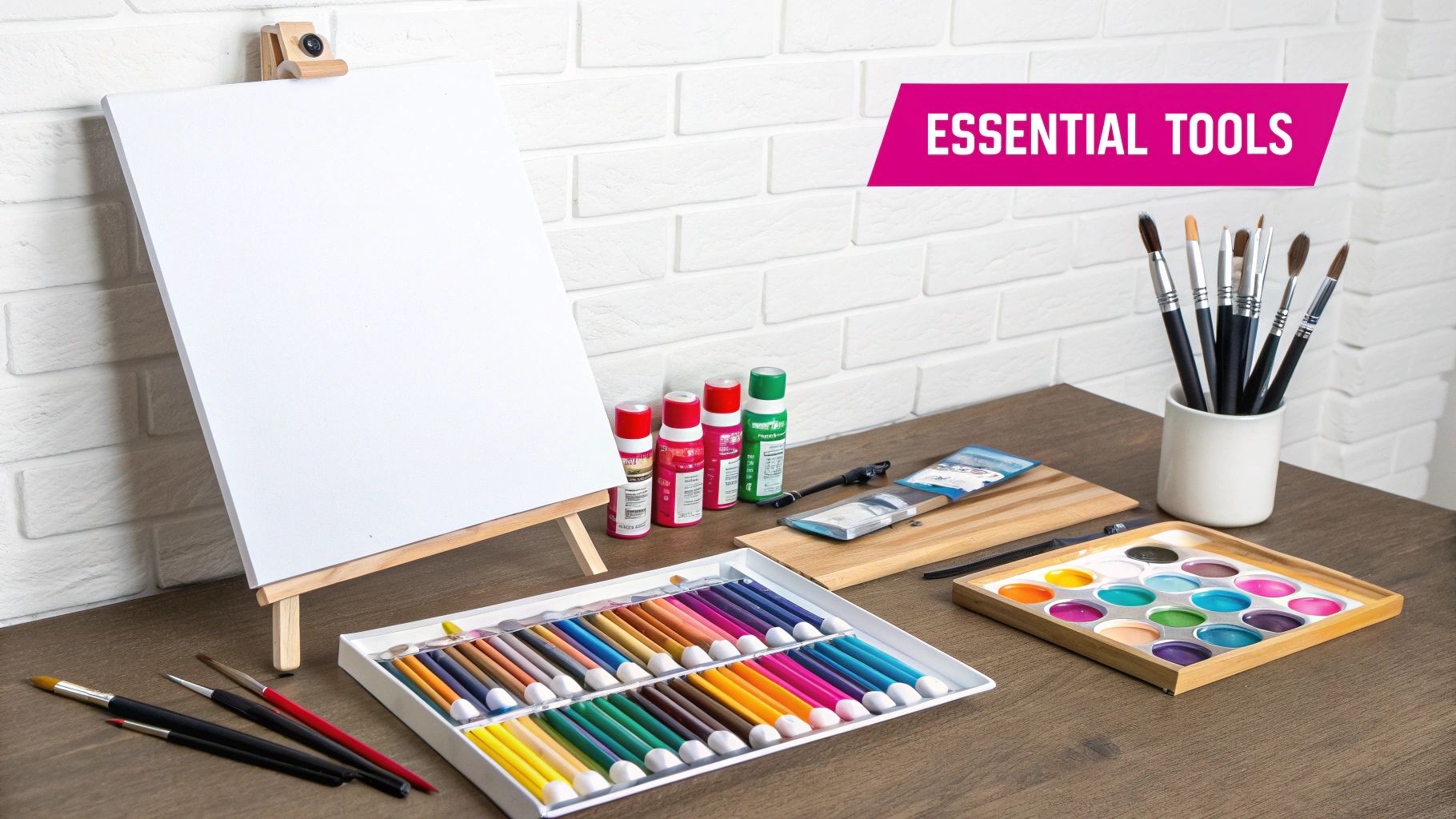
Walking into an art supply store for the first time is… a lot. The sheer number of options lining the walls can feel overwhelming, and it’s tempting to grab one of everything. But let's be strategic. The goal is to build a practical starter kit that gets you painting right away without breaking the bank.
Honestly, you don't need top-of-the-line, professional-grade gear to create something beautiful. This more accessible approach is even reflected in the art world itself. A growing number of art sales are happening under the $5,000 mark, which shows that more new collectors are jumping in. Your journey can mirror this trend—start affordably and grow from there. You can actually read more about these art market trends and see how the landscape is shifting.
Choosing Your Paint
Your first big decision is the paint itself. For anyone new to abstract painting, it really boils down to two main contenders: acrylics and watercolors. They behave very differently, so your choice will shape your entire creative process.
- Acrylics: If you’re looking for a recommendation, this is it. I almost always suggest beginners start with acrylics because they're the Swiss Army knife of paint. They dry fast, which is a lifesaver when you want to layer colors without turning your canvas into a muddy mess. You can also thin them with water to mimic watercolors or use them thick right out of the tube for creating rich, physical texture.
- Watercolors: These are your go-to for creating soft, ethereal, and dreamy effects. Working with watercolor is a unique experience; it’s all about guiding the pigment and water and embracing the happy accidents. It's a fantastic lesson in letting go of rigid control, but be warned—it's less forgiving than acrylic, since mistakes are much harder to paint over.
Here's a pro tip that will save you money and make you a better artist: ignore those giant sets with 24 different colors. Instead, buy individual tubes of the primary colors (a good red, yellow, and blue) plus a black and a white. This simple palette forces you to learn color theory by mixing your own shades, giving you endless possibilities from just five tubes.
Surfaces and Unconventional Tools
Your canvas doesn't have to be, well, a canvas. While a small pack of pre-primed canvases is a great, no-fuss starting point, don't feel boxed in. Thick watercolor paper, canvas boards, or even a piece of wood with a coat of primer can work beautifully.
This is where you can also get really creative and save some cash. Forget the 20-piece brush set. All you really need to start is a few key sizes: a small one for details, a medium flat brush, and a larger one for covering big areas.
But don't stop at brushes! Some of the best tools are probably already in your house. An old credit card is perfect for scraping and creating sharp, clean lines. A kitchen sponge can be dabbed or dragged to produce incredible textures. I've even used crumpled paper and bubble wrap to apply paint. Remember, experimentation is the heart of abstract art for beginners.
5 Essential Abstract Painting Techniques to Try Today
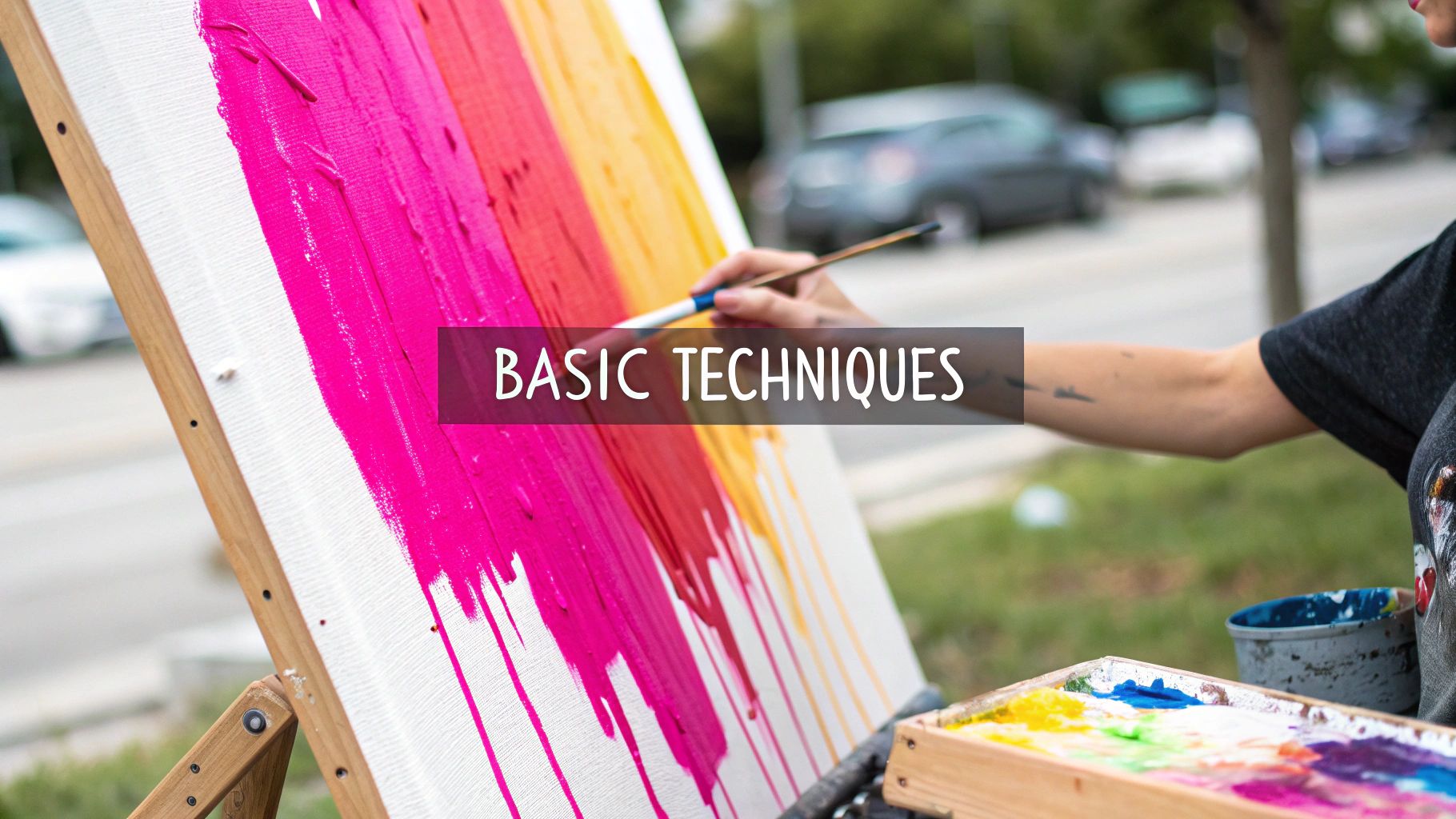
Alright, you've gathered your supplies, and now the real fun starts. This is where you get to forget all the rules you think you know about art and just get some paint on your canvas. Let's dive into the hands-on methods that create those captivating abstract effects.
Think of these techniques less as rigid instructions and more as invitations to play. A huge part of the joy in abstract art for beginners is figuring out which methods feel right for you. There’s no right or wrong here, only discovery.
Creating Dreamy Blends with Wet-on-Wet
The wet-on-wet technique is as straightforward as its name suggests: you apply wet paint directly onto another layer of wet paint. This is your go-to method for creating soft, seamless color transitions and those beautifully atmospheric backgrounds.
To give it a try, start by brushing a thin layer of a light color—or even just plain water—onto your canvas. While that surface is still damp, introduce dabs of another color. Just watch as the colors bleed into each other, forming organic gradients you could never get with a dry brush. It's the perfect way to capture a mood or a feeling instead of a concrete object.
The secret to great abstract art is embracing spontaneity. When you use a method like wet-on-wet, you’re letting go of some control and allowing the materials to guide you. These "happy accidents" often turn into the most compelling parts of a painting.
Don't hesitate to tilt and turn your canvas, encouraging the wet colors to run and mingle in unexpected ways. This is your first step in learning to collaborate with the paint itself.
Building Bold Texture with a Palette Knife
If you’re craving physical depth and bold marks in your work, it’s time to trade your brush for a palette knife. While a brush is fantastic for smooth, even coats, a palette knife lets you build up sculptural, three-dimensional textures that simply aren't possible otherwise.
Imagine you're frosting a cake. You can scoop a thick dollop of paint onto your knife and spread it across the canvas to create a rich, impasto effect. You can also use the knife's edge to carve sharp lines or scrape back layers of paint to reveal the colors hidden beneath.
Here are a few ways to experiment with a palette knife:
- Dragging: Pull a loaded knife firmly across the canvas. This creates a strong, directional mark that often breaks up at the end, leaving behind a fascinating texture.
- Dabbing: Use the tip or flat of the knife to press small mounds of thick paint onto your surface. This builds up a bumpy, tactile finish that begs to be touched.
- Scraping: After applying a layer of paint and letting it partially dry, use the knife's edge to scrape some of it away. This technique creates a weathered, almost historic feel, adding a story to your piece.
Adding Depth Through Layering and Washes
Layering is a core skill that can transform a flat, one-dimensional painting into a work of incredible depth and complexity. It’s all about building up your piece with multiple coats of paint, with each new layer interacting with the ones below it.
A fantastic way to begin is with a color wash. This involves thinning your acrylic paint with a generous amount of water to create a transparent veil of color. Apply this as your first layer to establish an atmospheric tone for the entire painting.
Once that wash is completely dry, you can start adding thicker, more opaque layers on top. This process gives your painting a sense of history. Little flecks of those underlying colors will peek through the final layers, making the entire piece feel richer and more visually engaging. The key here is patience—always let each layer dry completely before adding the next to avoid creating a muddy mess.
Your First Three Canvases: A Guided Start
Alright, let's move from just practicing techniques to finishing an actual piece. I know that staring at a blank canvas can be a bit intimidating, but having a gentle plan in place makes all the difference in building your confidence.
To get you started, I've put together three simple projects. Each one is designed to guide you through the process and focus on a different core skill in abstract art. Think of these not as strict instructions to be copied, but as structured invitations to play and explore. They're your first real conversations with the canvas, where there are no wrong answers—only discoveries.
Project 1: Monochromatic Focus
Our first project is all about the power of simplicity. By sticking to a single color family (what we call monochromatic), you can forget about complex color theory for a moment. Instead, you get to pour all your energy into texture and composition. It’s a fantastic way to discover just how much visual punch you can create with a very limited palette.
Pick a primary color you really connect with—let's say a deep, rich blue. Now, all you'll do is mix that blue with white and black to create a whole family of tints and shades. The goal is to fill the canvas with these variations, using different tools to build up interesting textures.
- What You'll Need: One canvas, one primary color (like ultramarine blue), titanium white, mars black, a large brush, and a palette knife.
- The Plan: Start by covering your canvas with a mid-tone of your blue. While the paint is still wet, grab your palette knife. Scrape, drag, and dab on thicker patches of your lighter and darker shades. The key here is to create contrast not with different colors, but with light, dark, and physical texture.
You’ll learn a crucial lesson from this: a compelling painting doesn’t need a whole rainbow. The subtle shifts in tone and the texture you build are more than enough to create something dynamic and engaging.
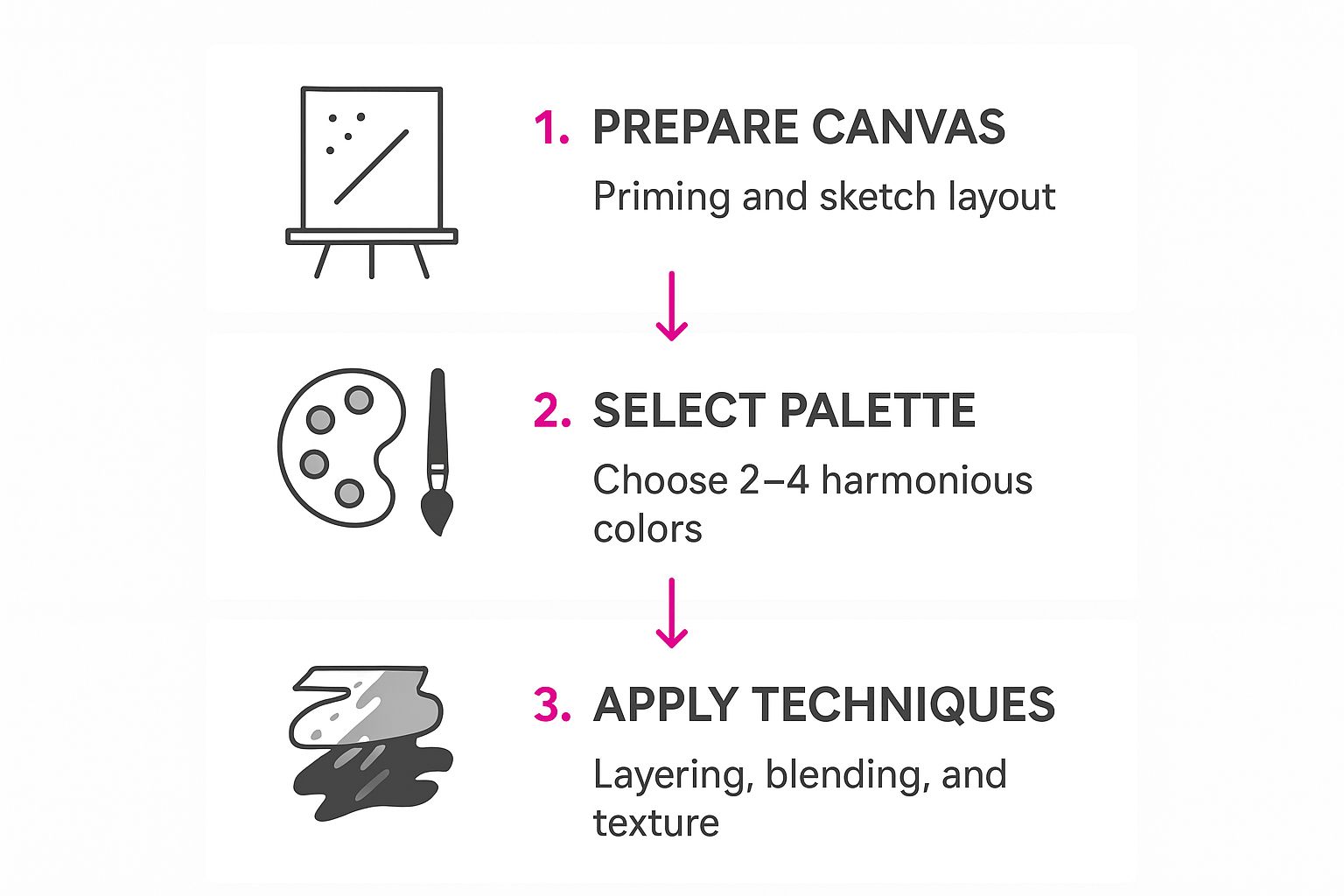
This simple process—Prepare, Select, Apply—is really the backbone of any painting session. It just ensures you start with a clear head and a focused set of tools.
Project 2: Geometric Layers
Ready for something with crisp, clean edges? For this next piece, we'll use a simple household item—masking tape—to create incredibly satisfying geometric shapes. This method is so rewarding because it practically guarantees those sharp, professional-looking lines.
This project is a lesson in patience and process. The real magic happens when you finally peel off the tape to reveal the clean, hard edges underneath. Trust the layers, even if it looks like a mess in the middle.
First, lay down strips of masking tape across your canvas to section off different areas. Don't overthink it; just create some triangles, rectangles, or any angular shapes that feel right. Make sure you press the tape down firmly so paint can't bleed underneath.
Now, paint inside your taped-off sections using a palette of two or three colors that work well together. Once the paint is completely dry (and I mean completely), carefully peel the tape away. The big reveal! You can stop there, or you can add another layer of tape over your new painted shapes to build up overlapping forms, which adds wonderful depth and complexity.
Project 3: Intuitive Expression
For our final canvas, we're throwing the plan out the window. This project is a pure exercise in intuitive painting. It’s all about reacting to the marks and colors you lay down without worrying about a final outcome. You're simply having a conversation with your painting.
Start by making a random mark on the canvas. It could be a splash of color, a bold line, whatever feels right in the moment. Now, stop and look at it. How do you want to respond? Does that bright yellow need a calming blue next to it? Does that sharp line need to be softened with a blended wash of paint?
This entire process is a cycle of action and reaction. Add a layer, step back, and see what the painting is asking for next. There's no destination here; the journey is the goal. You’ll know the piece is finished when adding anything else feels like it would just disrupt the harmony you’ve created.
Discovering Your Personal Artistic Style
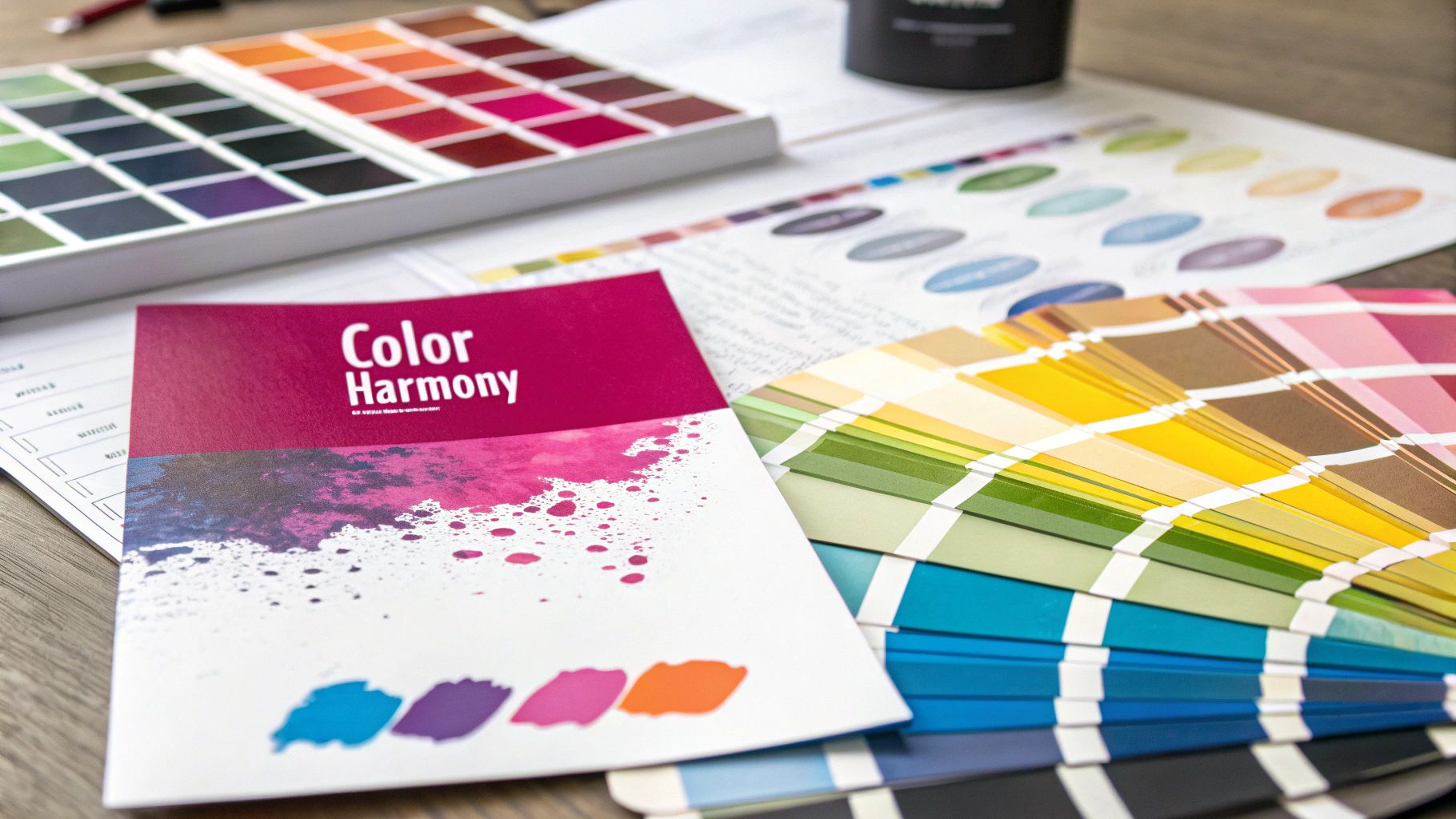
When you move past structured projects, your real journey with abstract art begins. This is where you graduate from following someone else's steps to painting from a place of pure intention. So, how do you find a style that feels like you? It all comes down to translating your own life experiences onto the canvas.
Inspiration is everywhere—and it’s rarely just in other paintings. It might be the chaotic energy of a city street, the specific feeling a song evokes, or a powerful memory from your past. The trick is to start noticing what makes you feel something and then ask yourself, "How could I capture that with color and texture?"
Find Your Unique Inspiration
Your personal style is born from what truly moves you. This is the part of the process that turns a fun hobby into a deep passion. You start to see the world differently, through an artist's eyes, and begin searching for your own stories to tell.
Here are a few practical ways to start tuning into your unique sources of inspiration:
- Keep an Idea Sketchbook: Forget about perfect drawings. This is a messy, personal space to scribble down color palettes you spot in nature, cool textures on an old wall, or just feelings you want to explore later.
- Analyze Artists You Admire: Don't just glance at art you like—really dig into why you're drawn to it. Is it the artist’s fearless use of color? Their chaotic brushstrokes? Or maybe their quiet, minimalist approach?
- Translate a Song to Canvas: Pick a piece of instrumental music, close your eyes, and just listen. Then, grab your tools and paint what you feel, letting the song’s rhythm and mood guide your colors and marks.
Your artistic style is really just your visual handwriting. It’s a unique combination of your taste, your emotions, and your personal story. It’s not something you just decide on; it's something you uncover, one painting at a time.
Develop Your Personal Color Story
One of the most powerful ways to build a signature style is to cultivate your own "color story." Think of this as the specific palette you naturally gravitate toward—one that reflects your personality and typical emotional state. Some artists, for example, always seem to come back to earthy, calming tones, while others can’t get enough of bright, high-contrast colors.
To find yours, flip through your sketchbook or even look at the clothes in your closet and the decor in your home. What colors keep showing up? Those are the foundation of your artistic identity. In my own work, I often use specific color relationships to explore themes of personal transformation, which you can see in my Motherhood abstract collection.
Your color story is your emotional anchor on the canvas.
Common Questions from New Abstract Artists
It’s totally normal to have a head full of questions when you first dive into abstract art. Trust me, every single artist has been there. Think of these questions not as obstacles, but as signposts guiding you along your own creative path. Let's walk through some of the big ones you might be bumping up against.
A huge one I hear all the time is about drawing. "Do I have to be good at realistic drawing first?" The answer is a loud and clear no. Abstract art is all about emotion, energy, and feeling. It’s about using color, texture, and form to say something, not to perfectly copy what you see. Your unique way of expressing an idea is so much more important than being able to draw a perfect apple.
How Do I Know When a Painting Is Finished?
Ah, the million-dollar question. This is something every artist struggles with, and there’s no magic formula. It really boils down to developing and trusting your own artistic gut.
For me, a painting feels finished when adding one more brushstroke would feel like adding noise instead of improving the whole. It’s about reaching a point of balance and harmony.
A trick I rely on is to simply walk away. I'll leave the studio for a few hours, or even wait until the next morning. Coming back to the piece with fresh eyes gives you a completely new perspective and helps you see if it truly feels resolved.
The painting is finished when the space has been occupied in a way that is satisfactory to the artist. Ultimately, you are the final judge. If it feels complete and resolved to you, then it is.
What if I Absolutely Hate What I Made?
First off, welcome to the club! Creating a piece you can't stand is a rite of passage for every artist. It’s not a failure; it’s just part of the process. In fact, it's a fantastic learning opportunity. You’ve just discovered what doesn't work, and that's incredibly valuable information.
Whatever you do, don't just toss it in the trash. You have options!
- Paint right over it. I love doing this. An old canvas with existing texture can be an amazing starting point for something new and unexpected.
- Do a little analysis. Step back and figure out what it is you don't like. Is it the color combination? The composition? Getting specific helps you avoid the same issues next time.
- Put it away for a while. Your relationship with a piece can change. Something you dislike today might suddenly click for you in a month or a year.
The most important thing is to keep going. Don't let one painting you're not happy with derail your momentum. Every single canvas, good or bad, is a step forward.
If you want to get more intentional about your creative journey, setting clear goals can make a world of difference. You can learn more about goal analysis and planning for creatives to keep your momentum going and build a practice that feels both sustainable and joyful.
At Wiktoria Florek, we believe art is a journey of inner transformation. To see how these principles come to life in emotionally charged, large-scale works, explore the collection at https://wiktoriaflorek.com.