
At its heart, intuitive painting is about trusting your inner voice. It’s a creative process where you let go of the rules and focus on the feeling of painting, rather than what the finished piece will look like. Think of it less as a technique and more as a conversation with yourself, where the canvas is your listening partner.
Embracing The Creative Journey
So, what is intuitive painting when you actually pick up a brush? It's an open invitation to play. You don't start with a perfect, pre-planned sketch. Instead, you might begin with a color that pulls you in, a burst of energy you want to capture, or even just a single word like "calm" or "joy."
From that simple starting point, the whole thing just…unfolds. Each brushstroke informs the next. This shifts painting from a purely technical exercise into a powerful way to connect with yourself. It doesn't matter if you're a seasoned artist or have never touched a paintbrush in your life. The real goal is to get that nagging inner critic to quiet down so you can hear what your intuition is trying to say.
The Focus Shifts From Product To Process
Most of us were taught that the point of art is the final product—how realistic it looks, whether the composition is "correct." Intuitive painting turns that idea completely on its head.
The real magic isn't in the finished canvas, but in the experience of getting there. It's about being fully present with your feelings and letting them guide your hand. This is where you build a deeper connection with your true self.
Shifting your focus to the journey itself is incredibly freeing. Here's why:
- Reduces Creative Pressure: When there's no such thing as a "good" or "bad" painting, the fear of messing up just melts away.
- Builds Self-Trust: Learning to follow those little creative nudges teaches you to trust your own gut, a skill that's useful far beyond the art studio.
- Provides Emotional Release: The canvas becomes a safe container to explore emotions, release stress, and give a voice to feelings that words can't quite capture.
To help you see the difference more clearly, let's look at a side-by-side comparison.
Intuitive Painting vs Traditional Painting
| Aspect | Intuitive Painting | Traditional Painting |
|---|---|---|
| Starting Point | An emotion, a color, or an inner impulse. | A specific subject, concept, or detailed plan. |
| Primary Goal | The process of self-expression and discovery. | A polished, technically sound final artwork. |
| Guiding Force | Instinct, feeling, and spontaneous choices. | Rules of composition, color theory, and technique. |
| View of "Mistakes" | Opportunities for a new direction; no mistakes. | Errors to be corrected or avoided. |
| Mindset | Meditative, playful, and non-judgmental. | Focused, analytical, and critical. |
As you can see, they are two very different paths to creativity. One is about exploration and feeling, while the other is about mastery and execution. Both are valid, but intuitive painting serves a unique purpose for personal insight and emotional well-being.
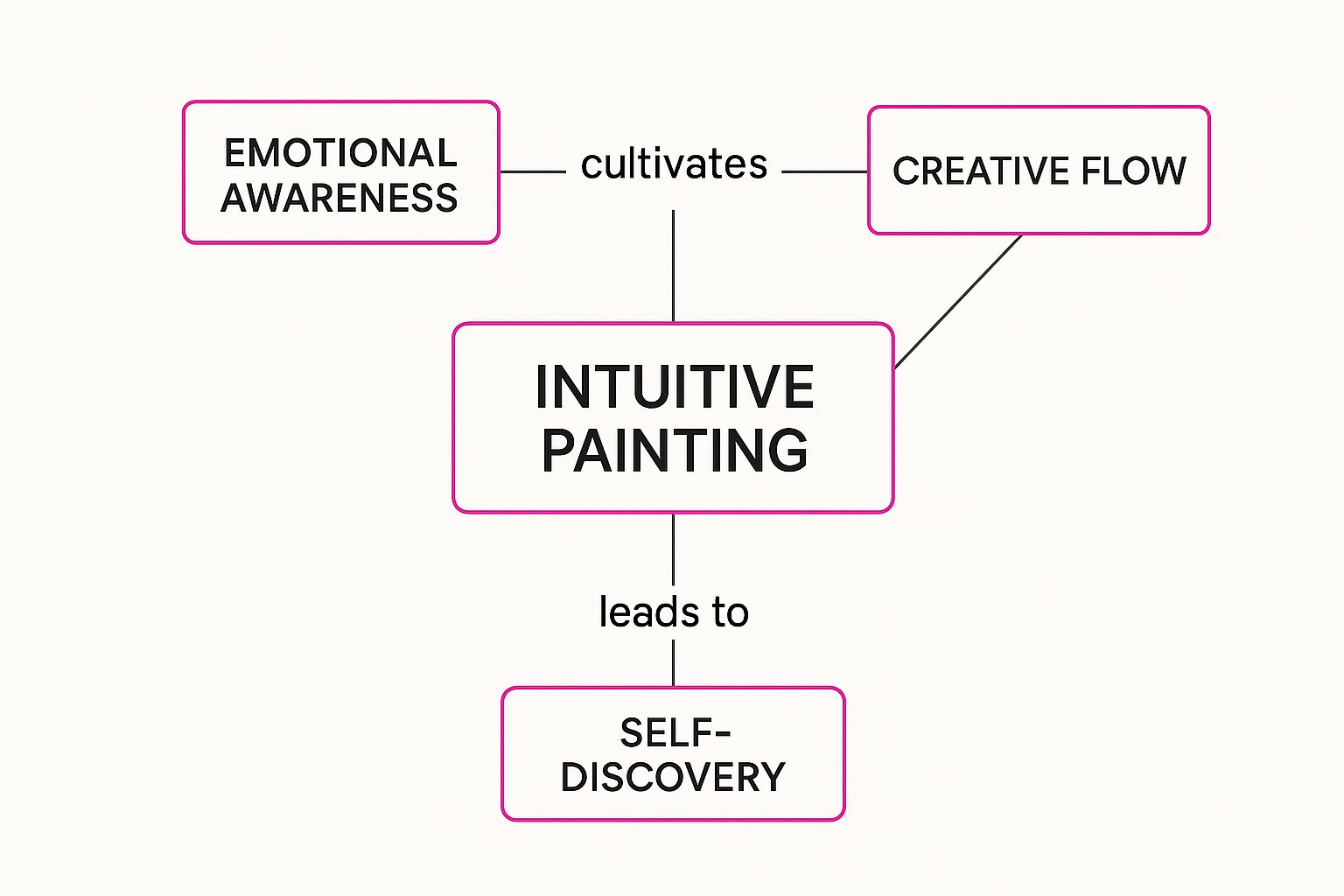
This diagram really gets to the core of it. The act of creating freely is what leads directly to deeper self-awareness and personal growth. It's a beautifully simple, holistic cycle.
The Artistic Roots of Intuitive Expression
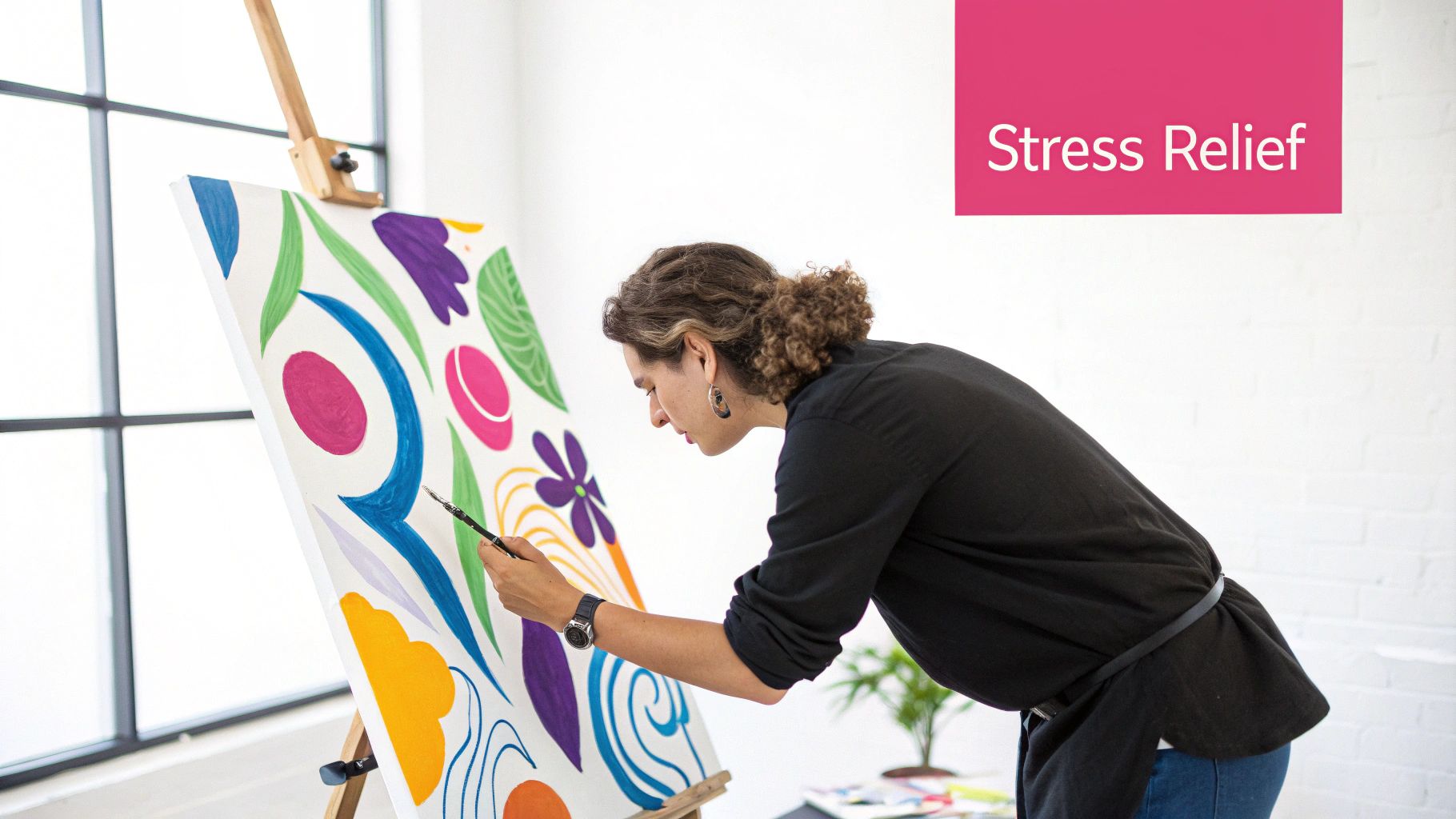
Intuitive painting didn’t just appear out of nowhere. It stands on the shoulders of some pretty bold artistic rebellions that, piece by piece, tore down the old idea that art had to be a perfect copy of the real world. You can trace its DNA back through generations of artists who decided to paint what they felt instead of only what they saw.
This whole shift really kicked off with the Impressionists back in the late 19th century. Think of artists like Monet and Renoir. They stopped obsessing over crisp, perfect details and started chasing the feeling of a moment—the way light danced on water or the energetic blur of a crowd. They put emotional impact and their own perception first, which was a radical move at the time. This cracked open the door for artists to explore their inner world.
That initial crack soon became a full-blown split. Movements like the Surrealism style dove headfirst into the subconscious, creating a rich history for intuitive expression to draw from. The Surrealists wanted to unleash the power of the unconscious mind, using techniques like automatic drawing and bizarre, dream-like scenes to get around the logical part of the brain.
The Rise of Spontaneous Creation
The journey toward pure, gut-level expression really took off with the Abstract Expressionists in the mid-20th century. This is where people like Jackson Pollock and Willem de Kooning completely changed the game, making the physical act of painting the main event.
For these artists, the canvas became an arena for action. The physical, emotional, and spontaneous engagement with paint was the art form. The finished piece was simply the evidence of that energetic encounter.
This was a massive turning point. The focus wasn't on painting something anymore; it was about channeling an internal state. Pollock didn't paint a landscape; he dripped and flung paint to create a record of his own movement and raw energy. This philosophy is the direct ancestor of modern intuitive painting, which takes these ideas and zooms in even more on the personal, inner journey.
From Rebellion to Personal Practice
All these historical shifts set the stage for what we now call intuitive painting. While its roots are firmly planted in major art movements, today's practice is often much more personal and therapeutic.
It really came into its own in the late 20th and early 21st centuries, as our culture started to value individual expression and mindfulness. By taking away the pressure of creating for a gallery or for critics, intuitive painting became a powerful tool for anyone looking to find themselves through art.
Unlocking Your Creativity: The Core Principles of Intuitive Painting
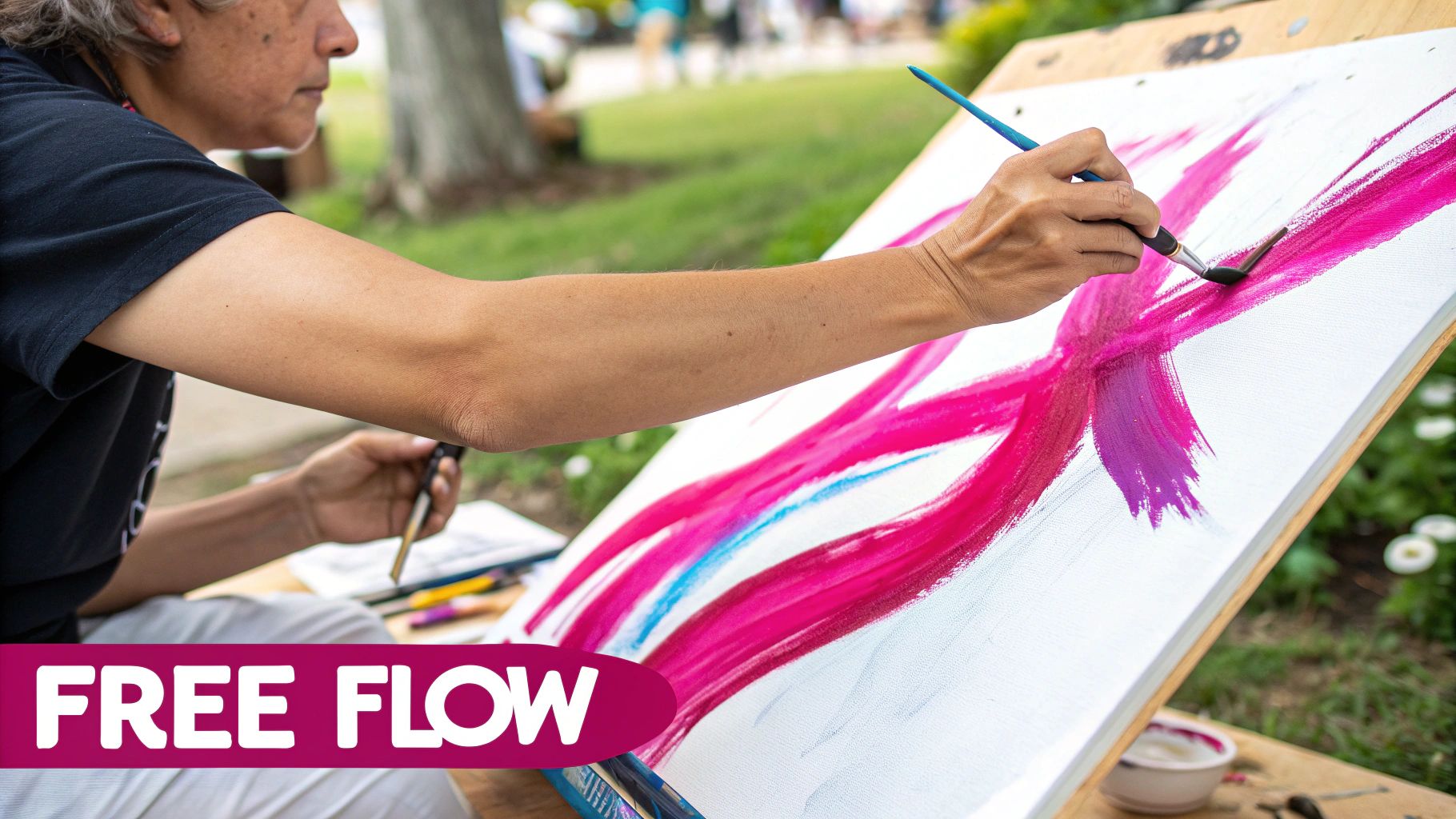
To really get into intuitive painting, you have to shift your mindset. It’s not about following a set of external rules but about tuning into your own inner guidance. This isn't just about throwing paint at a canvas and hoping for the best; it's a deliberate practice of listening to yourself.
When you understand these core ideas, you're not just painting—you're opening up a space for genuine creative freedom and self-discovery. Let’s break down the principles that make this process so personal and powerful.
The Journey, Not the Destination
The most important shift to make is focusing on process over product. In our day-to-day lives, we're constantly judged by the final result. But with intuitive painting, the real magic happens during the act of creation. The goal isn't the finished piece, but the feelings, insights, and moments of connection you discover along the way.
Think of the final painting as a beautiful souvenir from your creative journey. This simple change in perspective takes all the pressure off. You no longer have to worry about creating a "masterpiece," which frees you up to simply be present and enjoy the experience as it unfolds.
Making Friends With Your Inner Critic
Another key pillar is non-judgment. We all have that nagging voice in our heads, the one that whispers we’re “not good enough” or “doing it wrong.” Intuitive painting is a gentle invitation to ask that voice to take a backseat.
In this space, there are no mistakes, only discoveries. A drip of paint you didn't intend or a color choice that seems "ugly" isn't a failure—it's an opportunity. It's a signpost pointing you in a new and unexpected direction. It’s really just about treating yourself with kindness, no matter what shows up on the canvas.
The creative intelligence within you wants to free you from your judgments. It aims to help you experience the embodied love that exists underneath the concepts of the mind.
This isn’t just about painting, either. Learning to trust your intuition, even when your logical mind protests, builds a habit of self-compassion that can spill over into every other part of your life.
The Power of Being Present
Finally, intuitive painting is built on spontaneity and mindfulness. Spontaneity means trusting your gut. It’s about grabbing the color that feels right without asking why, or making a bold mark just because it feels good in the moment.
This is how you get past those frustrating creative blocks and tap directly into your instincts. It's also a fantastic way to understand abstract art on a much deeper, more personal level.
Mindfulness, on the other hand, is what keeps you grounded in the now. Instead of worrying about how the painting will turn out, you pay attention to the simple, physical sensations—the feeling of the brush in your hand, the texture of the paint, the emotions bubbling up inside you.
Together, these principles transform a blank canvas from something intimidating into a playground for profound self-exploration.
How Intuitive Painting Boosts Your Well-Being
Intuitive painting is so much more than just a creative hobby. It's a genuine practice for looking after your mental and emotional health. By letting go of the need for a perfect final product and instead focusing on the journey, it becomes a kind of art therapy you can practice anytime. It offers a safe space to work through tricky feelings, quiet a busy mind, and dissolve creative blocks, all without the pressure of getting it "right."
This free-flowing process is incredibly therapeutic because it helps you sidestep the logical, often critical, part of your brain. You start tapping into the parts connected to emotion, mindfulness, and even memory. This allows you to give shape and color to feelings that are often too big or too tangled for words. The simple act of picking a color that resonates or making a mark that just feels right is a small but powerful step toward knowing yourself better.
A Pathway to Emotional Processing
When you stand before a blank canvas with nothing but your feelings to guide you, you’re opening a direct line to your inner world. This practice can be a real lifeline when you're navigating difficult emotions or past experiences.
The painting becomes a container for your emotions. It can hold your joy, your grief, your frustration, or your peace, allowing you to witness these feelings from a new perspective without judgment.
Translating your inner state into color and form is deeply restorative. As you paint, you aren't just moving a brush—you're moving feelings from inside you onto the canvas. This can make overwhelming emotions feel more manageable and easier to understand. This practice can genuinely improve your quality of life by giving you a reliable tool for self-care.
Building Confidence and Reducing Stress
One of the most powerful benefits is how intuitive painting builds real, lasting creative confidence. When you remove all the rules and the fear of making a mistake, you start to trust your own instincts. This newfound trust doesn't just stay in your art studio; it spills over into other parts of your life, helping you make decisions with more self-assurance.
The practice is also a fantastic stress-reduction tool. The immersive, almost meditative state you enter while painting naturally promotes mindfulness, pulling you into the present moment. Focusing on physical sensations—the feel of the brush in your hand, the texture of the paint on the canvas—is incredibly calming for the nervous system and helps lower stress.
Emerging research backs this up, showing how intuitive art activates brain regions tied to emotional regulation. Studies have found these practices effective in helping people process trauma and improve their mental health. Some educational approaches have even shown that approximately 70-80% of children gain creative confidence when they are introduced to intuitive art. You can find more about how intuitive art is classified and studied on Wikipedia.
How to Start Your Intuitive Painting Practice
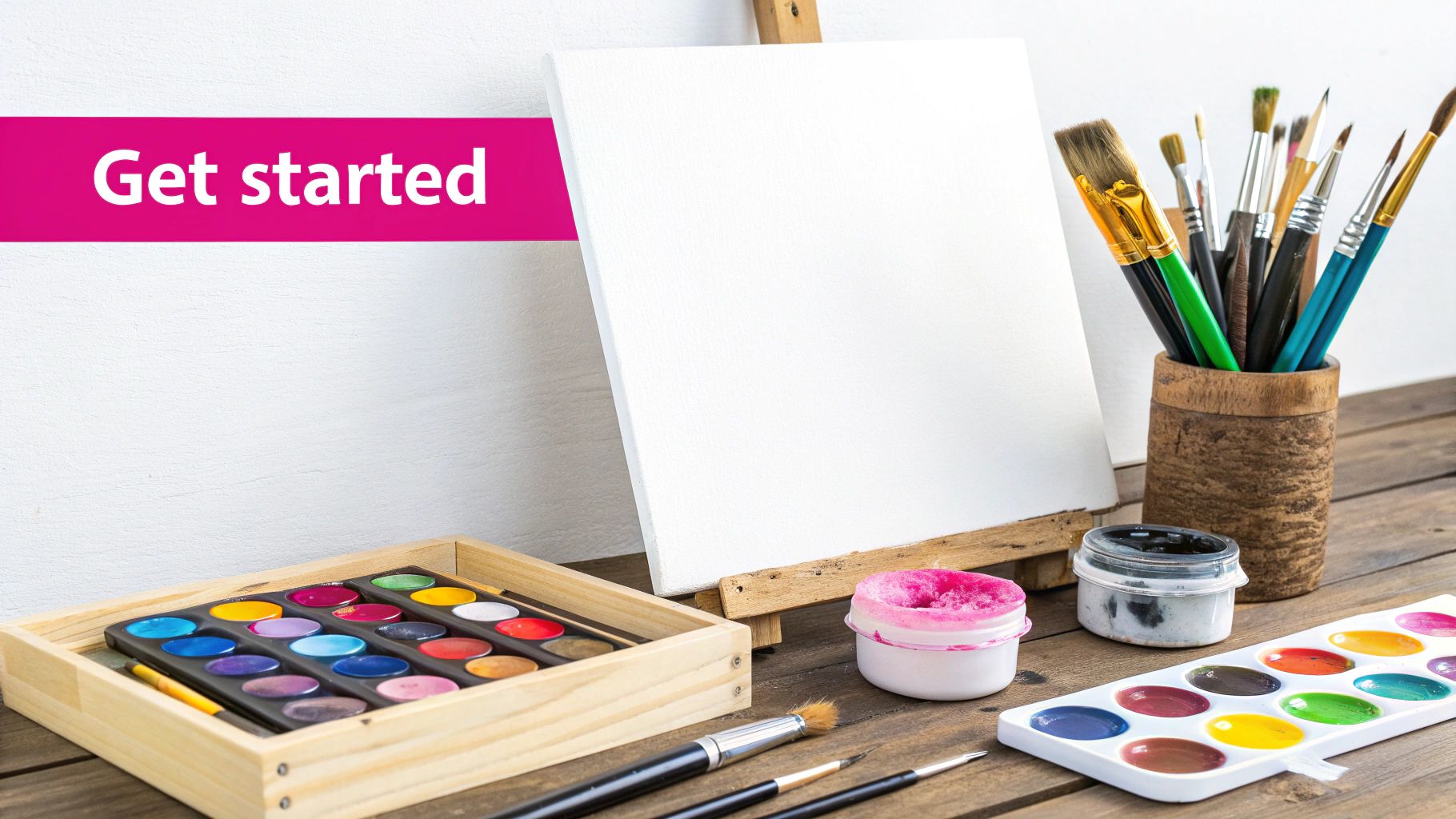
Jumping into your own intuitive painting practice is far simpler than you might imagine. That's the real beauty of it—this isn't about having a fancy studio or expensive, professional-grade supplies. The entire point is to just begin, not to get bogged down in perfect preparation.
Honestly, all you need is a surface to paint on, some color, and a brush. It could be a piece of cardboard, some basic craft paints, and an old brush you don’t mind messing up. The goal is to remove every possible barrier, so just use whatever you can get your hands on right now.
Creating Your Sacred Space
Your environment really matters when it comes to relaxing and connecting with your inner voice. This doesn’t mean you need a whole room dedicated to art. Your "sacred space" can be a quiet corner of your kitchen table or even a spot on the floor.
The key is to minimize distractions. Put your phone on silent, let your family or roommates know you need some uninterrupted time, and maybe put on some music that makes you feel calm and open. You're just creating a little bubble of time and space that belongs only to you and your creative spirit.
Taking the First Steps
That fear of the blank canvas? It's a real thing, but intuitive painting gives you a gentle way to sidestep it. Your first move isn't about planning a masterpiece; it’s just about making a single, simple mark.
The aim is to bypass the critical mind and connect with the heart. When you start with one simple idea or feeling, the painting often takes an unexpected and wonderful turn, leading you somewhere new.
To get the ball rolling, try one of these simple prompts:
- Set an Intention: Before you even pick up a brush, decide on a one-word intention for your session. Maybe it's 'play,' 'release,' or 'curiosity.'
- Choose a Color: Don't overthink it. Just look at your paints and grab the one color that calls to you in this moment.
- Make Your Mark: Use that color to make one mark on your surface—a dot, a line, a scribble. Then, just pause. Take a breath and see what you feel like doing next.
This whole process is about starting a conversation with the canvas, one mark at a time. It requires you to trust yourself, which is a powerful skill to build. If you want to dig deeper into this, check out my guide on how to build self-confidence as an artist. Just remember, every single mark is a step forward on your journey.
Why Intuitive Art Is Gaining Momentum Now
It’s no surprise that intuitive painting is striking a chord with so many people right now. We live in a world of screens, schedules, and endless notifications. It's only natural to seek out something real, something tangible that lets us unplug and simply be.
That’s exactly what this kind of art offers. It’s a powerful escape from the digital noise. Instead of passively scrolling, you're actively mixing paint, feeling the texture of the canvas, and getting lost in the flow of creation. It's a breath of fresh air in a culture that’s often obsessed with results and productivity.
A Shift Toward Wellness and Authenticity
The growing interest in intuitive painting goes hand-in-hand with a much larger cultural shift toward wellness. People are actively looking for ways to take care of themselves, not just physically but mentally and emotionally. Intuitive painting fits perfectly into this, serving as a powerful tool for mindfulness, emotional expression, and just getting to know yourself a little better.
We're even seeing this change in the art world. There's a real hunger for art that feels personal and emotionally honest. More and more, collectors and art lovers are drawn to the raw energy of an artist's process, sometimes valuing it even more than flawless technical skill.
People don't just want something to hang on the wall anymore. They want a piece that speaks to them, that carries a certain energy or tells a story. This desire for a deeper, almost spiritual connection is what's really fueling the interest in intuitive and abstract art.
The market backs this up. While some traditional art markets have cooled, abstract and intuitive art sales are climbing, with some reports showing annual growth of 15-20% in key markets. On the ground, I’ve seen workshops and online courses fill up faster than ever. Some providers are reporting growth of over 25% a year as people turn to art for their well-being. You can dive deeper into these expanding market trends at The Sparkling Hippie.
Answering Your Questions About Intuitive Painting
Even as more people are drawn to expressive arts, it's totally normal to have questions. Stepping into a practice that prioritizes feeling over form can feel a bit strange at first, especially if you don't consider yourself an "artist."
Let's tackle some of the most common uncertainties head-on and help you feel more comfortable getting started.
"But I'm Not a 'Good' Artist…"
This is probably the number one question I hear. The answer? It doesn’t matter. In fact, you can throw the whole idea of "good art" out the window.
Intuitive painting isn't about learning proper proportions or creating a masterpiece for a gallery wall. It’s all about the act of expressing yourself. This makes it an incredibly powerful tool for absolutely everyone, no matter their artistic background.
"What If I Don't Feel Creative or Intuitive?"
This is another huge one. So many of us have been taught to believe that creativity is a special talent reserved for a select few. But this practice is built on the idea that intuition and creativity are innate parts of being human.
Think of it this way: your creativity isn't lost, it's just buried. The goal isn't to force it to appear, but simply to give it the space and permission to come out and play.
The only real step you need to take is that first one—dipping your brush and making that first mark on the canvas. The rest will follow.
"What Do I Do With the Paintings When I'm Done?"
Because the real magic happens during the process, what you do with the finished piece is completely up to you. There's no right or wrong answer here; it’s about what feels right for your journey.
- You can keep them. Many people see their paintings as a kind of visual journal, a beautiful record of their inner world at a specific moment in time.
- You can paint over them. Some artists use the same canvas repeatedly, allowing new experiences and emotions to build upon the old ones, creating rich, layered histories.
- You can let them go. Others simply discard their paintings, honoring the fact that the work served its purpose in the moment it was created. The act of creation was the destination.
One final thought: while intuitive painting can feel incredibly healing, it’s not the same thing as art therapy. Art therapy is a clinical discipline guided by a licensed therapist. Intuitive painting is a personal practice—a way for you to connect with yourself, explore your inner world, and find a sense of release.
At Wiktoria Florek, the power of intuition is at the heart of every creation. Discover how emotional presence and spontaneous movement come to life in large-scale abstract art by exploring the collection.