
Decoding Abstract Art in High-End Spaces
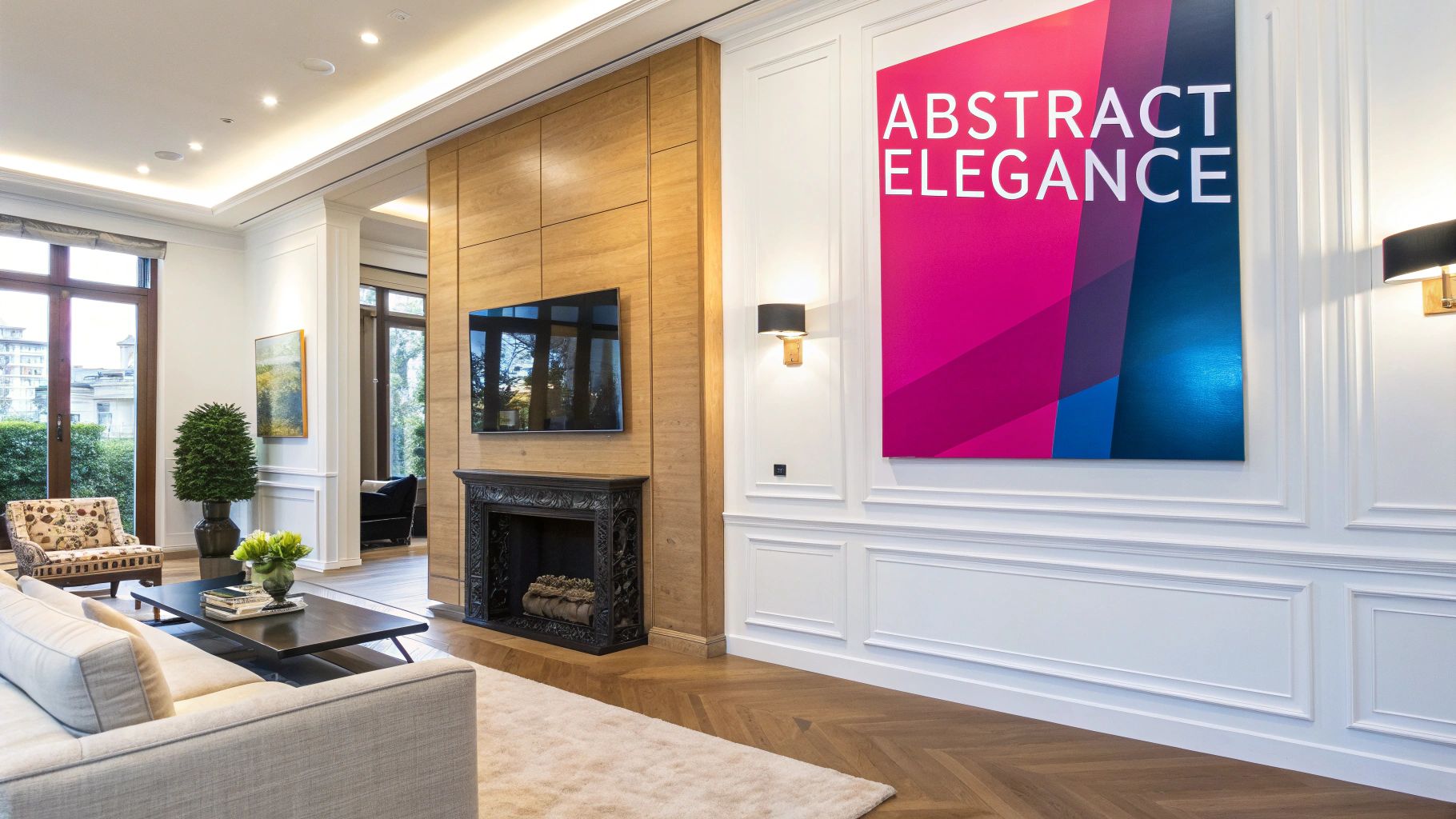
In the world of high-end interiors, abstract art does more than just fill a blank wall; it sets the emotional tone for the entire space. Think of it as the soul of a room. While fine materials like Italian marble and hand-woven silks speak to quality, abstract art for luxury interiors communicates feeling, depth, and personality. It’s what turns a visually impressive house into an emotionally resonant home, creating a silent dialogue between the environment and its inhabitants.
This unique ability to convey emotion is why certain pieces command such high value. The global art market is a testament to this, with an estimated sales value of $57.5 billion in 2024. Within this market, sales of artworks between $10 million and $50 million accounted for about $1.86 billion, highlighting the serious investment behind luxury art. Abstract pieces are a cornerstone of this segment, valued for their power to bring modern sophistication to prestigious interiors. You can explore further art market dynamics and discover more insights about this evolving sector.
Beyond Decoration: The DNA of Investment-Worthy Art
What separates an expensive decoration from a genuine piece of investment art? The key difference is emotional presence and artistic intent. A decorative piece is often chosen to simply match a color scheme, acting like a high-end accessory. An important work of abstract art, however, possesses a visual and emotional weight that can anchor an entire room. It doesn’t just blend with the decor; it elevates it.
Top designers understand this dynamic well. They use abstract art as both a focal point and a conversation starter. The right piece can:
- Establish a mood: A painting with fluid, calming blues can create a serene sanctuary, while one with dynamic, energetic strokes can inject life into a formal space.
- Add complexity and texture: Mixed-media abstract works often introduce a tactile quality that complements the smooth, polished surfaces common in luxury design.
- Tell a story: The artwork becomes a reflection of the owner's journey and taste, adding a deeply personal layer to the design narrative.
Learning the Language of Abstraction
Understanding abstract art isn't about deciphering a hidden meaning or finding a recognizable image. It's about responding to its core elements—color, form, texture, and composition. For a deeper dive, you might find our guide on how to understand abstract art helpful. When you begin to see how these components work together, you build the confidence to choose pieces that truly speak to you.
You'll start to recognize the subtle markers of quality: the assurance in a brushstroke, the harmony in a seemingly unbalanced composition, and the emotional impact a piece carries. This skill is vital for making choices that enhance, rather than compete with, your carefully designed luxury space, ensuring your art collection is as meaningful as it is beautiful.
Selecting Art That Actually Works With Your Space
Choosing the right artwork isn't just a purchase; it's the start of a long-term relationship with a piece that will shape your daily environment. Selecting abstract art for luxury interiors requires moving beyond that first spark of attraction. Experienced designers treat this as a strategic process, carefully considering how a room's specific features will interact with the art. The same bold painting that looks perfect in a wide-open, white-walled gallery might overwhelm an intimate dining room with its unique lighting and architectural details.
The goal is to shift from simply "liking" a piece to truly understanding how it will perform in your home. A great choice results from a thoughtful analysis of the artwork's composition, color, and style in relation to your home's existing design story.
Matching Art to Architecture and Mood
Before you commit, think about the conversation that will happen between the art and the room. It’s like casting an actor for a role; the art has to fit the part the space requires. A grand, minimalist living room with soaring ceilings might demand a large-scale piece with powerful, decisive strokes. A cozy study, however, could be the perfect home for a more detailed, textured work that encourages you to step closer and look again.
Ask yourself these key questions:
- Compositional Energy: Does the movement in the art complement the room's lines, or does it fight them? A painting with strong vertical lines can emphasize high ceilings, while a piece with soft, flowing shapes can balance a room's sharp angles.
- Style Harmony: How does the abstract style work with your furniture? A geometric abstract piece can pair beautifully with modern, clean-lined furniture. In contrast, a lyrical, expressive painting can offer an exciting juxtaposition against more traditional or rustic decor.
- Emotional Tone: What feeling do you want the room to evoke? Art has a direct line to our emotions. Studies show that looking at art can increase positive feelings about a space by 63%. A calm, monochromatic work can create a feeling of peace, while a piece bursting with bright colors can bring energy and joy into the room.
Strategic Color and Material Harmony
Color is essential, but it’s about more than just matching a shade from your sofa pillows. It’s about creating a deeper connection between the artwork's palette and your interior's finishes. The color temperature—the underlying warmth or coolness of the tones—is especially important. A cool-toned blue abstract painting might feel out of place against warm wood finishes but would look stunning next to polished concrete or chrome.
The infographic below shows three core strategies for building color harmony in your space.
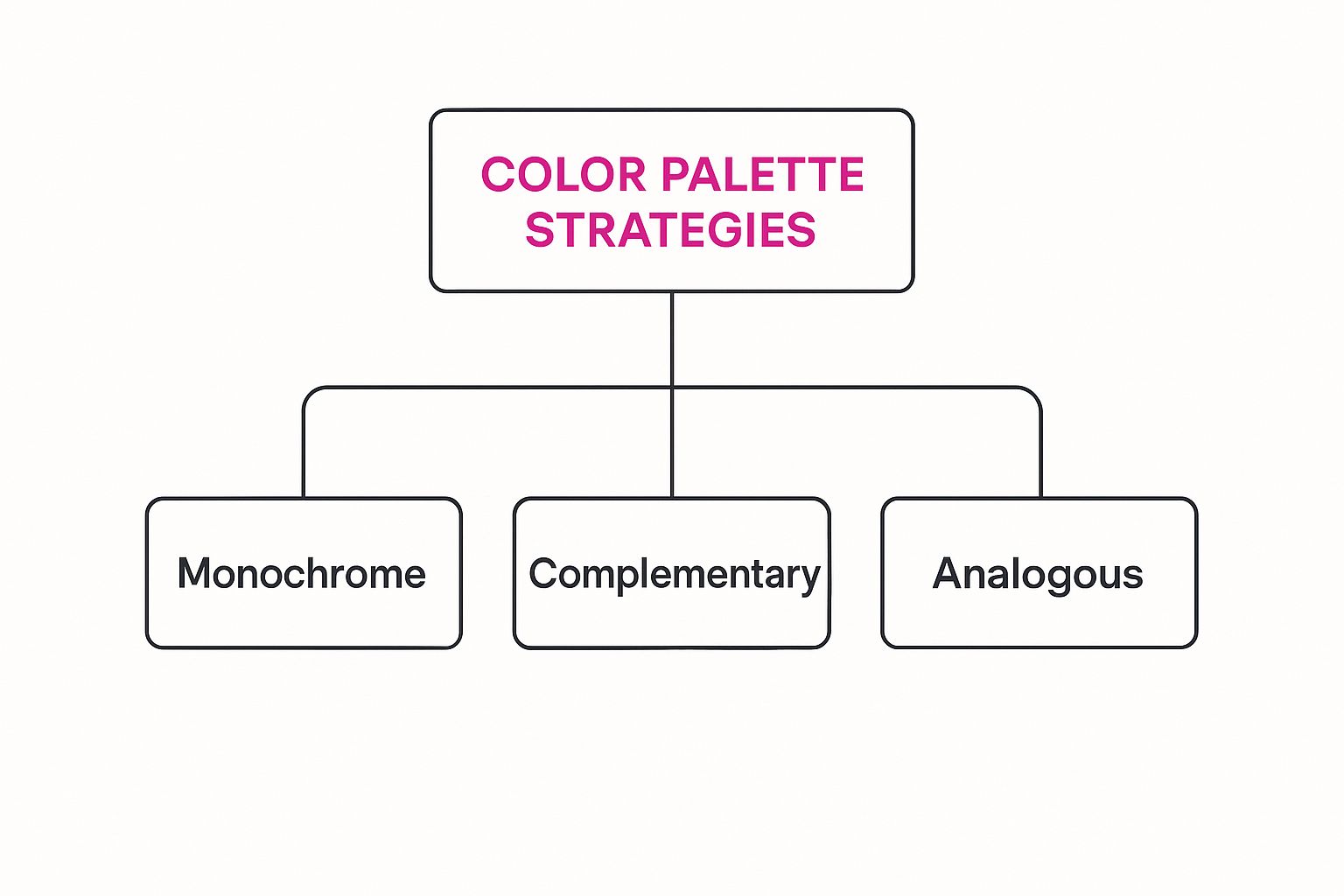
This guide illustrates how to create a unified look, whether by using different shades of one color (monochrome), creating dynamic energy with opposites (complementary), or crafting a peaceful flow with neighboring colors (analogous). Similarly, materials within the art, like gold leaf or metallic pigments, can beautifully reflect brass light fixtures but might clash with silver or nickel finishes if not planned carefully. The objective is to design a space where every element feels intentional, resulting in an interior that is both visually impressive and emotionally resonant.
Getting Scale Right (When Bigger Isn't Always Better)

Selecting the right scale for abstract art in luxury interiors is less about size and more about creating harmony. Many assume a large, empty wall automatically requires a massive canvas, but this can be an expensive mistake. An oversized piece can easily overwhelm a room, shrinking the furniture and disrupting the carefully considered flow of the space. On the other hand, art that is too small gets lost, failing to make its intended statement. The real secret is in mastering proportion and its dialogue with the surrounding environment.
Think of your artwork's scale as the soundtrack to a film; it should complement the room's mood and intensity. A grand living room with soaring ceilings might be the perfect stage for a monumental piece that commands attention. In a cozier space, like a library or a hallway, a series of smaller, connected works could tell a more intimate and engaging story. The objective is to achieve visual balance, making the art feel as if it belongs in the space, not just dropped into it.
The Rule of Proportions: A Practical Framework
Interior designers often use simple guidelines to achieve a pleasing sense of proportion. These aren't strict laws, but they are excellent starting points. A widely used principle is that an artwork should measure roughly two-thirds to three-quarters the width of the furniture it hangs over, whether that’s a sofa, a console, or a headboard. This simple ratio forges a strong visual anchor between the art and the furniture below.
When placing art on a blank wall, your goal is for the piece to occupy a noticeable, yet balanced, portion of the space. Imagine the wall as a grid; the artwork shouldn't feel crammed into one corner or look like a tiny island in a vast sea of white.
The Impact of Architecture and Groupings
The architecture of your room is a major factor in choosing the right scale. High ceilings, for example, are an invitation for vertically oriented art that draws the gaze upward, celebrating the room's height. Conversely, in rooms with lower ceilings, a wide, panoramic piece can create an illusion of space and openness.
Don't overlook the power of a thoughtfully arranged group of artworks, often called a gallery wall or a triptych. This is a brilliant solution when one large piece feels too dominant or when you wish to display several pieces by an artist like Wiktoria Florek. To make it work, follow these tips:
- Create Cohesion: Unify the collection with a common thread, such as a consistent color palette, frame design, or artistic theme.
- Mind the Gap: Keep the spacing between each piece consistent—usually 2 to 5 inches apart—for a clean and organized appearance.
- Treat It as One Unit: The entire group should follow the same two-thirds rule, filling the space as if it were a single, large composition.
By giving careful thought to scale, you ensure your chosen art makes a graceful statement, elevating your interior without overpowering it. This deliberate approach is a true mark of sophisticated design.
Mastering Color Harmony in Abstract Art Selection
Color is the soul of a room. When choosing abstract art for luxury interiors, it’s the element that creates either a seamless symphony or a jarring distraction. This isn't just about picking colors you like; it’s about understanding the delicate dance between hues, tones, and the light that fills your space. The right artwork can blend with your existing palette or become the bold first note that inspires the entire room's design. A strategic approach to color is what elevates an interior from simply decorated to truly intentional.
The demand for personalized home decor confirms this, with the wall art market expected to reach $8 billion by 2033. Abstract art is a key player, celebrated for its ability to create emotional responses while complementing high-end designs. This growth shows that buyers want art that does more than fill a space—they want pieces that feel essential. If you're interested in market trends, you can learn more about best-selling art styles and market growth.
Warm vs. Cool: The Underlying Mood of Your Space
Think of color temperature as the room's underlying mood. Every hue has a "temperature"—either warm (with red, orange, or yellow undertones) or cool (with blue, green, or purple undertones). This subtle quality dramatically impacts how art interacts with its surroundings. A painting dominated by cool blues and grays will feel crisp and calm next to polished chrome and white marble. In a room with warm walnut wood and cream fabrics, that same piece might feel cold and disconnected.
Before you start looking for art, take a moment to assess your room's dominant temperature.
- Warm Interiors: Look for abstract pieces with hints of ochre, sienna, terracotta, gold, or creamy whites. These colors help build a cozy and inviting atmosphere.
- Cool Interiors: Seek out art with shades of cobalt, slate gray, emerald green, or pure white. These tones foster a sense of modern calm and sharpness.
Creating Depth with Strategic Color Stories
A common misstep is picking art that perfectly matches a room's colors. This can make a space feel one-dimensional and predictable. Instead, the most impactful abstract art for luxury interiors introduces a color story that adds depth and personality. Think of it as inviting a new, interesting guest to a dinner party. The aim is harmony, not a perfect echo.
Here are a few advanced strategies to consider:
- The 60-30-10 Rule: This classic design principle is perfect for art. If your room is 60% neutral (like beige walls) and 30% a secondary color (like navy blue furniture), your artwork can provide the final 10% accent. A splash of vibrant rust or deep magenta in the painting will create a balanced yet dynamic feel.
- Metallic Accents: The use of gold, silver, or bronze leaf in abstract art can instantly elevate a space. To make it work, align these metallic elements with your existing fixtures. Gold leaf art pairs beautifully with brass hardware, while silver tones complement chrome or nickel.
Ultimately, mastering color harmony is about building confidence in your selections. By moving beyond simple color matching and embracing these strategic relationships, you ensure your art feels not just expensive, but essential. You transform your luxury interior into a space with true emotional and visual resonance.
Professional Placement and Lighting Secrets
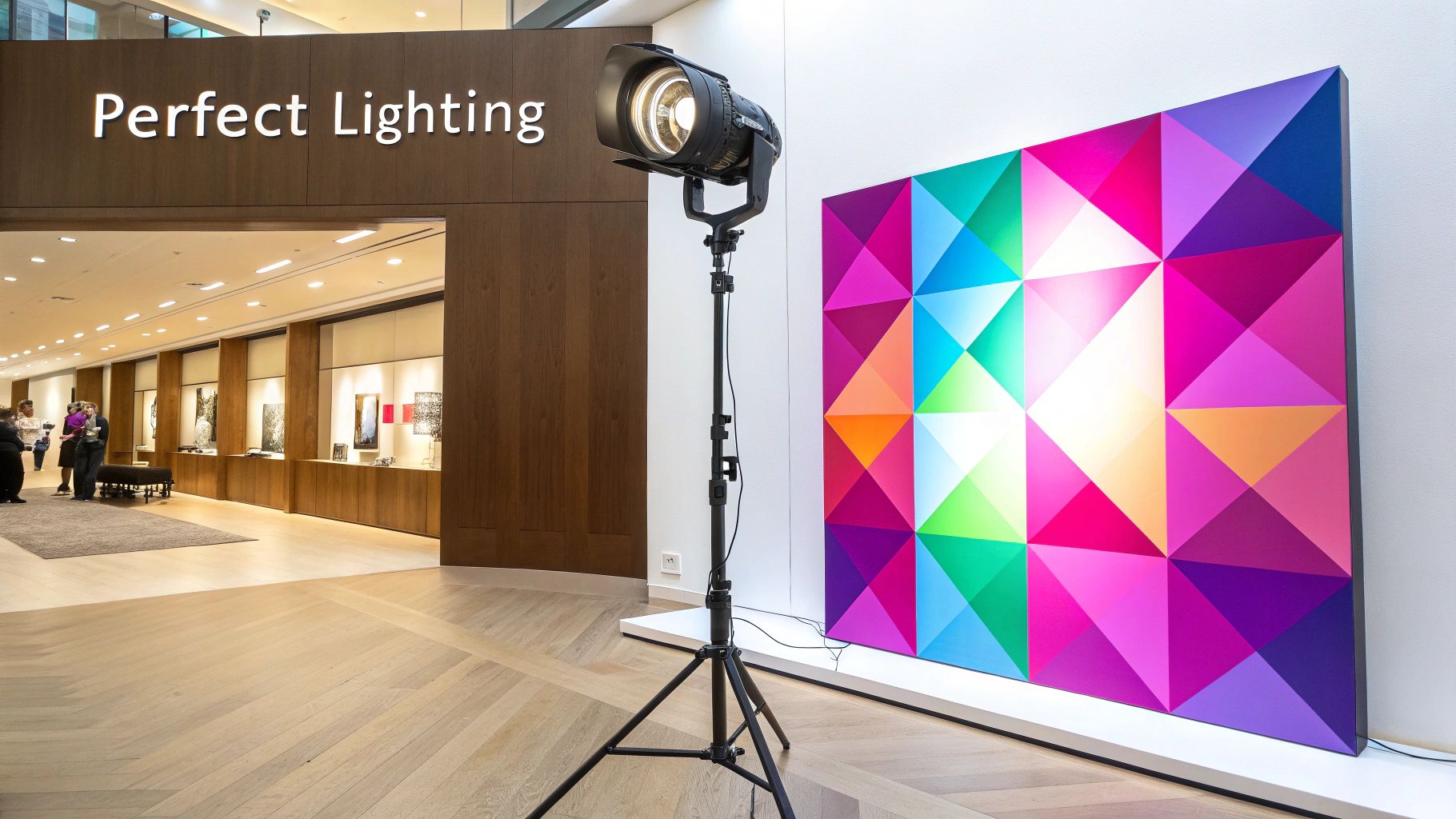
Even a masterpiece can feel lost if it's poorly placed or lit. The most stunning piece of abstract art for luxury interiors depends on its surroundings to truly shine. Professional placement and lighting are not just finishing touches; they are core components that unlock the artwork's full emotional impact. Taking a cue from museum curators, the goal is to create an experience, not just hang a painting. This approach ensures your investment is presented with the significance it deserves.
The first rule of placement is hanging the art at the proper height. It’s a common mistake to hang art too high, which creates a visual disconnect and forces people to crane their necks. The standard museum guideline is to position the center of the artwork 57 inches from the floor. This measurement corresponds to the average human eye level, allowing the art to meet the viewer's gaze directly for a more personal and engaging connection.
The Art of Illumination
Lighting is where the real magic happens. Think of it as the final brushstroke that sets the mood and reveals the hidden textures and depths of a painting. Just as a director uses light to guide emotion in a film, strategic lighting highlights the unique form, color, and texture of your artwork. Relying on general room lighting can make a piece feel flat and wash out its subtle details. For art to truly stand out, it needs its own dedicated light source.
Here are a few professional lighting techniques to consider:
- Wall Washers: These fixtures cast a wide, even layer of light across a large surface. They work beautifully for oversized pieces or gallery walls, providing a soft, uniform glow that minimizes distracting shadows and allows the entire composition to be seen clearly.
- Picture Lights: A more classic choice, these lights are mounted directly on the wall or frame above the artwork. Modern LED versions offer superb color accuracy and can be adjusted to prevent light from spilling beyond the frame, creating a focused and intimate viewing area.
- Spotlights: For a bold, high-contrast look, adjustable spotlights or track lighting are an excellent option. They let you aim a precise beam of light to sculpt the artwork, making it pop from the background. This technique is especially powerful for pieces with heavy texture, metallics, or sculptural elements.
To help you decide on the best lighting for your space, here's a quick comparison of the most common solutions. Choosing the right technology is essential not only for visual appeal but also for preserving the artwork from potential damage caused by heat or UV rays.
Lighting Solutions for Abstract Art Display
Comparison of different lighting options and their effectiveness for showcasing abstract artwork
| Lighting Type | Best For | Color Accuracy | Cost Range | Installation Complexity |
|---|---|---|---|---|
| LED Spotlights | Highlighting texture; dramatic effect | High (CRI 90+) | Moderate – High | Moderate |
| Wall Washers | Large canvases; gallery walls | High (CRI 90+) | Moderate – High | Moderate |
| Picture Lights | Small to medium pieces; traditional look | Good (CRI 85-95) | Low – Moderate | Low |
| Ambient Light | General illumination; not ideal | Varies | N/A | N/A |
As the table shows, options like LED spotlights offer the best color accuracy for a dramatic effect, while picture lights are a simpler, more affordable solution for smaller pieces.
By combining correct height placement with thoughtful, strategic lighting, you create a dedicated stage for your art. This professional approach guarantees that your abstract art for luxury interiors is not just seen, but truly experienced and appreciated every single day.
Creating Custom Abstract Art That Fits Perfectly
Sometimes, the perfect piece of abstract art for luxury interiors isn’t waiting in a gallery; it’s an idea that needs to be brought to life. Commissioning a custom artwork is the ultimate way to get a piece that is flawlessly suited to your space, vision, and emotional needs. It's a deeply personal process that transforms you from a buyer into a co-creator, resulting in an artwork with a story that is uniquely yours. This path is ideal when you need a specific scale, an exact color palette, or a piece that truly captures the soul of your home.
The journey starts not just with an idea, but with finding the right artistic partner. The most successful commissions come from a genuine connection with an artist's existing work and creative philosophy. This relationship is built on mutual respect—balancing your clear vision with the artist's creative freedom.
Finding and Collaborating with the Right Artist
The first step is to identify an artist whose style truly speaks to you. Spend time exploring their portfolio and reading their artist statements. Do their pieces create the feeling you want in your space? An artist’s work is an extension of their worldview. For instance, some artists create pieces that offer a sense of stillness and emotional presence. You can discover more about this artistic philosophy to see if it matches your own goals. Once you've found a potential match, the collaborative process can begin.
A strong collaboration is the foundation of a successful commission. Here’s a typical framework for how it works:
- Initial Consultation: This is your chance to share your vision. Bring photos of your space, fabric swatches, paint samples, and measurements. Talk about the mood you want to create, the scale required, and any specific colors you'd like to feature.
- Concept & Sketches: The artist will usually provide preliminary sketches, color studies, or a digital mockup. This stage is essential for agreeing on the composition and overall direction before the final work starts.
- Timeline and Contract: A clear agreement protects both you and the artist. It should detail the total cost, payment schedule (typically a 50% deposit is required upfront), estimated completion date, and terms for any revisions. Timelines can range from a few weeks to several months, depending on the artist's schedule and the complexity of the piece.
Understanding Pricing and Expectations
Commissioning art is an investment in a one-of-a-kind creation, and its price reflects that. The cost is typically set by several factors, including the artist's reputation, the size of the artwork, the complexity of the piece, and the materials used. It is common for artists to charge a premium of 20-30% more than their existing works of a similar size. This extra cost covers the additional time spent on consultations and the custom nature of the project.
Working with an emerging artist can be a great way to get a significant piece at a more accessible price, while established artists offer a proven track record and greater potential investment value. Regardless of who you choose, the most rewarding commissions happen when you trust the artist's process. Provide clear direction, but also allow room for their unique interpretation to shine. This synergy is what produces extraordinary results—a piece of abstract art for luxury interiors that not only fits perfectly but also carries a piece of your own story within its layers.
Your Strategic Action Plan for Abstract Art Success
Let's move from theory to a practical roadmap. Choosing and displaying abstract art for luxury interiors is a thoughtful process, not an impulsive buy. This action plan breaks down the key strategies into clear, manageable steps, taking the guesswork out of the equation and building your confidence as a collector. By following this framework, you'll make choices that not only add deep emotional value but also protect your investment.
Phase 1: Evaluation and Selection (The Art of the Smart Buy)
This first phase is all about careful assessment. It's about looking beyond your initial emotional reaction to decide if a piece is the right long-term fit for your home and your collecting goals.
- Define Your "Why": Before you even start browsing, get clear on your main objective. Are you trying to fill a specific wall, begin a new collection, or find an emotional centerpiece for a room? Knowing your "why" will act as your compass through the selection process.
- Create a Space Profile: Take a moment to document your room's key details. This includes precise wall dimensions, the scale of your furniture, the dominant color temperature (is the room warm or cool-toned?), and the lighting throughout the day. This data-driven approach helps prevent expensive mistakes with scale and color.
- Set Quality Benchmarks: Learn to distinguish true luxury art from simple decoration. Look for signs of genuine artistic skill, like confident brushwork, a balanced composition, and the use of high-quality materials. A great work of art should feel like it has its own presence, rather than just matching the sofa. For more on this, an artist’s perspective on how to collect art can offer some helpful guidance.
Phase 2: Acquisition and Installation (Securing Your Vision)
Once you've zeroed in on a piece, the focus shifts to logistics and making sure it's installed perfectly. Identifying red flags in service providers is just as crucial as spotting quality in the artwork itself.
- Vet Your Services: If you are commissioning a custom piece or hiring installers, always check their references and look at their past projects. A true professional will communicate clearly about timelines, costs, and their process. For commissions, a 50% deposit is a standard industry practice.
- Trust But Verify: Use digital mockups to visualize the art in your space. Even better, ask if a home trial is possible. This step is essential for confirming that the scale and colors feel right in person, not just in a gallery or on a screen.
- Plan the Installation: For large or valuable artworks, it's wise to coordinate with professional art handlers. Talk to an electrician about lighting placement before the art is hung to guarantee the final result is exactly as you imagined.
Phase 3: Long-Term Stewardship (Protecting Your Investment)
Your role as a collector doesn't end once the art is on the wall. Proper care is what ensures its beauty and value will last for generations.
- Documentation is Key: Keep all your records organized and in a safe place. This includes the artist's certificate of authenticity, the original bill of sale, and any professional appraisals you have done for insurance.
- Maintenance Schedule: Create a simple care plan. Dust frames gently with a soft, dry cloth. Position artwork out of direct sunlight to prevent the colors from fading. Periodically check that your art lighting isn't generating too much heat.
- Evolve with Intention: Your collection is a living, breathing part of your home. As your tastes develop, don't hesitate to move pieces to different rooms or even put some in storage to rotate your display. A truly great art collection is one that grows and changes along with you.
By following these strategic steps, you can confidently build a collection you'll love for years. To discover art that offers both emotional depth and timeless elegance, explore the works of Wiktoria Florek.