
Understanding Wiktoria Florek's Unique Investment Appeal

Imagine identifying a promising startup just before it takes off. That's the potential of investing in an emerging artist like Wiktoria Florek. It's about seeing future promise, not just buying a pretty picture.
We're looking for artists with a unique vision, someone who could change how we see contemporary abstract art. Wiktoria Florek, with her mixed media approach, offers just that – a fresh perspective in a competitive field.
Her work distinguishes itself through its focus on emotional storytelling. Think of her paintings as visual narratives, expressing complex emotions through the interplay of color and texture. This powerful connection resonates with viewers, the kind of impact that fuels collector interest and builds long-term value.
For instance, the layered materials—from acrylics to gold leaf—aren't merely decorative. They add depth and nuance to the emotional story being told on the canvas. It’s like adding layers of meaning to a good book; each layer adds complexity and richness to the overall experience.
This focus on emotional depth aligns perfectly with current art market trends. Wiktoria Florek's mission to evoke feelings through abstract art resonates with a broader market that values emotional connection. Contemporary art, including abstract pieces, represented roughly 44% of the global art market in 2020, with sales frequently in the millions.
While specific sales figures for Florek aren't public, this market context, coupled with her distinct style, suggests strong investment potential as her reputation grows. Learn more about Wiktoria Florek here.
Furthermore, understanding an artist's development is key for any art investor. Tracing Florek’s artistic journey—from her earliest pieces to her current work—allows us to identify the signature elements that set her apart. This isn’t about chasing fads. It’s about recognizing core artistic qualities.
These qualities, such as her bold use of color or her incorporation of natural pigments, are what elevate a promising artist to a sought-after investment. They are the hallmarks that experienced collectors seek, signaling an artist’s longevity and potential for appreciation. Think of it like identifying a company’s core competencies – those strengths that drive its long-term success.
Why Abstract Art Investment Is Having Its Moment
The art market is a dynamic and ever-changing landscape. Right now, something fascinating is happening. Instead of the usual scramble for big-name masterpieces, astute collectors are quietly turning their attention to contemporary abstract art, sensing a unique investment opportunity. This shift represents a fundamental change in how value is perceived in the art world, with artists like Wiktoria Florek and the potential of this art segment taking center stage. So why is this happening now?
Seasoned collectors are drawn to the resilience of abstract art, especially during times of economic uncertainty. Imagine it like this: when the stock market feels like a rollercoaster, tangible assets like art can offer a safe harbor. Think of them as anchors in a storm.
Furthermore, pieces that resonate on an emotional level, like Florek's work, tend to hold their value better than purely decorative art. People form connections with art that speaks to them deeply, creating a sustained demand that transcends market fluctuations.
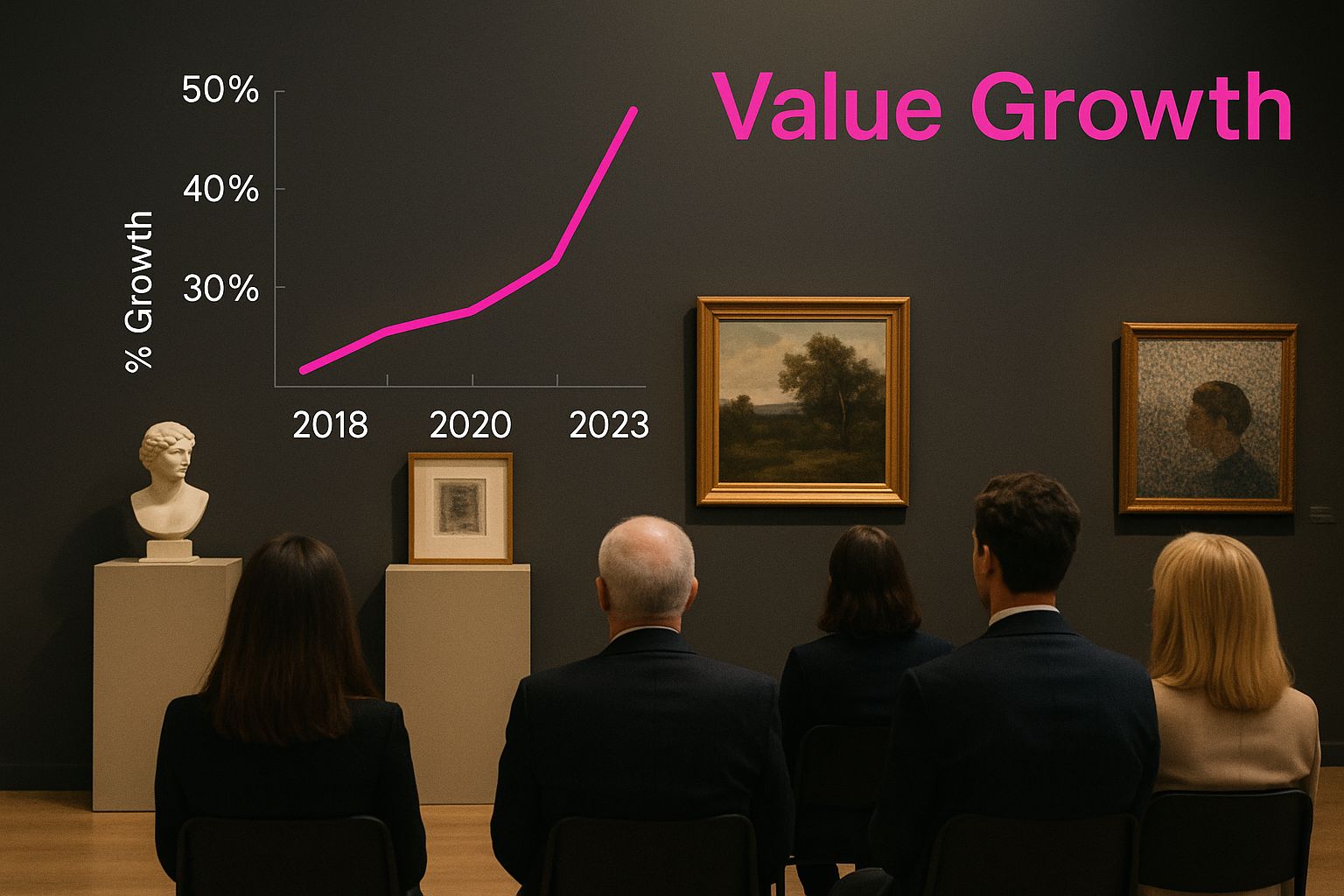
The infographic above captures the energy of an auction gallery, visually representing the potential for value growth within this environment. The presence of an audience highlights the tangible nature of art as an investment, contrasting sharply with the more abstract world of financial instruments. The image emphasizes how experiencing art in a gallery setting, such as seeing Florek’s work firsthand, can solidify its appeal to potential investors.
Understanding Market Trends
Navigating the art market successfully requires a keen understanding of trends. A good place to start is with our guide on understanding abstract art. The key is to identify lasting market movements, not just short-lived fads. Emerging artists often progress through different market tiers – a journey that has significant implications for investors.
To understand abstract art's position in the broader art market, consider the following table. It breaks down the performance of various contemporary art categories as investments.
To illustrate the broader market context, let's look at a comparison of different art categories. The table below provides a snapshot of how different segments of the contemporary art market are performing.
Contemporary Art Market Performance Comparison
| Art Category | Market Share (%) | Average Annual Growth | Investment Risk Level | Liquidity Rating |
|---|---|---|---|---|
| Abstract Art | 15% (Estimated) | 8-12% (Estimated) | Medium | Medium |
| Impressionist Art | 25% (Estimated) | 6-8% (Estimated) | Low | High |
| Modern Art | 20% (Estimated) | 7-9% (Estimated) | Medium | Medium |
| Contemporary Figurative | 10% (Estimated) | 5-7% (Estimated) | Medium | Medium |
| Post-War Art | 30% (Estimated) | 9-11% (Estimated) | Low | High |
Note: These figures are estimates based on general market trends and should not be taken as financial advice.
As you can see, abstract art offers a compelling balance of growth potential and risk. Its market share is growing, and the average annual growth is promising. While specific data on Wiktoria Florek’s art sales is limited, the global art market reached approximately $67.4 billion in 2020, with projections for a 10.3% compound annual growth rate (CAGR) from 2021 to 2028. This growth suggests an increasing demand for abstract art, which could potentially benefit artists like Florek. For more about her vision, you can read Wiktoria Florek’s artist statement here.
Seizing the Moment
The current market presents a unique window of opportunity to acquire carefully selected contemporary abstract pieces before wider recognition drives prices upward. Investing now offers the potential to benefit from the artist's growth trajectory. Think of it like seed investing in a startup. Getting in early can yield substantial returns as the artist gains wider acclaim. This isn't just about buying art; it's about strategically positioning yourself within a burgeoning segment of the art market.
Evaluating Florek’s Work Through An Investor's Lens

Thinking about art as an investment requires a shift in perspective. Instead of picturing a piece on your living room wall, you need to analyze it through a financial lens. This involves understanding what makes a particular artwork attractive to serious collectors, starting with technical skill and artistic innovation.
Assessing Artistic Merit
A crucial aspect of investing in Wiktoria Florek’s work is grasping its artistic merit. This means looking at the composition, the color palette, and the emotional resonance of each piece. Think of a piece of music: a memorable melody and skillful arrangement contribute to its lasting appeal. Similarly, a well-composed and emotionally resonant painting can draw viewers in time and again, increasing its long-term desirability. This sustained interest fuels demand and, ultimately, value appreciation.
Florek’s innovative use of mixed media also plays a key role. Her layered approach, incorporating materials like gold leaf and natural pigments, creates a rich tactile and visual experience. This technique sets her apart and enhances the unique appeal of her pieces. This distinctive quality can be a significant driver of value growth.
Due Diligence: Provenance, Condition, and Documentation
Just like any investment, due diligence is essential. For art, this means evaluating the provenance, condition, and documentation. Provenance refers to the work’s history of ownership, authenticating its origin and impacting its value. Imagine finding a historical document with a clear chain of custody – its value would be significant. A piece of art with well-documented provenance is similarly more attractive to collectors.
The artwork's condition also plays a crucial role. Even minor damage can significantly affect its value. Think of it like buying a classic car – a pristine model commands a premium. A well-preserved artwork is more likely to appreciate over time.
Complete and accurate documentation is equally vital. This includes certificates of authenticity, appraisal reports, and other relevant paperwork. This documentation provides a verifiable record of the work's value and history, offering reassurance to potential buyers and streamlining future transactions.
Portfolio Potential: Identifying Key Works
Understanding which of Florek’s pieces hold the greatest appreciation potential is key to a successful investment strategy. This involves analyzing factors such as the size of the piece, its place within a particular series, and its overall market positioning. Larger pieces often command higher prices because of their visual impact. Works belonging to a significant series can also benefit from the overall narrative and thematic coherence, making them more appealing to collectors.
By carefully considering these factors, investors can pinpoint pieces with the most promising investment potential. This selective approach, coupled with broader market trends and the artist's growing reputation, makes Wiktoria Florek's work an attractive option for those seeking to diversify their portfolios with contemporary abstract art.
Your Strategic Approach To Acquiring Florek's Work
Acquiring Wiktoria Florek's artwork isn't as simple as clicking "buy now." The art world operates on relationships and timing. Imagine trying to join a private club: you need connections and an understanding of the unspoken rules. This guide will navigate you through that world, from building relationships with galleries to securing the best pieces for your collection.
Building Connections and Understanding the Primary Market
Your first step is connecting with the galleries and dealers who represent Florek. These relationships are your key to accessing her work, particularly in the primary market—where artworks are first sold. Galleries often act like gatekeepers, giving priority to established collectors. Building a genuine rapport and showing sincere interest in Florek’s artistic vision, rather than just its investment potential, can establish you as a serious collector.
Think of it like building a relationship with a financial advisor. Regular communication and demonstrating you understand their investment philosophy builds trust and can open doors to exclusive opportunities. For a deeper dive into Florek’s perspective on collecting, check out this interview: Studio Talks 13 with Wiktoria Florek.
The Art of Negotiation and Strategic Timing
Negotiating in the art world is a skill in itself. Unlike fixed-price online marketplaces, galleries often allow for some level of negotiation. However, aggressive bargaining can be detrimental. Instead, think of negotiation as a conversation. Express your genuine appreciation for the work and demonstrate your understanding of its market context.
Timing also plays a crucial role. For sought-after artists like Florek, acting decisively on a desirable piece is often essential. Conversely, with pieces that haven't generated immediate interest, waiting strategically might create opportunities for negotiation. It’s a balancing act that requires careful observation and a keen understanding of the market.
Documentation, Authentication, and Insurance
After making a purchase, proper documentation is paramount. Consider it the equivalent of a deed to a house: it proves ownership and protects your investment. Ensure you receive a certificate of authenticity, a bill of sale, and any relevant exhibition history. This documentation not only confirms the work’s provenance (its history of ownership) but also simplifies any future resale.
Authentication verifies the artwork’s origin and safeguards against forgeries. While Florek’s relative newcomer status might minimize this risk now, establishing authentication procedures early protects your investment for the future.
Finally, insurance is essential. Art insurance protects against damage, theft, and other unforeseen circumstances. It’s similar to insuring a valuable car: it provides peace of mind and protects your investment.
To help compare different acquisition methods, let's look at the following table:
Art Acquisition Channels Comparison: Comparing different methods of purchasing contemporary art, from galleries to auctions to direct studio sales, with pros and cons for each approach.
| Acquisition Method | Average Cost Premium | Authentication Guarantee | Investment Potential | Beginner Friendly |
|---|---|---|---|---|
| Gallery | Higher | Excellent | High | Moderate |
| Auction House | Variable; can be high or low depending on demand | Strong | High | Less Beginner Friendly |
| Direct from Artist (Studio) | Lower | Moderate | Moderate to High | Moderate |
| Online Marketplaces | Variable | Variable; requires due diligence | Moderate | High |
The table above highlights key differences in acquisition channels. Galleries typically carry a higher price premium but offer strong authentication. Auctions can be unpredictable, while buying directly from the artist's studio can offer lower prices but requires more research on your part. Online marketplaces offer convenience but require careful vetting.
Choosing the right channel depends on your individual circumstances and risk tolerance.
Avoiding Beginner Mistakes and Building Long-Term Relationships
A frequent mistake made by new art investors is focusing solely on price. While price is a factor, consider the long-term appreciation potential, the artist’s career trajectory, and the piece's significance within their body of work. Building relationships with galleries gives you access to valuable insights, helping you identify pieces aligned with your investment goals and offering the best long-term value. These relationships can also provide early access to desirable pieces before they hit the wider market. This strategic approach transforms art collecting from a mere transaction into a journey of discovery and investment growth.
Building A Smart Contemporary Art Portfolio Strategy
Building a strong art portfolio isn't like picking out posters you enjoy. It's a strategic process, similar to building a diverse financial portfolio. It involves understanding how an artist like Wiktoria Florek fits into your overall strategy, balancing potential gains and risks across different artists and styles.
Balancing Established and Emerging Artists
Imagine your art portfolio as a garden. You want established trees (blue-chip artists) offering stability and shade, along with promising seedlings (emerging artists) that hold the potential for stunning growth. Established artists offer a sense of security, while emerging artists bring the excitement of potential future value. Florek, as an emerging artist, represents this opportunity for significant appreciation as her career blossoms.
The balance between established and emerging artists depends on your investment goals and your comfort level with risk. A cautious approach might favor well-known artists, while a growth-focused strategy could allocate more to up-and-coming talents like Florek.
Diversification Across Styles and Price Points
You wouldn't put all your eggs in one basket, right? The same principle applies to art. Diversifying across styles and price points helps manage risk. Florek’s mixed media abstract works could complement other contemporary styles, creating a well-rounded and vibrant collection. This protects you from market shifts affecting one specific area.
For instance, if the market for abstract art takes a temporary dip, other parts of your collection, such as photography or sculpture, can provide a buffer. This diversification builds resilience and lessens the impact of market swings.
Portfolio Sizing and Timing
The scale of your art portfolio, just like any investment portfolio, should fit your broader financial plan. If you're a new collector, beginning with a few carefully selected pieces, including a Wiktoria Florek piece, can be a smart move. As your budget and expertise expand, you can gradually add more works.
Timing plays a crucial role as well. Investing in artists like Florek earlier in their career can generate substantial returns as their reputation grows. It’s akin to investing in a small company before it becomes a major player. To see Florek’s available works, visit her original art collection here.
Managing Illiquidity and Tracking Performance
Art isn’t like stocks; it's not easily converted to cash. You can't sell a painting as quickly as you can sell shares. This calls for a long-term outlook and careful planning for any eventual sale. Tracking the performance of your art portfolio isn’t as simple as checking stock prices. It involves keeping tabs on auction results, gallery sales, and professional appraisals to understand how your holdings, including your Florek piece, are appreciating.
Rebalancing and Long-Term Appreciation
Just as with a financial portfolio, your art portfolio needs occasional adjustments. This might mean selling some pieces to lock in profits and reinvesting in other promising artists or styles. The aim is to keep your collection aligned with your goals and maximize long-term growth. Preparing your collection for long-term appreciation requires understanding the art market, artists' career trajectories, and new trends. It’s an ongoing process of learning, adapting, and refining your strategy.
Protecting Your Investment: Professional Care and Documentation
Owning a Wiktoria Florek artwork is a bit like owning a classic car: it's an investment that requires care and attention to maintain its value. This section guides you through the practical steps of protecting your Wiktoria Florek piece, ensuring it remains a prized possession for years to come.
Environmental Factors and Mixed Media Vulnerabilities
Think of a mixed media artwork as a finely tuned machine. Each element, like the parts of an engine, reacts differently to its environment. Factors like temperature, humidity, and light exposure can significantly impact a mixed media piece over time. Too much humidity, for instance, can cause the artwork’s layers to peel apart or even encourage mold growth. Similarly, direct sunlight can fade the colors and damage delicate materials like gold leaf, diminishing the vibrancy and ultimately, the value of the artwork.
Just as extreme temperatures can damage a vintage car's engine, fluctuating environmental conditions can wear down the materials in a mixed media artwork. Maintaining a stable environment is key to its preservation.
Storage Solutions: Home vs. Professional
Where you keep your artwork plays a big role in its longevity. If displaying a piece at home, keep it out of direct sunlight and away from areas prone to temperature swings, like near fireplaces or exterior walls. Investing in UV-protective glazing for framing is also a smart move.
What if you have a larger collection or pieces not currently on display? Professional art storage facilities offer climate-controlled environments and expert handling, much like specialized storage for classic cars. These facilities provide top-tier protection but do come with a price tag. Weighing the cost against the potential benefits is a crucial step in making an informed decision.
Documentation Best Practices: Provenance and Condition Reports
Think of detailed documentation as maintaining a car's service history. A complete record significantly increases a car’s appeal and value. The same holds true for art.
Recording the artwork’s provenance—its history of ownership—is essential. This establishes authenticity and boosts its market value. Regular condition reports, on the other hand, document the artwork's current state. These reports act like a car’s maintenance log, providing a timeline of the artwork’s condition. This makes it easier to assess any damage and support insurance claims should the need arise.
Maintenance Schedules and Professional Conservation
Like regular check-ups for your car, routine maintenance can prevent costly issues down the line. Dusting with a soft brush and checking for any signs of damage should be a regular practice.
For more serious problems, professional conservators are like specialized mechanics for your artwork. They can repair damage, clean the piece, and offer expert guidance on long-term care. Knowing when to call in a professional is vital for protecting your investment. This proactive approach can stop small issues from turning into major headaches.
These practices, while perhaps not as exciting as acquiring the artwork itself, are fundamental to protecting its value and ensuring your investment appreciates over time.
Knowing When And How To Exit Successfully
Even the most passionate art collectors eventually consider selling pieces from their collection. Knowing when and how to strategically exit an investment in an artist like Wiktoria Florek can significantly impact your returns. It's the difference between a modest gain and a potentially impressive profit. This involves understanding the ebb and flow of the art market, the various avenues for selling, and how to negotiate effectively.
Recognizing Peak Market Value
Timing is everything. Imagine selling a stock – you aim to sell high. The same principle applies to art. Several indicators can point to an artist's peak market value. A surge in demand, consistently high prices at auction, and growing recognition from critics all suggest a favorable selling environment. When considering a Wiktoria Florek investment, keeping tabs on her exhibition history, gallery representation, and media coverage provides valuable clues about her market trajectory.
This screenshot from Wiktoria Florek's website offers a glimpse into her vibrant and emotionally resonant work, showcasing the style that attracts collectors. Her website is a valuable resource for potential investors. It acts as a central hub for information about her exhibitions, press mentions, and available pieces, allowing you to track her market presence and gauge collector interest.
Choosing the Right Sales Channel
Just as there are different ways to invest, various paths exist for selling art. Auction houses, like Sotheby's or Christie's, offer wide market reach but come with fees and a degree of unpredictability. Private sales require more effort on your part but provide greater control over pricing and negotiation. Working with an art advisor offers expert advice and access to a network of potential buyers. Each approach has its pros and cons. The best channel for you will depend on your individual situation and investment goals.
Maximizing Returns and Minimizing Costs
Think of preparing your artwork for sale like staging a house before listing it. Ensuring the piece is in excellent condition, with all the necessary documentation and authentication, increases its attractiveness and potential value. Negotiation is key in any sale. Understanding market trends, comparable sales data, and the buyer's motivations are essential for securing the best possible price. Remember to factor in transaction costs, such as auction house fees or art advisor commissions, as these will affect your final profit.
Market Timing, Tax Implications, and Relationship Management
Understanding broader art market cycles, like periods of heightened collector activity or major art fairs like Art Basel, can inform your selling strategy. Just as economic trends influence the stock market, broader art market dynamics play a role in an individual artist's value. Tax implications, such as capital gains taxes, should also be considered. Careful financial planning can significantly boost your overall returns. Finally, cultivating relationships with galleries, art advisors, and fellow collectors opens up more options when you're ready to sell. It’s about building a network – a wider network creates more opportunities.
Investing in art, especially the work of an emerging artist like Wiktoria Florek, requires patience, knowledge, and a well-defined strategy. Knowing how to exit your investment effectively is as crucial as selecting the right pieces to begin with. It’s not about quick wins; it’s about building a valuable art portfolio and maximizing your return over time. Explore the captivating world of Wiktoria Florek's art and begin your collecting journey today: https://wiktoriaflorek.com