
Reading Today's Art Market Like a Pro
The art market can feel unpredictable. Values swing wildly, and what's hot today might be forgotten tomorrow. So, how do you find art with real investment potential? Forget chasing trends. Think about the fundamentals. I've been lucky enough to chat with some seriously seasoned collectors – people who’ve seen it all – and their wisdom is gold. They ignore the hype and focus on what truly matters.
One thing they all agree on? Volatility isn't always a bad thing. When the big-name, blue-chip works get shaky, smart investors start looking elsewhere. This opens up exciting possibilities in areas of the art market that are often overlooked. It's like real estate: when city center prices go crazy, the savvy investors look to up-and-coming neighborhoods. Art is no different.
This shift is being fueled by online platforms. They’re breaking down the old barriers and making information and art itself more accessible. This empowers buyers to do their own research, compare prices, and spot promising artists before they become household names. It's not about who you know anymore, but what you know.
And consider this: in 2024, even though the overall art market dipped by 12% to USD 57.5 billion, the actual number of transactions increased by 3%. That tells a story. Even with fluctuations at the top end, collector interest – especially in art as an alternative investment – stayed strong. Discover more insights about the art market's performance. This shows why it’s so important to look beyond the headlines and dig into the details of specific market segments.
Identifying Authentic Market Signals
So, how do you tell the difference between real opportunities and speculative bubbles? Look past the hype and focus on concrete evidence. Is the artist getting attention from respected institutions? Is there growing collector interest across different platforms? Does the artist have a solid exhibition history and a clear artistic vision? These are the questions that separate smart investments from impulse buys.
Understanding collector psychology is crucial, too. Fear and greed can drive markets to behave irrationally. Smart investors learn to spot these emotional tides and make decisions based on objective analysis, not market mania. They know building a valuable art portfolio is a marathon, not a sprint. It’s about playing the long game, doing your research, and having the patience to let your investments grow. This careful approach, combined with a solid understanding of market dynamics, is the real key to buying art with investment potential and building a collection that truly speaks to you.
Discovering Value Where Others Don't Look
Savvy art collectors aren’t chasing headlines. They're quietly building wealth by exploring market segments most people ignore. They focus on emerging artists with strong potential, dive into underrepresented categories, and recognize value before it explodes. This isn’t about gambling; it's about understanding true appreciation potential. Think of it like investing in a promising startup. You're betting on the future, not just buying the current product.
Beyond the Blue-Chip Bubble
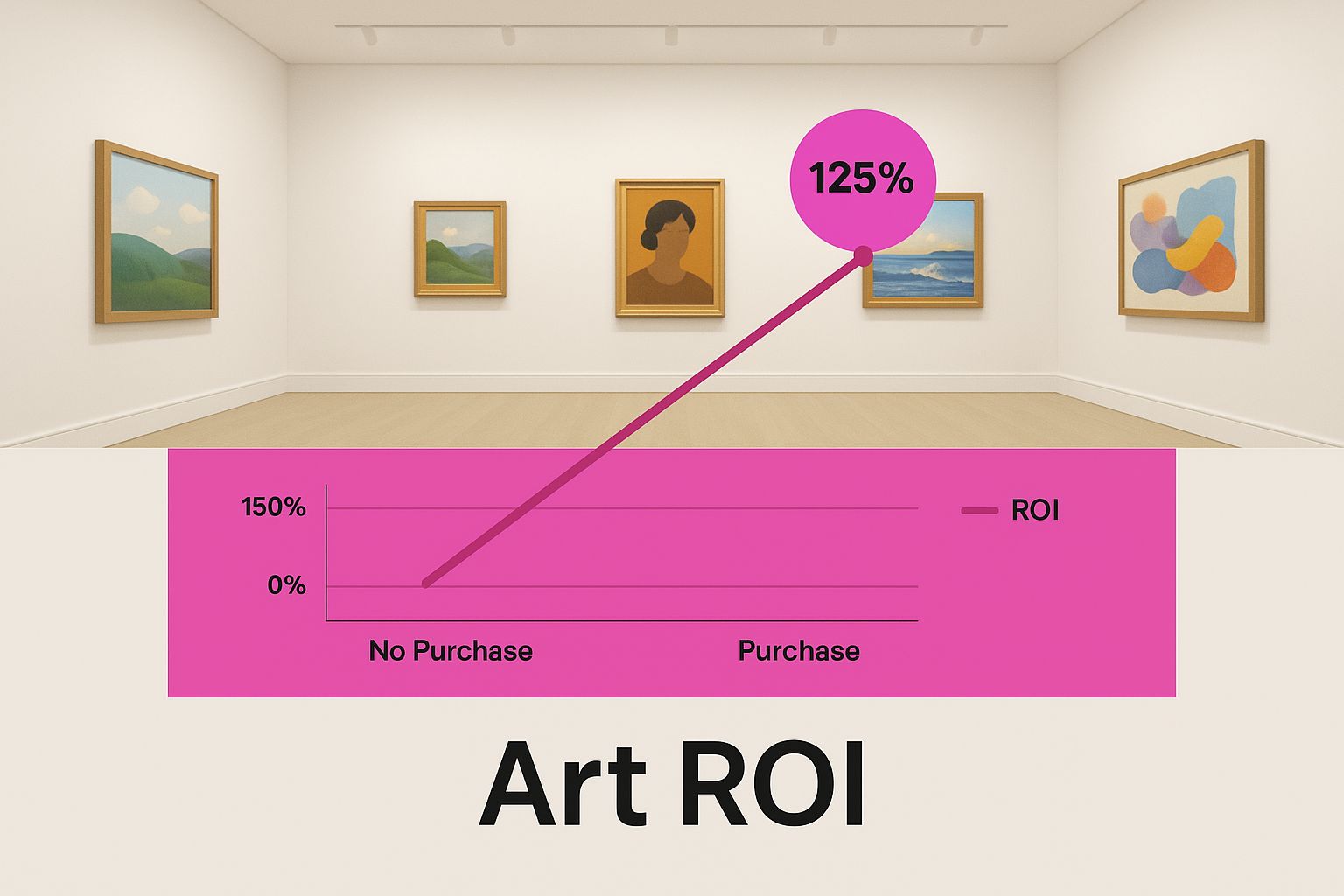
The infographic above illustrates the potential return on investment (ROI) in the art market, highlighting the hidden gems often overlooked. It shows the exciting shift towards more accessible price points, where growth can be truly impressive. See how those under-the-radar segments can deliver substantial returns?
While the high-end art market might experience its ups and downs, there’s a vibrant, growing segment where smart collectors are focusing their attention. The sub-$5,000 segment is a prime example. In 2024, sales volumes jumped by 13%, and values climbed 7% globally. This is where you find artists building their reputations, gaining recognition from institutions, and cultivating a loyal following. Learn more about these market trends here.
Identifying the Markers of Future Value
So, how do you uncover these hidden gems? It's a mix of art historical knowledge, market analysis, and a little bit of detective work. Look for artists exhibiting in reputable galleries, participating in juried shows, and winning awards. These are all strong signals of growing recognition and potential future value.
Understanding the nuances of specific art movements is also key. Is it a passing fad or a movement with staying power? Analyzing recent sales patterns and talking to art dealers specializing in particular areas can provide invaluable insights. They’re on the front lines, witnessing firsthand what collectors are drawn to and which artists are gaining traction.
The Trifecta of Long-Term Value
When you’re looking to buy art with investment potential, keep these three factors in mind: market depth, collector interest, and institutional recognition. Market depth signifies a broad base of buyers and sellers, creating stability. Collector interest indicates growing demand, which can push prices upward. And institutional recognition from museums, galleries, and critics adds legitimacy and further fuels demand. You might find this article helpful: How to Understand Abstract Art.
Think about the rise of contemporary abstract art. Initially dismissed by some, it's now a flourishing market segment with established artists commanding impressive prices. Why? Because it hit that trifecta. It developed a deep market, attracted passionate collectors, and earned recognition from major institutions.
By focusing on these fundamental principles, you can identify promising areas with similar potential. You’ll discover value where others haven’t even started looking. This strategic approach lets you build a collection that not only speaks to you aesthetically but also has the potential to appreciate in value over time.
Let's take a closer look at different segments of the art market and their potential for investment. The table below breaks down key metrics across various price ranges.
Investment Potential by Art Market Segment
This table compares different price segments in the art market, showing their sales growth, transaction volumes, and overall investment characteristics. It's a helpful snapshot of where the action is and what level of risk might be involved.
| Price Range | Sales Growth | Volume Change | Risk Level | Entry Barrier |
|---|---|---|---|---|
| Under $5,000 | High (e.g., 7%) | High (e.g., 13%) | Medium | Low |
| $5,000 – $25,000 | Moderate | Moderate | Medium-High | Medium |
| $25,000 – $100,000 | Variable | Variable | High | Medium-High |
| Over $100,000 | Variable | Low | High | High |
As you can see, the lower price segments often exhibit stronger growth in both sales and volume, suggesting a dynamic and accessible entry point for new collectors. While the higher price ranges can offer prestige and potential for significant returns, they also come with higher risk and entry barriers. Choosing the right segment for your investment goals and risk tolerance is a crucial first step.
Building Your Investment Research Toolkit
Buying art as an investment? It’s not about gut feelings. Think of it more like detective work. You’re searching for clues, trying to separate the gems from the duds. After years in this game, I can tell you: the right tools and a systematic approach are everything.
Uncovering an Artist's Trajectory
First, dive into the artist’s exhibition history. Look at the galleries they’ve shown in. Have they been in any major art fairs or biennials? This helps you understand their standing in the art world and where their career might be headed. Then, you need to look at comparable sales data. Artnet is a great resource for this.
This Artnet screenshot shows a sample search for an artist's auction history. See how you can track price trends? You can also see which pieces are most popular and which auction houses are handling the sales. This kind of market intelligence is gold.
Provenance research is another must. It’s not just about verifying a piece is authentic. It's about the story. If a piece was owned by a well-known collector or museum, that adds to its value and prestige. Think about it: two identical prints, one from a flea market, the other from a famous museum. The provenance makes all the difference.
Essential Resources and Networks
There are some amazing databases and platforms out there that offer crucial market data. You can find auction records on sites like Artnet and Sotheby's. Talking to art advisors and appraisers can also give you valuable insights and connect you with trustworthy dealers. But a word of caution: not all sources are equal. Some online forums and marketplaces are full of misinformation. Stick to reliable, respected sources.
Deciphering Condition Reports and Spotting Red Flags
Don't underestimate condition reports. You need to know how things like restoration work affect long-term value. A painting that’s needed a lot of restoration might not appreciate as much as one in perfect condition. Spotting red flags is just as important. If a piece has questionable authenticity or a spotty exhibition history, that’s a risky investment. These are the lessons collectors learn the hard way – and often at a steep price. For helpful tips on managing your creative projects – and believe me, collecting can be creative! – check out this resource on project management.
Building a Comprehensive Due Diligence Checklist
Before you buy anything, create a checklist. Research the artist’s career, look at comparable sales, check the provenance, review the condition report, and get a feel for the overall market. This thorough approach reduces your risk and increases your chances of finding art that’s a good investment. It’s not just about making money; it's about building a collection you love that also holds financial value. Knowledge is your greatest asset here. The more you understand the market and the artist’s place in it, the better your decisions will be – for your passion and your portfolio.
Mastering the Art Market's Digital Shift
The art world is online, and that’s great news for anyone looking to collect art with an eye towards investment. Online platforms have opened up the market, giving us access to global inventory and powerful analytical tools we could only dream of a few years ago. Imagine: comparing prices from galleries around the world, spotting trends as they emerge, and discovering artists before they hit the big time, all from your laptop.
Using Digital Tools For Savvy Art Investing
I’ve witnessed firsthand how collectors are building incredible portfolios almost exclusively online. They're using digital resources to compare prices, identify up-and-coming artists, and spot emerging trends before the mainstream catches on. A friend of mine, for example, recently acquired a limited-edition print by an emerging artist through an online auction. He’d been tracking the artist’s growing social media presence and recognized the potential before most traditional galleries did.
This isn’t just about easier access; it’s about data. Data analytics are changing how we evaluate art as an investment. Remember the old days of pouring over auction catalogs and calling dealers for price estimates? Now, online platforms offer instant access to historical sales data, price trends, and even artist career trajectories. You can make informed decisions based on actual market intelligence, not just gut feeling.
Navigating the Online Art World
Of course, the online art market has its challenges. Authentication, secure transactions, and the sheer volume of information can feel overwhelming. That’s why it’s so important to develop a discerning eye and connect with trusted online dealers and auction platforms. Look for platforms with strong verification processes, secure payment systems, and transparent seller ratings. Just like with any online purchase, do your homework. Check reviews, verify credentials, and don't be afraid to ask questions.
This easier access to information is a game-changer. The traditional gatekeepers of the art world—the established galleries and auction houses—are no longer the sole source of information. In 2025, galleries and collectors are embracing the digital transformation, with 43% of galleries planning to increase their focus on online sales. Discover more insights about these art market trends. For buyers interested in art as an investment, this shift opens up global markets and enables data-driven decisions.
Developing a Digital-First Art Strategy
So, how can you take advantage of this digital shift?
-
Embrace the tools: Use online platforms to track artists you’re interested in, monitor price trends, and research comparable sales. Artsy is a good example of a platform with extensive resources.
-
Build relationships: Connect with online dealers, follow online auctions, and engage with artist communities on social media.
-
Develop a strategy: Just like with any investment, define your goals, set a budget, and stick to your plan.
The image above captures the energy of the digital art space. It reminds us that the art world is changing, and those who adapt and embrace the new possibilities will thrive. This digital transformation is creating opportunities for new and seasoned collectors alike. By blending traditional art knowledge with digital savvy, you can discover a world of potential and build a collection that is both financially rewarding and personally fulfilling.
Smart Buying: Timing, Deals, and Portfolio Strategy
Knowing what kind of art to buy is only the first step when it comes to investing. The real magic happens when you understand when and how to buy. It's a bit like real estate – location is important, but timing and negotiation skills can make all the difference. So, let's explore how to time your art purchases, snag some great deals, and build a portfolio that makes you proud.
Riding the Market Rhythms
Just like any market, the art world has its own ebb and flow. Major art fairs and auction seasons generate a lot of buzz and activity. This can be a great time to discover unique pieces, but be prepared for potentially inflated prices. On the other hand, quieter periods like the summer months or holidays can offer opportunities for more relaxed negotiations and better deals.
Another key element is understanding an artist's career trajectory. Buying right before a major exhibition or award can significantly impact your investment’s value. Remember those artists we discussed earlier, like Mary West, whose work took off after being featured in Architectural Digest? Recognizing these turning points in an artist's career is like catching a rising star.
Negotiation: The Art of the Deal
Effective negotiation isn’t about being pushy; it’s about understanding the situation. Negotiating with a blue-chip gallery is completely different from working with a regional dealer or a private collector. Blue-chip galleries often have fixed prices, but you might be able to negotiate on additional costs like shipping or framing. Regional dealers might be more flexible on price, especially if you become a regular client. And with private collectors, depending on their reasons for selling, you could find yourself with a significant discount.
One of the most valuable lessons I’ve learned is to focus on building relationships. If you genuinely appreciate an artist's work, express your enthusiasm and engage in conversations. Dealers appreciate dedicated collectors and often reward them with access to new pieces or better pricing. This long-term approach cultivates trust and can lead to some amazing opportunities down the road.
Building a Balanced Portfolio: Diversification and Focus
Building an art portfolio is like putting together a winning team. You need a diverse group with various strengths and potential. Diversifying across different artists, mediums, and price points helps manage risk. Having some works by established artists provides stability, while investing in emerging artists offers higher growth potential.
But don't let diversification dilute your focus. It’s essential to zero in on works with real appreciation potential. This requires the kind of in-depth research we discussed earlier and a solid understanding of what drives value in the art market.
The Psychology of Collecting vs. Investing
Be honest with yourself: are you primarily a collector or an investor? Collecting is driven by passion and a personal connection with the art. Investing is about financial returns. While the two can certainly overlap, knowing your primary motivation will help you make informed decisions.
Knowing when to hold onto a piece and when to sell is another crucial element. Sometimes, patience is key, allowing a work's value to grow over time. Other times, it’s smarter to take profits, especially if the market is peaking or you want to fund a new acquisition. Strategically selling existing works—what’s known as calculated deaccessioning—can be a powerful way to optimize your portfolio's growth.
Hidden Costs and the Erosion of Returns
Let's talk about those often-overlooked expenses: storage, insurance, conservation, and transaction fees. These costs can significantly eat into your returns if you’re not prepared. Factor them into your budget from the outset. Proper storage and conservation are also vital for maintaining the value of your art. Think of it like caring for a vintage car – regular maintenance prevents depreciation.
To help you visualize a balanced approach, take a look at the table below. It provides a framework for diversifying your art investments, suggesting allocation percentages based on different categories, risk levels, and expected timelines.
Portfolio Diversification Strategies for Art Investors
This table offers a starting point for building a diversified art portfolio, suggesting allocations based on risk, timeline, and liquidity. Remember, these are just guidelines, and your personal strategy should reflect your individual goals and risk tolerance.
| Category | Allocation % | Risk Level | Expected Timeline | Liquidity |
|---|---|---|---|---|
| Blue-Chip Artists | 20-30% | Low-Medium | Long-Term (10+ years) | Medium |
| Established Mid-Career Artists | 30-40% | Medium | Medium-Long Term (5-10 years) | Medium |
| Emerging Artists | 20-30% | Medium-High | Medium-Short Term (3-7 years) | Low-Medium |
| Prints and Multiples | 10-20% | Low-Medium | Variable | High |
As you can see, balancing established artists with emerging talent, and considering factors like liquidity, allows you to manage risk while pursuing growth opportunities.
By considering all these elements – timing, negotiation, portfolio strategy, and hidden costs – you can navigate the art market strategically and build a collection that is both personally fulfilling and financially rewarding.
Dodging Expensive Mistakes and Protecting Your Assets
I've been in the art game long enough to see some serious missteps, even from seasoned collectors. Getting swept up in fleeting trends, overlooking the crucial details of documentation, or getting hit with unexpected costs—these are the kinds of mistakes that can quickly drain your art investment. So, let's dive into how to avoid these common pitfalls and safeguard your collection.
Recognizing Market Manipulation and Verifying Authenticity
Sadly, the art world isn't immune to shady dealings. Some dealers might inflate prices, create artificial scarcity, or even try to pass off forgeries. I remember a story about a collector who shelled out a huge sum for a supposedly "rare" print, only to find the market flooded with identical copies a few months later. Due diligence is key here. Independently verify provenance, get second opinions on valuations from other trusted sources, and never feel pressured into a quick decision.
With increasingly sophisticated forgeries these days, verifying authenticity is paramount. Partner with reputable experts and consider scientific analyses when needed. Always insist on clear documentation. A piece's history is its identity—telling its story, its ownership, and ultimately, its worth. A solid provenance protects your investment.
The Hidden Costs That Erode Your Profits
It's easy to get caught up in the thrill of acquiring a new piece but don't forget the less exciting, yet critical, aspects of ownership: storage, insurance, conservation, and transaction fees. These can quietly eat into your returns. Climate-controlled storage is a must for preserving value, especially for sensitive works on paper or photographs. Think of it as protecting your initial investment.
Comprehensive insurance is also non-negotiable. Accidents happen—theft, fire, water damage—and these are risks you can't afford to take. Even routine conservation can add up. Factor all of these expenses into your budget from the beginning to avoid any nasty surprises down the road.
Preserving Value: Storage, Insurance, and Documentation
Finding a spot for your art isn't enough; it's about long-term preservation. Climate-controlled facilities offer the ideal environment, minimizing the temperature and humidity fluctuations that can damage artwork over time. Attics, basements, and garages are a recipe for disaster.
Consider insurance your investment's safety net. Find a specialist who understands the intricacies of insuring art. A standard homeowner's policy often won't cut it for a valuable collection. Get regular appraisals and keep your policy updated.
Meticulous documentation is essential for resale. Keep every receipt, invoice, appraisal report, and provenance document organized and secure. This paper trail validates authenticity, ownership history, and condition, all of which are crucial for establishing value and attracting serious buyers. A friend of mine learned this the hard way. He tried selling a valuable sculpture without proper documentation, which scared off buyers, forcing him to accept a much lower price. Good record-keeping simply equals stronger resale value.
Protecting your art investment isn't just about buying smart; it's about strategic asset management. By sidestepping common errors, understanding the hidden costs, and proactively preserving value, you'll be well-positioned to build a collection that flourishes.
Your Roadmap to Smart Art Investment Success
So, you’re ready to dive into the exciting world of art investing. Excellent! Let's translate all that market research into a practical plan. This isn’t about rigid rules, but about creating a flexible framework that helps you navigate the art market with confidence and build a collection you truly love.
Setting Your Investment Compass: Budget and Timeline
First things first: set a realistic budget. How much can you comfortably invest? Starting small is perfectly okay. Remember that sub-$5,000 range we discussed? It’s a fantastic entry point with serious growth potential. Next, consider your timeline. Are you thinking short-term gains or building a collection over the long haul? This will influence which artists and market segments you focus on.
Making Your First Moves: Strategic Acquisition
Once you have a few artists on your radar, it's time to start evaluating individual pieces. Don't rush into a purchase. Instead, create a checklist: review the artist's exhibition history, analyze comparable sales data (think recent auction results), delve into the piece's provenance, carefully examine the condition report, and assess the current market demand. For a peek behind the scenes of the art world, I found this article really insightful: Read also: Studio Talks.
Evaluating Potential Acquisitions: A Practical Checklist
-
Artist Trajectory: Is their career gaining momentum? Have they been included in significant exhibitions or art fairs? Are they receiving recognition from respected museums or galleries? Think of artists like Mary West, whose work saw a significant value increase after being featured in Architectural Digest.
-
Market Analysis: What are similar pieces selling for? Is there a strong demand for this artist's work? Are prices trending upwards? Artnet is a great resource for this kind of data.
-
Provenance: Does the piece have a clear and verifiable history? Has it been previously owned by prominent collectors or institutions? This adds to its narrative and value.
-
Condition: Is the artwork in good condition? Have there been any major restorations? This directly impacts its long-term value and how easily you can resell it later.
Engaging With Dealers and Advisors: Essential Questions
When you're ready to talk to a gallery or art dealer, come prepared. Asking the right questions can unlock crucial information. Here are a few to get you started:
- Could you tell me more about the artist’s career trajectory and any upcoming exhibitions?
- What's the provenance of this particular piece?
- Has the artwork been conserved or restored? Do you have a condition report I can review?
- What's the current market demand for this artist’s work?
Measuring Your Portfolio’s Performance
As your collection grows, tracking its performance is essential. Regular appraisals can help you understand how your investments are performing and if your strategy needs tweaking. This isn’t a set-it-and-forget-it process. It's about continuous learning and refinement. When you’re just starting out, don't hesitate to seek professional advice. A knowledgeable art advisor can be invaluable, guiding you through the market, identifying promising artists, and helping you avoid costly mistakes. But remember, building your own knowledge is key.
Building a Network of Trust
Developing relationships with dealers, advisors, and other collectors is one of the smartest things you can do. The art world thrives on connections. These relationships can open doors to unique opportunities and provide invaluable insights. Start small, learn as you go, seek expert guidance when needed, and nurture those connections. This will build a strong foundation for creating a valuable art collection. Consider this your practical blueprint for joining the ranks of successful art investors.
Ready to begin your art collecting adventure? Explore the captivating work of Wiktoria Florek, a visionary mixed media abstract artist pushing the boundaries of contemporary expression. Discover her collection and begin your investment today.