
Why Finding Your Purpose Feels Harder Than Ever

Discovering your purpose, the thing that truly motivates and inspires you, is a fundamental human drive. Yet, in our current world, this search often feels more challenging than ever before. Traditional career paths, once a source of stability and direction, are becoming increasingly blurred.
This shift leaves many feeling lost and unsure about how to find their niche. The rise of the gig economy and remote work, for example, has created a vast array of opportunities, but also an overwhelming sense of choice.
Additionally, the constant presence of social media exposes us to a stream of seemingly perfect lives and careers. This can cultivate unrealistic expectations and feelings of inadequacy, making it difficult to appreciate our unique talents and passions.
This constant comparison makes it hard to determine what genuinely resonates with us, versus what we think we should be doing. Many feel paralyzed by the pressure to select the "right" path.
Furthermore, rapid technological advancements continuously reshape the job market. Skills that were highly sought-after just a few years ago can quickly become outdated. This uncertainty adds another layer of complexity to the process of self-discovery.
This uncertainty also fuels the self-improvement industry, highlighting the widespread need for guidance and direction. In fact, the market is projected to reach $45.7 billion by the end of 2024 and double to $90.5 billion by 2033. Find more detailed statistics here: https://www.custommarketinsights.com/press-releases/self-improvement-market-size/
Despite these difficulties, finding your purpose remains more vital than ever. A clear sense of direction not only provides career satisfaction, but also contributes to overall well-being and resilience. In the next section, we’ll explore how to overcome these obstacles and discover what truly excites you.
Discovering What Actually Excites You (Beyond Generic Advice)

Generic advice like "follow your passion" rarely helps when you're trying to find your purpose. This is especially true if you're not even sure what your passions are. Instead of relying on simple personality tests, think about using proven methods employed by successful career changers and entrepreneurs. These methods focus on uncovering what truly motivates you and what you're genuinely interested in.
Identifying Your Strengths and Interests
One effective approach is to find converging points between your strengths and interests. Begin by listing what you're naturally good at. Don't worry about whether it seems like a "career skill" or not. For example, are you a good communicator, a problem-solver, or highly organized? Next, brainstorm activities you truly enjoy, even if they seem unrelated to work. This could include hobbies, volunteer work, or even just things you lose yourself in.
Recognizing Patterns and Testing Your Interests
Look for patterns where your skills and interests overlap. These points of convergence are potential paths worth exploring. But a passing interest is very different from a lasting passion. So, it's important to test your potential interests systematically. This means designing low-risk experiments and thinking about the results. For instance, if you like writing and are interested in technology, you could start a blog about tech gadgets or volunteer to write website copy for a local non-profit.
The Power of Introspection and Experimentation
This active experimentation helps you gather real-world data about what truly energizes you. When combined with thoughtful reflection, you can tell the difference between what you think you should enjoy and what truly motivates you. The growing popularity of personal development reflects the need for guidance on this journey. The global personal development market was valued at $48.4 billion in 2024 and is projected to grow at a CAGR of 5.7% through 2030. Learn more about this growth here: https://www.grandviewresearch.com/industry-analysis/personal-development-market
By noticing patterns in your natural curiosity and systematically testing potential interests, you can move from feeling lost to understanding what drives you. This approach helps you build a path forward based on self-awareness and real-world experience. These are essential when considering how to find an idea for yourself (jak znaleźć pomysł na siebie).
Smart Technology Tools For Modern Self-Discovery
Technology has changed how we approach self-discovery. We've moved past simple personality tests. Today's tools use data and algorithms to provide a deeper understanding of ourselves and our goals. This includes AI-powered assessments, apps that monitor our energy levels, and even virtual reality (VR) experiences designed for introspection. But how do we separate truly valuable tools from marketing hype?
AI-Powered Self-Assessment
AI-driven platforms analyze large amounts of data to find patterns in our behavior and preferences. Some tools look at writing style to uncover personality traits. Others track online activity to understand interests. These platforms can create detailed reports. However, it's important to remember these are just tools. Think of them as a starting point for self-reflection, not a final answer to "who am I?"
Mobile Apps for Tracking Energy and Engagement
Some self-discovery tools focus on tracking real-time experiences. Imagine an app that monitors your energy levels throughout the day and connects them to your activities. This data can show which tasks energize you and which drain you. This information can offer clues about your ideal work environment and preferred activities, which can be incredibly helpful when thinking about personal projects or business ideas (jak znaleźć pomysł na siebie).
Virtual Reality for Deeper Introspection
Virtual Reality (VR) provides a unique opportunity for self-discovery. Imagine exploring simulated environments that challenge your perspectives and push you beyond your comfort zone. VR can create safe spaces for facing fears, exploring careers, or envisioning your future. This immersive technology adds a new layer to traditional introspection. Technology is constantly reshaping how we learn about ourselves. By 2030, it's estimated that up to 40% of personal development content will be delivered through digital and immersive technologies. Learn more: Personal Development Market Research
To help you navigate the different tools available for self-discovery, we've compiled a comparison table showcasing some popular options:
Digital Self-Discovery Tools Comparison
Comprehensive comparison of popular technology platforms and apps for self-discovery, including features, accuracy, and user satisfaction ratings
| Platform | Key Features | Target Area | Price Range | User Rating |
|---|---|---|---|---|
| Crystal Knows | Personality AI, communication insights | Professional Development, Sales | Freemium – Paid Plans | 4.5/5 |
| Moodpath | Mood tracking, personalized mental health support | Mental Wellness | Freemium – Paid Plans | 4.6/5 |
| BetterUp | Personalized coaching, goal setting | Personal & Professional Growth | Paid Plans | 4.7/5 |
| Reflectly | Journaling prompts, mood tracker | Mindfulness & Self-Reflection | Freemium – Paid Plans | 4.4/5 |
This table provides a snapshot of various digital tools, offering insights into their features, pricing, and user satisfaction. Keep in mind that the best tool for you will depend on your specific needs and preferences.
Choosing The Right Tools For You
The best way to use technology for self-discovery is to choose tools that match your learning style and offer actionable insights. Some people may find data-driven analysis helpful, while others might prefer the immersive experience of VR. The infographic below compares three idea-generation methods based on their idea volume and required time investment.
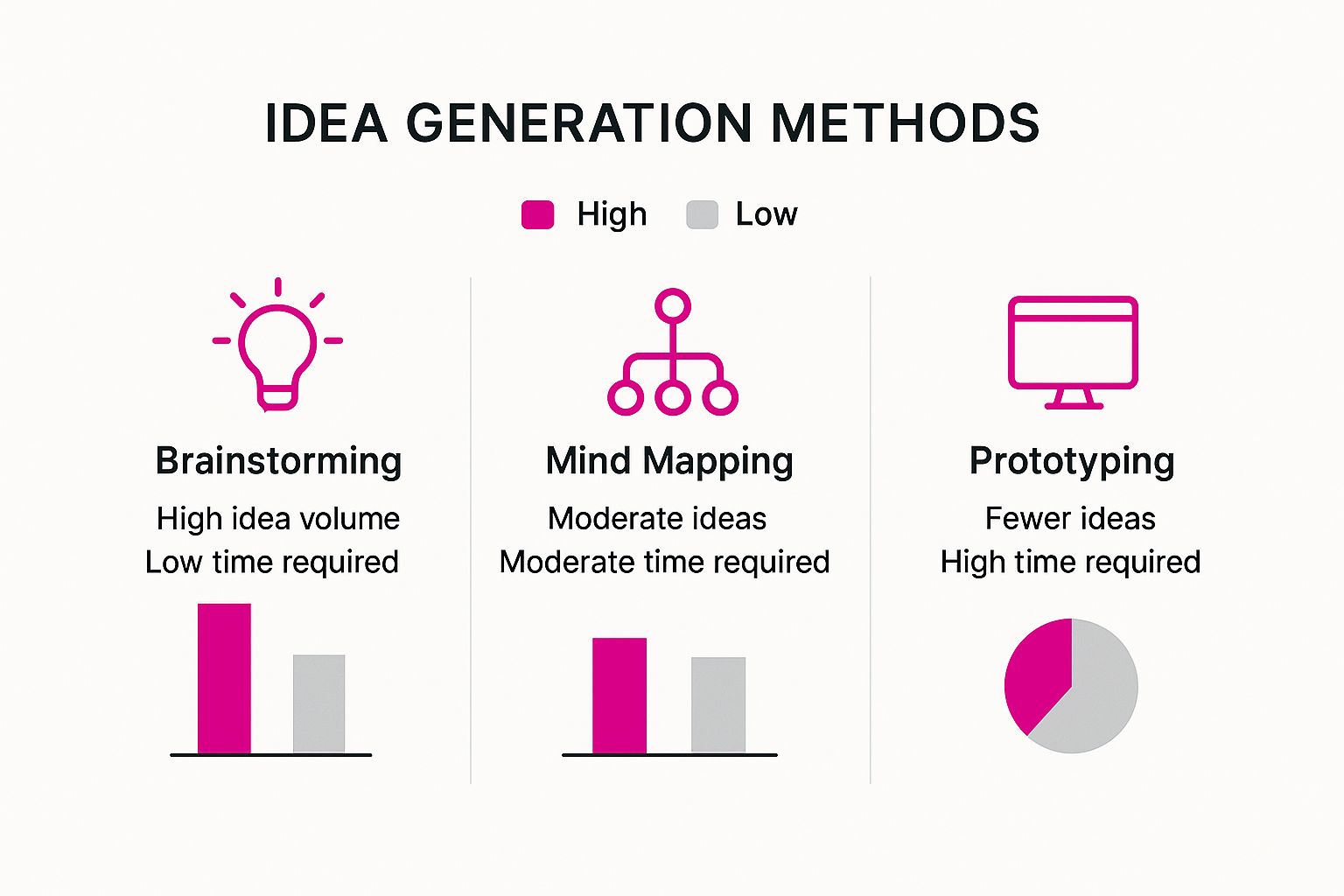
As the infographic shows, Brainstorming creates many ideas quickly, while Prototyping takes more time but produces fewer ideas. Mind Mapping offers a balance. Choosing the right tools and methods depends on your needs and available resources. Combining these tools with traditional methods like journaling and mentorship creates a powerful synergy for self-discovery.
Breaking Through The Mental Blocks That Keep You Stuck

Finding an idea for yourself (jak znaleźć pomysł na siebie) can be challenging. Mental and emotional obstacles often stand in the way. These blocks, while common, can significantly hinder your self-discovery. Understanding and addressing them is key to moving forward.
Overcoming Fear and Self-Doubt
Fear of judgment, failure, or the unknown can be paralyzing. Even the most driven individuals can struggle with these fears. Family expectations, though often meant with love, can add pressure. This pressure can stifle authentic exploration by pushing individuals toward predetermined paths. Imposter syndrome can also contribute to self-doubt, making you question your abilities despite evidence of your competence.
For example, you might dream of starting a business. However, you might also worry about what people will think if you leave a stable job. This fear of judgment can lead to inaction. Recognizing and acknowledging these fears is the first step to overcoming them.
Navigating Uncertainty and Maintaining Motivation
Self-discovery rarely follows a straight line. It’s a journey filled with ups and downs, clarity and confusion. This uncertainty can be uncomfortable. It can also lead to discouragement, especially if progress feels slow. Building resilience and developing coping strategies are crucial.
Learning to manage the emotional rollercoaster of self-discovery is essential. For helpful advice on managing emotions, check out this resource: How to Master Managing Your Emotions. Developing strategies for maintaining motivation is also important. Celebrating small wins and viewing setbacks as learning opportunities can help you through challenges.
Building a Supportive Environment for Authentic Exploration
The advice and opinions of others, while sometimes valuable, can also fuel self-doubt. Even well-meaning friends and family may unintentionally steer you toward conventional choices that don't resonate with your inner desires. Building a support system that encourages authentic exploration is essential.
Surrounding yourself with people who believe in you makes all the difference. These individuals will support your journey, even when it veers from the norm. A strong support network offers encouragement and valuable feedback. This support helps you navigate the complexities of self-discovery with confidence and clarity. Overcoming analysis paralysis and trusting your intuition are also important steps in finding the right path for you.
Creating Your Personal Exploration Action Plan
So, you’ve identified your passions and explored potential career paths. Now comes the big question: how do you turn these insights into action? This is where a Personal Exploration Action Plan comes in. It’s your roadmap, guiding you from thought to tangible progress, all while balancing your current commitments.
Designing Meaningful Experiments
A good action plan starts with meaningful experiments. These aren't random actions, but carefully designed trials to provide valuable data about your potential paths. Think of it like scientific research. You form a hypothesis (e.g., "I would enjoy a career in web design") and then test it with small, manageable experiments. This could be taking a short online course, building a basic website for a friend, or attending a web design meetup. Each experiment offers valuable feedback, helping you refine your understanding of what truly resonates with you.
Setting Realistic Timelines and Measurable Goals
Enthusiasm is important, but it needs a dose of reality. Realistic timelines prevent overwhelm and help maintain momentum. Break down larger goals into smaller, achievable steps. Instead of aiming to "become a web designer" in three months, set a goal to complete a specific online course in six weeks. These measurable goals provide clear markers of your progress.
Balancing Exploration With Existing Responsibilities
Finding an idea for yourself (jak znaleźć pomysł na siebie) doesn’t require upending your life. Your action plan should consider current responsibilities, whether it's a full-time job, family, or other obligations. This might mean dedicating a few evenings a week to exploration activities, or finding ways to integrate them into your existing routine. You might be interested in: My Trick To Improve Quality of Life.
Managing the Financial Aspects of Change
Finances are often a major factor in life changes. Your action plan should address potential financial implications. This could mean setting aside a small budget for learning resources, exploring potential side hustles for income, or researching funding options for entrepreneurial ventures. Careful planning minimizes financial risks and allows you to pursue your goals with confidence.
Creating Accountability and Maintaining Momentum
Accountability keeps you on track. Find a mentor, join a support group, or share your goals with a trusted friend. Regular check-ins maintain focus and motivation, especially during challenges. Self-discovery is a journey, not a destination. Celebrate small victories and embrace the learning process, even when things don’t go as planned.
To help you visualize and track your progress, here’s a sample action plan timeline you can adapt:
Self-Discovery Action Plan Timeline
Month-by-month breakdown of activities, milestones, and evaluation points for a structured self-discovery journey.
| Timeline | Key Activities | Expected Outcomes | Success Metrics | Adjustment Points |
|---|---|---|---|---|
| Month 1 | Research online courses, attend introductory workshops | Identify 2-3 potential areas of interest | Completion of research, attendance at workshops | Narrow down areas of interest based on initial exposure |
| Month 2 | Enroll in online course, start a small side project | Gain basic skills in chosen area, build a portfolio piece | Course completion, tangible project output | Assess enjoyment and skill development, adjust project scope if needed |
| Month 3 | Network with professionals, attend industry events | Expand professional network, gain industry insights | Number of new contacts, knowledge gained from events | Evaluate networking effectiveness, refine networking strategy |
| Month 4 | Seek mentorship, join a relevant community | Gain personalized guidance and support | Consistent communication with mentor, active community participation | Assess mentor/community fit, adjust support system as needed |
| Month 5 | Evaluate progress, adjust action plan | Refine goals based on learning and experience | Progress against initial goals, clarity on next steps | Revise timeline and activities based on evaluation |
This table provides a framework for a five-month self-discovery journey. Remember to tailor the activities, outcomes, and metrics to your specific goals and circumstances. Regularly review and adjust your plan based on your progress and evolving interests.
Strategies for Testing Your Ideas
Here are more specific strategies for testing your ideas:
-
Side Projects: Start a small project related to your potential interest. This gives practical experience and tests your skills in a low-pressure environment.
-
Informational Interviews: Connect with people working in fields you're curious about. These conversations offer valuable insights into career realities.
-
Low-Commitment Trials: Look for opportunities to "try before you buy," such as volunteering, shadowing, or freelance projects.
Adapting and Pivoting
As you gain information and experience, be prepared to adjust your approach. Sometimes, what seems perfect might not meet your expectations. Recognizing when to pivot is as important as knowing when to persist. Embrace the fluidity of the process and be open to changing direction as your understanding evolves.
A structured action plan helps you move from abstract ideas to concrete steps, increasing your chances of finding a fulfilling path. This empowers you to navigate self-discovery with greater confidence and clarity.
Sustaining Growth And Staying True To Your Evolution
Finding your initial "idea for yourself" (jak znaleźć pomysł na siebie) is a significant first step. However, it’s not the end of the journey. True self-discovery is an ongoing process of growth and evolution. Just as successful entrepreneurs adapt to changing markets, and experienced career changers embrace new challenges, you too must remain adaptable as your interests naturally evolve.
Building on Your Core Discoveries
After you’ve identified your core values and passions, the real work begins. This doesn't mean abandoning your initial discoveries. Rather, it involves intentionally nurturing and expanding them. Think of it like tending a garden. You’ve planted the seeds of your interests; now, you must cultivate them, allowing them to grow and flourish. This includes regularly revisiting your values to ensure they still align with your evolving self. You might be interested in learning more about core values: What Are Your Core Values?
Creating Multiple Streams of Fulfillment
Relying on a single source of fulfillment can be a precarious strategy. Just as savvy investors diversify their portfolios, you should diversify your sources of meaning and purpose. This could involve exploring several different passions, acquiring new skills, or contributing to various communities. This diversified approach creates a more robust and resilient sense of self, making you less vulnerable to external setbacks. For example, someone passionate about writing might also explore photography, combining their love of narrative with visual expression.
Building a Personal Brand Around Your Authentic Self
Building a personal brand isn't just for celebrities or influencers. It’s about showcasing your unique skills, values, and passions to the world. This could involve creating a portfolio of your work, sharing your expertise online, or networking with people who share your interests. A strong personal brand empowers you to attract opportunities that genuinely align with your authentic self.
Staying Open to New Opportunities and Embracing Change
While building on your core discoveries is essential, remaining open to new experiences is equally important. This requires cultivating curiosity and a willingness to step outside your comfort zone. Just as successful entrepreneurs constantly seek new opportunities, you should also remain open to exploring unexpected paths and evolving interests. This doesn’t mean constantly questioning your choices, but rather remaining adaptable and embracing the natural progression of growth and change.
Measuring Long-Term Satisfaction and Recognizing When It's Time for Your Next Evolution
Regularly assessing your level of satisfaction is vital for long-term fulfillment. This means honestly evaluating your current situation, identifying areas for potential growth, and recognizing when it’s time for a change. This might involve pursuing new challenges in your existing field, transitioning to a new career, or exploring entirely different passions. The key is to stay attuned to your inner compass, making deliberate choices that align with your evolving values and aspirations.
By continuously reflecting, experimenting, and adapting, you can ensure your journey of self-discovery remains dynamic and fulfilling, leading to a life rich with purpose and meaning.
Are you ready to transform your space with art that speaks to your soul? Explore the captivating world of Wiktoria Florek’s mixed media abstract paintings and discover pieces that resonate with your inner self. Visit Wiktoria Florek's online gallery today.