
Why Zmiana Zawodu Is the New Normal

The concept of zmiana zawodu, or career change, is becoming increasingly commonplace. It represents a departure from the traditional idea of staying in one career for your entire working life. Several factors contribute to this shift, changing how we think about our professional lives.
The Shifting Landscape of Work
A primary driver is the rapid development of technology. Entire industries are experiencing disruption. This creates new job roles while simultaneously making others obsolete. Professionals need to adapt and learn new skills to stay competitive.
Societal values are also evolving, with a greater focus on personal fulfillment and a healthy work-life balance. This has prompted many to reconsider their current career paths to find more meaningful work.
Career changes are becoming more frequent, especially for younger generations. In fact, 78% of workers under 40 have re-evaluated their careers since the pandemic. The average number of job changes between the ages of 25 and 34 is 2.4. This illustrates the growing desire for work that aligns with personal values and offers opportunities for growth. More detailed statistics can be found here: https://joingenius.com/statistics/career-change-statistics/
Recognizing the Need for Change
Knowing when to make a zmiana zawodu can be difficult. There are some common signs that indicate a potential need for change. These can include persistent feelings of job dissatisfaction, a lack of motivation, and a sense of stagnation in your current role.
If you notice a growing gap between your skillset and the demands of your industry, it could also indicate the need for a career change. You might find this helpful: Follow Your Dream.
Overcoming Barriers to Change
Even though career changes are more widely accepted now, many people still face psychological barriers. Fear of the unknown, financial worries, and self-doubt can hold talented professionals back from pursuing more fulfilling career paths.
Overcoming these challenges takes thoughtful planning, introspection, and a willingness to embrace new experiences. Building a supportive network and seeking advice from mentors can offer valuable encouragement and practical guidance during your transition.
Embracing the Opportunities of Zmiana Zawodu
While zmiana zawodu comes with challenges, it also presents valuable opportunities. By embracing change, you can uncover hidden talents, explore new passions, and ultimately achieve greater professional and personal fulfillment. This shift in mindset allows individuals to take charge of their careers and create a future that aligns with their evolving goals.
Mapping Your Hidden Assets for Career Transition

A successful zmiana zawodu (career change) isn't about wiping the slate clean. It's about understanding how your existing skills and experience can propel you forward. This means taking stock of your valuable assets and seeing how they fit into a new career path. A thorough self-assessment is the first step.
Identifying Transferable Skills
Many skills are useful across various industries. For example, strong communication skills gained in customer service are also valuable in sales or marketing. Project management skills developed in one field can be easily applied to another. Pinpointing these transferable skills is key to bridging the gap to your new career.
These transferable skills are the foundation you can build upon. By recognizing their value in different contexts, you open doors to new possibilities.
Uncovering Core Competencies
Beyond specific skills, think about your core competencies. These are the underlying abilities and strengths that drive your success. Are you a strong problem-solver? A creative thinker? Do you excel at building relationships? These competencies are highly valued in many fields and can be a major asset in your zmiana zawodu.
Understanding your core competencies provides a deeper understanding of your potential. They are the engine that powers your performance, regardless of the specific role.
Recognizing Hidden Talents
Sometimes, our greatest strengths are hidden in plain sight. Consider activities you enjoy and excel at, even outside of work. Maybe you have a knack for organizing, a passion for teaching, or a talent for design. These hidden talents can often be translated into valuable skills for a new career.
Exploring these hidden talents can uncover unexpected career paths. What you enjoy doing might be the key to a fulfilling and successful career change.
Conducting a Gap Analysis
Once you've identified your existing assets, it's time for a gap analysis. This means honestly assessing the skills and experience needed for your target career and comparing them to your current skillset. This helps identify areas for development. The following table can be a useful tool:
To illustrate this, let's look at a sample framework you can adapt for your own career change.
Skills Assessment for Career Transition
A comprehensive framework for evaluating your current skills and identifying those needed for your target career
| Skill Category | Current Skills | Target Career Requirements | Gap Analysis | Development Plan |
|---|---|---|---|---|
| Communication | Excellent written and verbal communication | Presentation skills, public speaking | Need to develop public speaking | Join a Toastmasters International club |
| Technical | Proficient in Microsoft Office Suite | Knowledge of specific software (e.g., Adobe Creative Suite) | Need to learn Adobe software | Take an online course |
| Leadership | Experience leading small teams | Experience managing larger projects | Need to develop large-scale project management skills | Seek mentorship from experienced project managers |
This table highlights the importance of identifying specific skill gaps. By creating a development plan, you can strategically address these gaps and increase your chances of success.
Researching and Aligning With Growing Fields
Understanding the job market is essential for a successful zmiana zawodu. Research growing industries and identify roles that align with your skills and competencies. This research helps focus your development efforts. By mapping your hidden assets and addressing skill gaps, you can confidently navigate your zmiana zawodu and build a future that reflects your true potential.
Focusing on growth areas maximizes your career prospects. By aligning your skills with industry demands, you position yourself for long-term success and career satisfaction.
Where Opportunity Meets Zmiana Zawodu: Future-Proof Fields

When considering a zmiana zawodu (career change), it's clear that not all career paths offer the same potential. This section explores how transformations in the current workplace are creating new opportunities for career changes. We'll look at promising industries and how the changing nature of work is reshaping career possibilities.
Industries on the Rise
Several sectors are experiencing significant growth, creating exciting opportunities for those making a zmiana zawodu. The tech industry, for example, continues its rapid expansion, with growing demand for software developers, data scientists, and cybersecurity specialists.
The healthcare sector is also booming, with numerous new roles in telehealth, medical technology, and senior care. This growth means individuals with transferable skills can find promising new careers in these industries. For instance, someone with strong analytical skills could transition from finance to data analysis within the tech sector.
The Impact of Automation and Remote Work
While automation is changing the job market, new roles are emerging to manage and maintain these technologies. This shift creates opportunities for career changers to develop specialized skills in areas like artificial intelligence, machine learning, and automation engineering.
Remote work is also becoming more common. By 2030, it's projected that 25% of global digital jobs will be fully remote, offering greater flexibility and location independence. This expands access to careers that were once geographically limited.
This trend benefits those pursuing a zmiana zawodu, allowing them to access opportunities regardless of location. The future of work emphasizes flexibility and skills-based hiring, transforming how careers evolve.
Future-Proof Skills
While specific job roles may evolve, certain foundational skills remain invaluable. Critical thinking, problem-solving, communication, and adaptability are essential for navigating today's dynamic work environment.
These transferable skills apply across various industries and roles, providing a solid foundation for long-term career success. Focusing on developing these core skills can make your zmiana zawodu more sustainable and position you for success in the future workplace.
The World Economic Forum's Future of Jobs Report highlights the importance of reskilling and upskilling, with 44% of workers needing these skills within the next five years. Increasingly, employers prioritize practical expertise over formal qualifications, further supporting the trend of career change.
Positioning Yourself for Success
A successful zmiana zawodu requires a strategic approach. By identifying your transferable skills, researching growing industries, and developing in-demand skills, you can align your strengths with future opportunities.
This proactive approach helps ensure your career change leads to long-term fulfillment and stability. Ultimately, a zmiana zawodu is a powerful opportunity to align your career with your evolving goals and passions. By embracing the changing workplace and focusing on future-proof skills, you can achieve lasting career success.
Accelerated Skill Building for Zmiana Zawodu Success
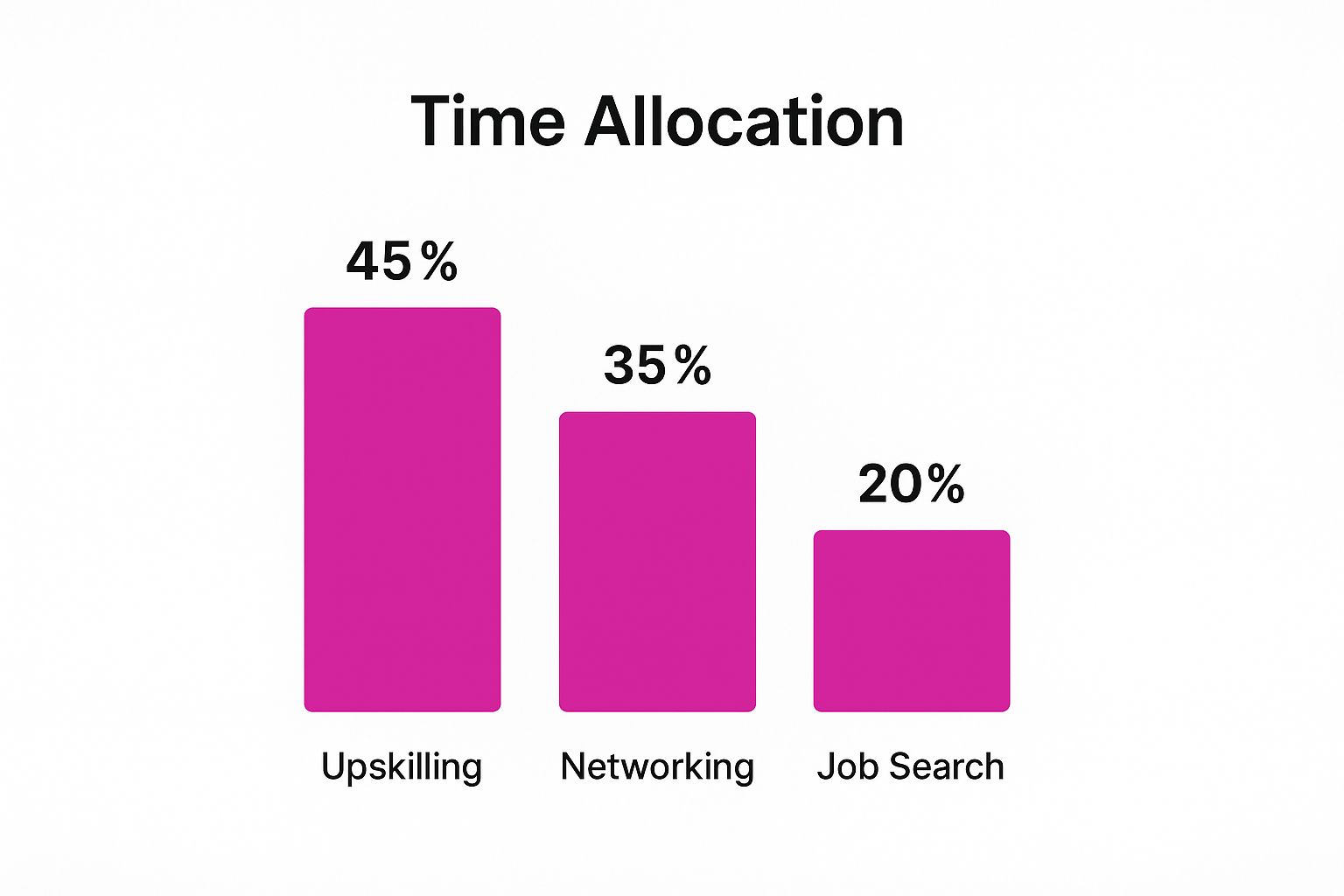
This infographic illustrates how to allocate your time for a successful career change. It recommends spending 45% of your time on upskilling, 35% on networking, and 20% on the job search itself. The data clearly highlights that skill development is the most important factor in a successful zmiana zawodu (career change). When planning your transition, make learning and development your top priority. For those looking to quickly gain skills in a new field, interim executive solutions can offer valuable, practical experience.
Identifying the Minimum Viable Skills
A successful zmiana zawodu depends on acquiring the right skills strategically. This means identifying your minimum viable skills. These are the core competencies you need to land an entry-level job in your chosen field. This focused approach prevents you from wasting time and money on unnecessary training. Concentrate on gaining the skills that will have the biggest impact on your job prospects.
For example, if you're moving into web development, you should focus on learning HTML, CSS, and JavaScript first. You can explore more advanced frameworks later.
Leveraging Micro-Learning and Building a Portfolio
Micro-learning involves short, focused bursts of learning. It's a great way for busy career changers to fit skill development into their schedules. Building a portfolio is also essential, especially if you lack direct experience in your new field. This portfolio can include personal projects, volunteer work, or freelance gigs that showcase your skills.
Techniques for Effective Learning and Overcoming Age-Related Anxieties
Learning new things under pressure can be tough, so using effective learning techniques is key. Consider techniques like spaced repetition or active recall to help you remember complex information. Many career changers worry about their ability to learn new skills as they get older. But research shows that adults can learn and grow throughout their lives. Check out this inspiring article: My trick to improve quality of life. Overcoming these anxieties is often a matter of changing your perspective and recognizing the value of your experience and maturity.
Case Studies and the Power of Strategic Skill Development
Looking at case studies of successful career changes can offer valuable insights and motivation. These stories show how strategic skill development can accelerate your career reinvention. They often emphasize the importance of perseverance, adaptability, and a commitment to lifelong learning. A well-defined skill-building strategy is the foundation of any successful zmiana zawodu.
To help you choose the best learning path, we've put together a comparison table:
The table below, "Comparison of Upskilling Methods for Career Changers," analyzes various learning approaches, considering the time investment, cost, industry recognition, and effectiveness for career transitions.
| Learning Method | Time Requirement | Average Cost | Industry Recognition | Effectiveness for Career Change |
|---|---|---|---|---|
| Self-Study (Online Courses) | Varies greatly | Low to moderate | Varies depending on platform | Moderate, requires self-discipline |
| Boot Camps | Intensive, short-term (e.g., 3-6 months) | High | Moderate to high, growing recognition | High, focused and practical training |
| University Degree/Certification | Longer-term (1-4 years) | High | High | High, provides comprehensive knowledge |
| On-the-job Training/Internships | Varies depending on role | Low to none | High, direct experience | Very high, practical and relevant |
| Mentorship | Varies depending on mentor | Low to none | Varies, depends on mentor's network | Moderate to high, valuable guidance and insights |
This table offers a quick overview of different upskilling options, allowing you to compare factors like cost and time commitment. Consider your personal circumstances and career goals when choosing the right approach. As you can see, each method has its own strengths and weaknesses. While boot camps offer intensive, focused training, university degrees provide a more comprehensive education. Self-study can be cost-effective but requires significant self-discipline. Ultimately, a combination of methods often provides the most effective pathway.
Building Your Bridge Network for Zmiana Zawodu
A successful zmiana zawodu (career change) relies heavily on networking. While skills and experience are important, your connections can significantly impact your transition. Think of building a strong network as constructing a bridge to your new career. This section offers practical strategies for cultivating meaningful professional connections, even in a new field.
Identifying and Engaging With Key Players
First, identify the gatekeepers in your target industry. These are influential individuals who can open doors to opportunities. They might be hiring managers, industry leaders, or even seasoned professionals in your desired role. Engage with them strategically, focusing on building genuine relationships, not just asking for favors. Attending industry events and conferences, for example, offers valuable chances to connect in a relaxed environment.
Crafting Your Transition Narrative
When networking, prepare to tell your career change story confidently. Your narrative should clearly explain your reasons for changing careers, emphasizing your transferable skills and the value you bring to the new industry. For instance, if you’re moving from finance to tech, highlight your analytical abilities and passion for problem-solving to show why you're a strong candidate.
You might be interested in: How to master goal analysis and planning.
Leveraging the Outsider Advantage
While lacking direct industry experience might seem negative, it can also be a strength. Your outsider perspective brings fresh ideas and innovative solutions. Embrace this unique viewpoint and present yourself as someone with a new perspective. Asking insightful questions during informational interviews, for example, shows your curiosity and eagerness to learn.
Informational Interviews and Mentorship
Informational interviews are invaluable for gaining industry knowledge and building connections. Reach out to professionals in your target field and ask for their advice. These conversations offer valuable insights into industry trends, career paths, and potential opportunities. Finding a mentor who supports career changers can also greatly help your transition. A mentor can offer guidance, support, and access to their network.
Overcoming Impostor Syndrome and Addressing Objections
Many career changers experience impostor syndrome, doubting their skills and feeling like they don't belong. Recognizing and addressing this is crucial for successful networking. Remember that everyone starts somewhere, and your unique background and skills are valuable. Be ready to address concerns about lack of experience. Highlight your transferable skills and show your commitment to learning and growing. To improve your HR skills, consider exploring relevant human resources training courses.
Building Relationships That Lead to Opportunities
Networking is more than just collecting business cards; it's about building genuine relationships that can lead to opportunities. Focus on creating mutually beneficial connections, offering your support and expertise, and actively participating in industry discussions online and offline. By building a strong network, you can open doors to hidden opportunities and gain credibility in your new field. This proactive approach is essential for realizing your full potential and achieving a successful zmiana zawodu.
The Financial Strategy Behind Successful Zmiana Zawodu
A zmiana zawodu (career change) requires careful financial planning. Transitioning to a new career often means a period of lower income, or even temporary unemployment. This section offers practical strategies for managing the financial realities of a career change and building a solid foundation for your transition.
Creating a Financial Runway
Building a financial runway is essential before making a career change. This means saving enough money to cover your living expenses during your transition. The length of this runway depends on your individual situation, like your current savings, monthly expenses, and the estimated time it will take to find a new job.
For example, if your monthly expenses are $2,000 and you think it will take six months to find a new job, you should aim for at least $12,000 in your financial runway.
Calculating Your True Minimum Income Needs
Figuring out your minimum acceptable income is another key step. Think about all your essential expenses: housing, food, transportation, healthcare, and debt payments. This gives you a clear understanding of your financial needs and helps you make informed decisions about job offers and salary negotiations.
Identifying Income Bridges
Explore ways to generate income during your transition. This could be freelancing, part-time work, or even selling personal belongings. These income bridges can help supplement your savings and extend your financial runway. They can also give you valuable experience in your new field or help you grow your network.
Negotiating Compensation and Leveraging Hybrid Roles
Even with limited experience in your new field, you can still negotiate a competitive salary. Focus on highlighting your transferable skills and the value you offer. Be ready to discuss your salary expectations and support your requests with research and qualifications.
Consider exploring hybrid roles that combine your current skills with those needed for your new career. These roles offer a smoother transition, letting you gradually gain experience in your target field while earning a steady income.
Consulting and Your Unique Perspective
Your previous experience can be valuable in consulting. Many industries value the fresh perspective of career changers. Think about offering your expertise as a freelancer or consultant to gain experience and expand your network.
Communicating With Financial Stakeholders
Talking openly with your family and other financial stakeholders is essential. Discuss your career change plans and the potential financial impact. This helps manage expectations and builds a supportive environment for your transition.
Developing Realistic Timelines
Create a realistic timeline aligned with your professional goals and financial situation. This timeline should include milestones for skill development, networking, job searching, and financial planning. Be flexible and adjust your timeline if needed, and celebrate your progress as you go.
By addressing the financial aspects of your zmiana zawodu proactively, you can reduce stress and make your transition smoother and more successful. A solid financial strategy provides a strong base for your new career, letting you focus on achieving your professional goals.
Ready to start your own zmiana zawodu? Explore resources at Wiktoria Florek Mixed Media Abstract Painter to discover how to transform your career and create a fulfilling future.